
Your support helps us to tell the story
From reproductive rights to climate change to Big Tech, The Independent is on the ground when the story is developing. Whether it’s investigating the financials of Elon Musk’s pro-Trump PAC or producing our latest documentary, ‘The A Word’, which shines a light on the American women fighting for reproductive rights, we know how important it is to parse out the facts from the messaging.
At such a critical moment in US history, we need reporters on the ground. Your donation allows us to keep sending journalists to speak to both sides of the story.
The Independent is trusted by Americans across the entire political spectrum. And unlike many other quality news outlets, we choose not to lock Americans out of our reporting and analysis with paywalls. We believe quality journalism should be available to everyone, paid for by those who can afford it.
Your support makes all the difference.Read more
The conventional wisdom surrounding weight loss often boils down to a deceptively simple equation: burn more calories than you consume. Yet, this basic arithmetic, long championed by various fad diets, may not always yield the expected results.
While the fundamental principle holds true – a caloric deficit can lead to weight reduction – the efficacy of calorie counting as a weight management tool hinges on a deeper understanding of what those numbers truly represent. What appears to be straightforward math can quickly become as intricate as Einstein’s theory of relativity.
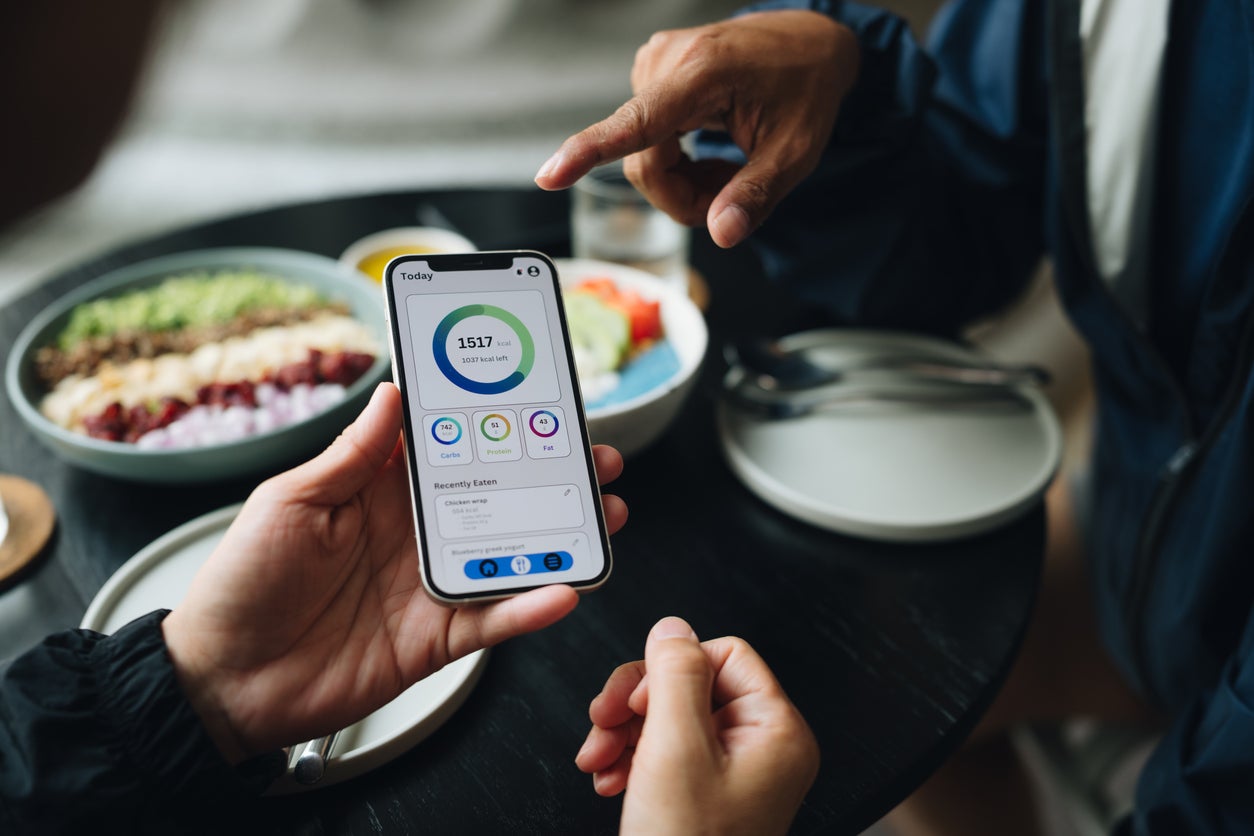 What appears to be straightforward math can quickly become as intricate as Einstein’s theory of relativity (Getty Images)
This complexity arises from a sophisticated interplay of factors that dictate how, or even if, our bodies process ingested calories. Consequently, the quality of one’s diet emerges as equally, if not more, crucial than mere caloric quantity.
As Dr. Dariush Mozaffarian, a cardiologist and director of the Food is Medicine Institute at Tufts University, explains: “Different foods have very different effects on the brain, liver, fat cells, muscle function, pancreas and all organs related to metabolism and body weight.”
Counting calories could burn you
A calorie is the unit of energy used to count what the body can get from carbohydrates, proteins and fats. That sounds simple, but the complexity of counting calories went mainstream recently, when a lawsuit accused the maker of David protein bars of affixing labels that misrepresent how many calories and how much fat the products contain. The lawsuit has since been dropped.
The allegations were based on an analysis of the bars using bomb calorimetry, which measures calories by burning food and calculating the amount of heat released, a method that counts every potential calorie. But our bodies aren’t combustion chambers and don’t treat all calories the same. The company’s numbers, like many food labels, are based only on the calories our bodies can actually use. Technically, both are correct, but only the latter matters for diet.
“You could put sawdust into a bomb calorimeter and you would get basically 4 calories per gram,” said Dr. David Ludwig, an endocrinologist and researcher at Boston Children’s Hospital. “If you’re a termite, yes, you’ll get calories from it. But humans won’t.”
The calorie counts on most nutrition labels reflect the total our bodies are likely to metabolize, not their burn rate. But they still can be misleading. Because of permitted rounding, the tallies can be off by as much as 20%. Additionally, the digestibility of an ingredient, whether and how it is cooked, to what extent it was processed, variations in processing, even quirks in our own DNA — all of these things influence whether and how our bodies use the calories we eat. Even that is just the start of the complications.
Calories are simple. How your body uses them is not
Our bodies determine how to process calories — either burning them or storing them — depending in part on our energy needs. But the quality of the calories matters, too. High-glycemic foods, such as white breads, pastas and sugars, are easily converted to usable energy and trigger our bodies to store calories, Ludwig said.
Foods containing resistant starches, including some beans, whole grains and seeds, resist easy conversion into usable energy and don’t trigger that same storage response. They also are more difficult to process, so we absorb fewer of the total calories contained in them.
“Having a snack of 8 ounces of sugary beverage, 100 calories, should be better for your weight than 1 ounce of nuts at 200 calories, right?” Ludwig said. “That’s the opposite of what actually happens because those 100 calories, even if they’re fewer at that moment, they shift your body toward storing fat and leave you hungrier sooner.”
Which of course triggers you to eat more, well, calories.
Even cooking and ripeness influence the equation. The calories in cooked foods are more easily absorbed than from raw ingredients, while the calories in unripe produce, such as bananas, are less easily absorbed. This means the number of calories you get from eating a medium banana, which is listed at 105 calories, can depend on how ripe it is.
As for processing, including something as simple as grinding a food, can change caloric impact.
“One classic example is that the calories in whole almonds are absorbed substantially less well than the calories in almond butter,” Ludwig said. “Just processing the almonds into almond butter causes a change in how much they will be absorbed.”
Ultra-processed foods introduce another challenge. Diets high in such foods have been found to decrease the number of calories we burn at rest, Mozaffarian said. That means a higher proportion of those calories will stick to your ribs.
Then there’s just plain old variation between people. Genetics lead our bodies to treat calories differently, said Dr. Fatima Cody Stanford, a Harvard Medical School obesity specialist. Even something as simple as a bad night’s sleep can change how the body processes calories. So you might absorb more or fewer calories from the same food on different days.
Should you even bother to count calories?
So what’s a weight watcher to do? Calorie counts can be a rough guideline; many people otherwise struggle to make healthy choices or determine appropriate portions, Ludwig said.
But the evidence indicates people should focus on diet quality, not just calorie quantity. Avoid ultra-processed foods, particularly refined starches, and build your diet around whole, minimally processed foods with an emphasis on plant-based ingredients rich in fiber.
“We need to think about calories in a much more sophisticated fashion than the number on the package,” Ludwig said. “The number on the package can do more harm than good by misleading people into thinking that it’s simply an accounting problem.”