


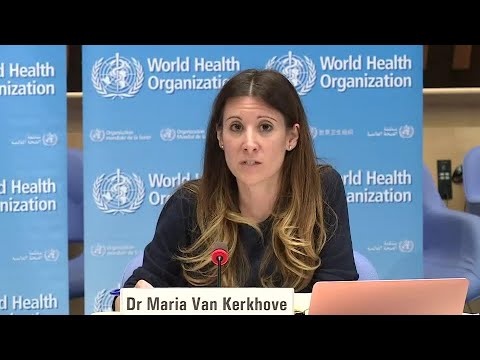
The daily press briefing on coronavirus COVID-19, direct from WHO Headquarters, Geneva Switzerland with Dr Tedros WHO Director-General, Dr Micheal Ryan, Executive Director of the Health Emergencies Programme, and Dr Maria Van Kerkhove, Technical lead, WHO Health Emergencies Programme with special guests Lady Gaga and Hugh Evans, CEO and Co-founder of Global Citizen.
WHO Director-General Dr Tedros Ghebreyesus said there’s been a 51 percent increase in the number of reported cases and a 60 percent increase in the number of reported deaths in Africa, adding that “with the current challenge of obtaining testing kits, it’s likely that the real numbers are higher than reported.”
According to the latest WHO COVID-19 situation report, there are 12,360 confirmed cases and 586 deaths in the African region.
The technical lead of WHO’s Health Emergencies Programme, Maria Van Kerkhove, noted that China had updated their numbers, adding “an additional 325 cases and 1,290 deaths from Wuhan.”
Van Kerkhove said, “this was done as in an attempt to leave no cases undocumented,” reviewing different databases against funeral service, hospital systems, and laboratories” to see if there were any duplications or if there were any cases missed missing.”
WHO’s Health Emergencies Programme Executive Director, Michael Ryan, said, “it’s always better when people put forward the data that they have as early as possible, because that keeps us on top of what the impact is and allows us to project forward in a much more, in a much more, accurate way.”
Ryan said it was “important that countries provide that data as quickly as they can in the interests of moving our collective efforts forward, to control this pandemic.”
Ryan also spoke about the “expectation maybe that herd immunity may have been achieved and that the majority of people in society may already have developed antibodies,” but said, “the general evidence is pointing against that and pointing towards a much lower seroprevalence. So, it may not solve the problem that governments are trying to solve.”
WHO’s Principal Legal Officer, Steve Solomon, explained “there is a point of contact within Taiwan CDC that has access to the International Health Regulations event information site.” He said, “this is the key platform for exchanging information among all the parties and stakeholders in the International Health Regulations. There are two of the key clinical networks, that Taiwanese experts participate in, the clinical management network and the infection prevention and control network. These networks meet, at least once a week. Sometimes twice a week.”
Dr. Tedros spoke about the reopening of wet markets, which he said, “are an important source of affordable food and livelihood for millions of people all over the world, but in many places, they have been poorly regulated and poorly maintained.”
He said the WHO’s position “is that when these markets are allowed to reopen, it should only be on the condition that they conform to stringent food safety and hygiene standards. Governments must rigorously enforce bans on the sale and trade of wildlife for food.”
Yesterday the first United Nations Solidarity Flight took off, transporting personal protective equipment, ventilators and lab supplies to many countries across Africa. The Solidarity Flight is part of a massive effort to ship lifesaving medical supplies to 95 countries across the globe.