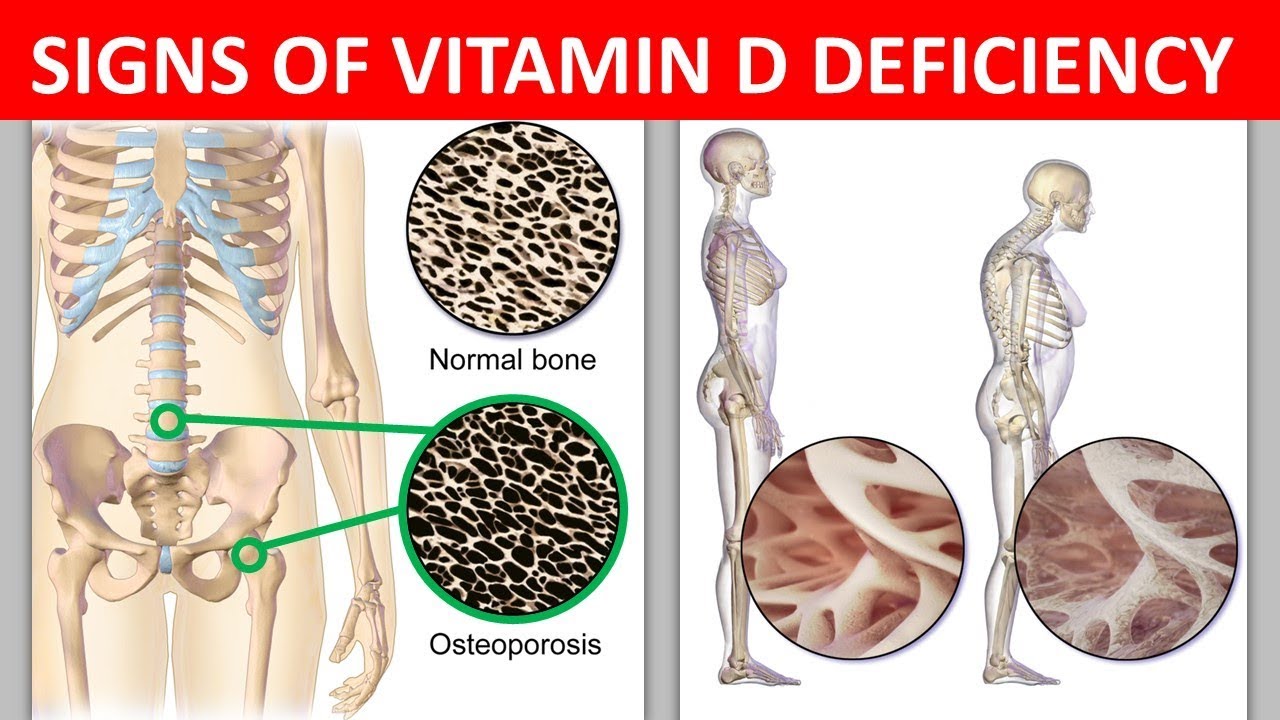
This video is about the importance of Vitamin D and the warning signs of deficiency. It also discusses other important aspects of this essential nutrient.
The main types of Vitamin D include Vitamin D2 or Ergocalciferol that is from plant source, and vitamin D3 or Cholecalciferol from animal source. Vitamin D is a fat-soluble vitamin, and is essential for normal bodily function and for health, including: Bone Health – Vitamin D is involved in mineral metabolism and helps maintain strong healthy bones by promoting calcium, phosphorus and magnesium absorption from the intestine, and deposition of these minerals into the bones. Cancer Prevention – Vitamin D helps preventing colon, prostate and breast cancer. Also, vitamin D is required for proper thyroid function, helps to improve the mood, and contributes to maintaining the immune system healthy.
The deficiency signs of Vitamin D include joints pain and stiffness, backache, and hair loss. In both children and adults, Vitamin D deficiency leads to reduced levels of calcium in the blood, causing muscle weakness and cramps. This because calcium is needed for the correct contraction and relaxation of muscles, including smooth and heart muscles. Also, lack of Vitamin D may lead to osteoporosis that is a disorder in which the bones become brittle and subject to fracture as a result of loss of calcium and other minerals. Vitamin D deficiency is linked with increased incidence of autoimmune disease and susceptibility to disease. In children vitamin D deficiency may cause Rickets, which is a disease characterized by impaired calcification, softening, and distortion of the bones, typically resulting in bow legs. Also, in children Vitamin D is important for normal development of teeth, and deficiency may cause tooth decay.
In humans Vitamin D is absorbed through the small intestine, and in this process is also involved the bile. There is evidence suggesting that diseases of the intestine, liver, gall bladder and pancreas, may reduce vitamin D absorption. Also, it should be considered the food contains low amount of vitamin D, and deficiency is quite common, especially in the winter months. Thus, supplements in the form of Vitamin D3 are often required, particularly for children, elderly and people with reduce the absorption due to diseases.
The main sources of vitamin D include production in the skin, from food, and supplements. Vitamin D can be produced in the skin through sunlight exposure. In this process the precursor of vitamin D, which is present in the skin, is converted into the active form by the action of ultraviolet light. Vitamin D is also found in food, and the best sources include herring, mackerel, salmon, oyster, cottage cheese, eggs and milk. Vitamin D supplements come in different forms, and is important to bear in mind that Vitamin D3 is the most active form.
The optimum daily amount of vitamin D is 30 mcg, of which 15 mcg provided by a good diet and daily sunlight exposure, and 15 mcg from supplements. While in the winter months the vitamin D supplements should provide about 25 mcg, this because of reduced sunlight exposure, and consequently, there is a decreased production in the skin. Children, the elderly and people with reduced absorption because of diseases, may require higher daily amount of vitamin D.