Dive into the world of essential supplements with me as I share insights beyond my viral video on the seven worst supplements – this time, it’s all about the seven crucial supplements that I personally take every day.
————————————————————————
Order Dr. Gundry’s latest book “Gut Check” here: https://www.amazon.com/Gut-Check-Microbiome-Transform-Emotional/dp/0062911775?&tag=dgpodcast.-20
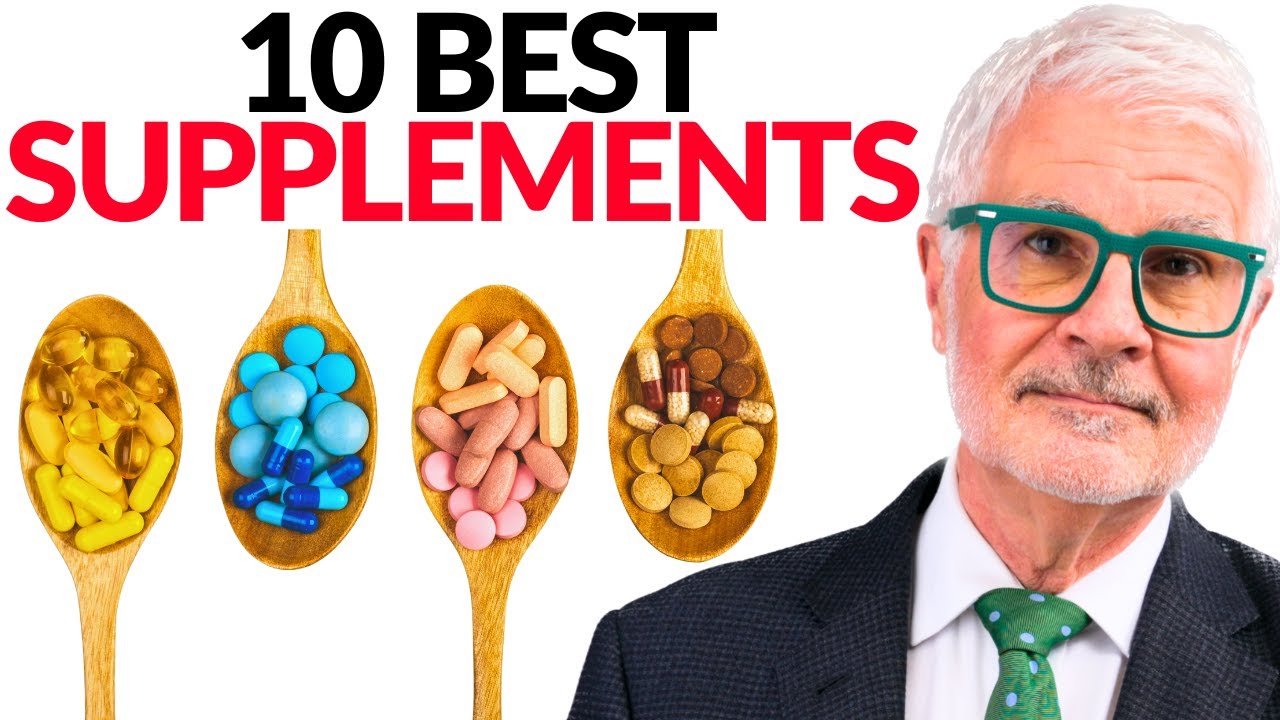
Join me in unpacking the 10 essential supplements you NEED. And for those with a little extra to spend, discover three splurge-worthy supplements that could take your health to the next level.
Ever wondered about the best practices for supplement intake? I’ve got you covered with practical packing tips to ensure you stay on track with your daily regimen. But the questions don’t end there – I frequently receive queries from my podcast audience, and in this video, I address some of the most common ones.
From whether it’s beneficial to cycle your supplements and experiment with different probiotic brands to the best time of day for intake – morning, evening, or throughout the day – I tackle it all. And for those days when you forget a dose, I’ve got the answers on whether doubling up the next day is a good idea.
With the volume of supplements I consume daily, a question that often arises is whether you can overdo it. I’ll share insights on this, shedding light on which supplements you should be cautious with and how to recognize if you might be overdoing it.
Join me for an informative session on maximizing the benefits of supplements while navigating the intricacies of their intake. Your health journey is about to get a whole lot clearer!
Dr. Gundry is the author of The Plant Paradox – A New York Times Bestselling book. Please subscribe to The Dr. Gundry Podcast to learn more about Polyphenols, Leaky Gut, Lectins, and other essential information.
– The top 10 supplements I take every day. Here’s number one, vitamin C. Now wait a minute, vitamin C was one of the supplements I told you was a waste of time, so come on Dr. Gundry. You can’t have it both ways, is it a good supplement or is it bad supplement?
Well, as I’ve talked about before, you and I are one of the few animals that do not manufacture our own vitamin C. We have five genes that make enzymes that convert glucose into vitamin C. We unfortunately, the fifth gene is called a ghost gene
In us, so you do not have the end enzyme that completes making vitamin C. That’s okay, you’re in good company. Guinea pigs also don’t have it and most great apes don’t have it. We think that that gene was silenced because we grew up in the jungle where there was plenty of vitamin C
And we didn’t need to waste energy glucose to make vitamin C since it was readily available in our food. Here’s the bad news. There’s work in rats where we genetically engineer rats to carry the human genes and a ghost gene for vitamin C. Those rats live only half as long as normal rats.
In other words, because they don’t make vitamin C, if you give those rats vitamin C in their drinking water, then they will live just as long as a normal rat, proving that a continuous supply of vitamin C is what makes the difference. So the problem with vitamin C, swallowing vitamin C
Is a vitamin C is a water-soluble vitamin and quite frankly it’s gone within three or four hours after you swallow it and then you are essentially left with nothing and that’s why just swallowing a vitamin C a day really isn’t going to do much for you at all.
On the other hand, you want a continuous supply of vitamin C, and so you want to take time to release vitamin C and there’s several on the market. I personally take a thousand milligrams twice a day of time to release vitamin C and it’s really one of the
Cornerstones of vitamin that you should take. The famous Nobel Prize laureate, Dr. Linus Pauling, the vitamin C doctor, who believed that vitamin C was essential for just about everything, including treating the common cold. Unfortunately didn’t know that we could not absorb
Enough vitamin C and mega doses to do what he wanted to do, but his point is well taken. That vitamin C is really essential for heart health, for your overall health, but it’s gotta be in a continuous form. That being said, if that’s inconvenient, you can get vitamin C tablets and swallow one
Four times a day. That’ll work, it’s bit inconvenient, but that’ll work. There are some chewable tablets of vitamin C, but quite honestly you gotta be a very intelligent consumer, ’cause a lot of them either have a lot of sugar or a lot of artificial sweeteners, so read the label carefully.
It’s easier to just buy vitamin C tablets and take it with a sip of water four times a day and that’ll do the trick. Number two, magnesium. Magnesium is one of two really, really essential vitamins for your heart health, for your gut health, for your brain health, for your mood.
Magnesium and potassium basically control the movement stability of cell membranes, particularly muscle cell membranes, including your heart and including your gut and so the right balance of magnesium is really critical. Milk of magnesia is concentrated magnesium, and anyone who’s used milk of magnesium knows that it really makes your bowels move.
I became interested in magnesium as a heart surgeon when we realized that most of our patients were profoundly deficient in magnesium even though their magnesium levels on a blood test were normal, and that’s because we will try to keep our blood level of magnesium normal at the expense of depleting intracellular magnesium.
When that happens, and it happens in almost all of us, our heart becomes very irritable with lots of skip beats and we had to give people two grams of magnesium sulfate IV every six hours for 48 hours after heart surgery to get their body intracellular magnesium back up to normal.
And we found and actually published on this, that was a really good way of preventing postoperative arrhythmias, skipped heartbeats like atrial fibrillation. Magnesium helps you sleep, it helps your mood, you don’t beat your dog anymore. Now everybody’s got a point where magnesium will act as a bowel movement pill, so everybody has
To balance that. In general, most people can take three 400 milligrams of magnesium daily. Now through the years, I don’t really care what form of magnesium you choose to buy. There’s multiple types of magnesium, there’s a magnesium aspartate, magnesium citrate, magnesium chelates, magnesium three and eight. These all work.
Magnesium three and eight is very useful for brain health, but it’s also very expensive. You can work your way up to bowel tolerance and I have some men who are on 1600 milligrams of magnesium a day. If you are beginning to do a low calorie or ketogenic diet,
One of the most important things is to supplement with magnesium because as you mobilize glycogen, which is the sugar storage molecule in our muscles, glycogen is stored with potassium and magnesium and as it’s mobilized, you pee off potassium and magnesium and it’s removed from your muscles and that’s where
All those often debilitating cramps come from when you go on a low calorie or ketogenic diet, so supplement with magnesium. Now there’s other ways to do this. As you know, one of my favorites is a electrolyte drink called Element, the letters are L-M-N-T. My wife I think is addicted to it,
It comes in lots of flavors. I have no relationship with the company. Gundry MD makes Vital Recharge also an electrolyte drink, but some women in particular are very sensitive to magnesium in terms of loose bowels and in that case you can use magnesium oil spray on your skin.
Now, magnesium oil is not an oil, but it feels greasy. That’s where the name comes from, but you can just spray it on your legs, on your abdomen, wherever you wanna spray it, particularly before you go to bed and you’ll absorb the magnesium from your skin, but it won’t make you
Move your bowels and it’s a great trick to remember. Last but not least, Epsom salts is essentially magnesium soap, that works really good. Alright, number three, we’re gonna go into the territory of B vitamins, but there’s two really essential B vitamins that everyone should have in their armamentarium, the first is methylfolate.
Now methylfolate is not the same as folic acid. Methylfolate is the active form of folic acid, why is that important? About 50% of us carry one or more mutations of the M-T-H-F-R genes and we laughingly in my office call them the mothereffer genes because if you actually
Say M-T-H-F-R out loud, we would bleep you from network television because we, most of us have one or more of those mutations. We don’t have the enzymes to connect a methyl group to folic acid to turn it into its active form. Similarly, B12 needs to be in its active form,
Which is methyl B12 or methylcobalamin to work. And since half of us don’t have the enzymes to do that, I like all of my patients to take methyl B12 with a provisor. A large number of people lack a receptor in their intestines called intrinsic factor that is capable
Of absorbing B12 from the intestines. So you could take, if you lack intrinsic factor, which is not unusual, you could take all the methyl B12 in the world and you won’t absorb it. The workaround is that you can put methyl B12 under your tongue and there are multiple sublingual
Methyl B12 available on the market, but the key is you gotta put ’em under your tongue. Now, some of these common chewable tablets, but don’t just chew it, chew it and then stick the pieces under your tongue. My most famous patient years ago who had
A methyl B12 deficiency, which we can pick up with an elevated homocysteine level on a blood test, we put him on methyl B12, and when he came back, his methyl B12 levels were still quite low and his homocysteine level was still quite high. And I said, “You are not taking your methyl B12.”
And he says, “Yes I am, I take it every day.” And I said, “You are not putting it under your tongue.” And his eyes got wide. He said, “Well, no, it’s so sweet, I sweetened my coffee with it.” And I said, “Well, you can see that that’s not working.”
So he put it under his tongue and we solved the problem. So I don’t say this just for being silly, it really makes a difference in how you access these supplements and how they access you. Now there are multiple other important B vitamins and they run the gamut from vitamin B3,
Which is niacin, vitamin B7, biotin, vitamin B6, vitamin B5, vitamin B2, and vitamin B1 thiamine. All of these are important and many of us believe it or not, have deficiencies and one or more of these, an easy way around that is to take either a B50
Or a B100 supplement, which gives you basically 50 or a hundred milligrams or micrograms of all the B vitamins. And it’s an easy way to get all the B vitamins in at one time. Number five, vitamin D3. I’ve said this so many times, you’re probably tired of hearing me say this.
Vitamin D3 is probably next to time release Vitamin C, the most important vitamin you’re gonna take. Most of us are deficient in vitamin D. Most of us do not get enough vitamin D from sunlight exposure, 80% of my patients in Southern California where we got a lot
Of sun are vitamin D deficient when they come into my office. Vitamin D is a hormone, it is a longevity hormone. It’s one of the most critical hormones for gut integrity there is, I like my patients to aim for a hundred to 150 nanograms per deciliter on a blood test.
I and others have never seen vitamin D toxicity. The University of California San Diego says the average American should be taking 9,600 international units of vitamin D three a day. That’s basically 10,000 international units a day and that’s what I take. That’s in general what I give all of my patients,
But I have some patients who take considerably more to get an adequate vitamin D level, vitamin K2. Now vitamin K2 is a very interesting component of vitamin K. There’s vitamin K1, which is present in green leafy vegetables, and then there’s vitamin K2, which is not very present in a lot of things,
But vitamin K2 is incredibly important for helping vitamin D take calcium from your blood vessels and put it into your bones. In fact, there’s a very good human study of giving people with calcified coronary arteries, vitamin D and vitamin K2 and reducing the level of coronary calcification sounds pretty good.
In general, you need about a hundred micrograms a day of vitamin K2 and they come in vitamin MK4 and MK7 forms. I make one at Gundry MD called essential K2, which uses both forms, but it’s controversial whether you need both. But because it’s controversial, try to find one that gives you both.
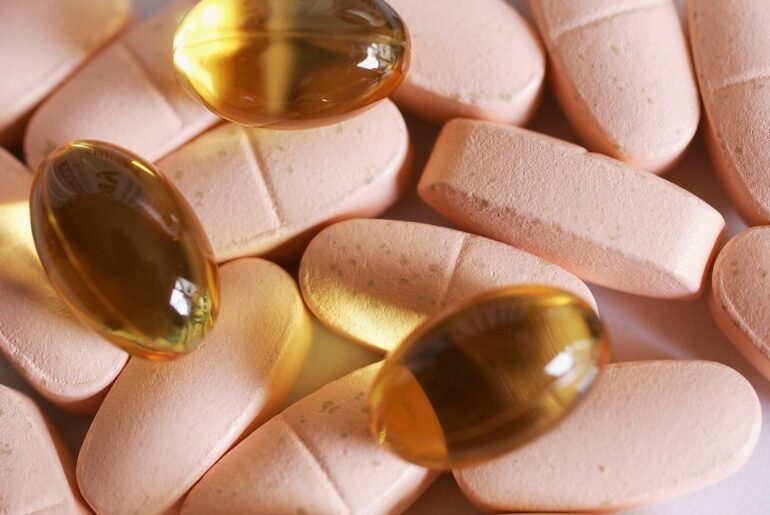
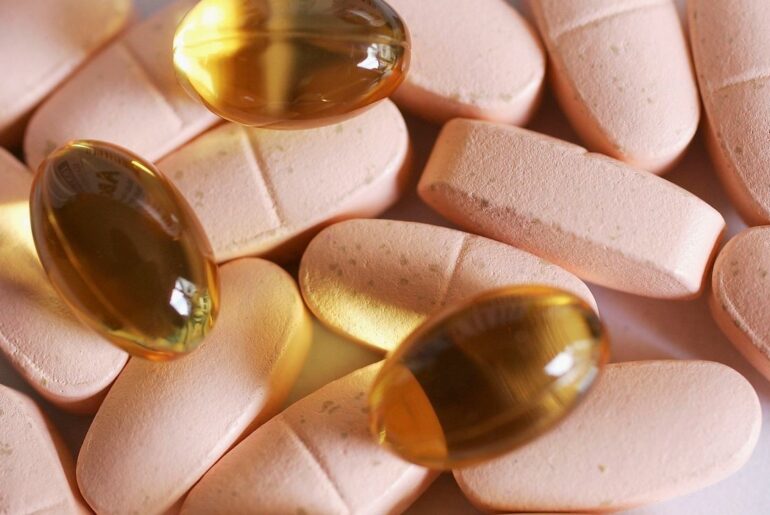
Number six, long chain Omega-3 fats, particularly DHA. Now most of us know this as fish oil. Now the good news is most fish oil that’s commercially available is molecularly distilled. That means that the heavy metals and the pollutants have been removed from the fish oil
And it’s very unusual to ever find a fish oil that isn’t molecularly distilled, so that’s not an issue anymore. What is an issue is what’s in your fish oil in terms of the amount of DHA. We do a test in our office called the Omega-3 index
Based on how much DHA and EPA, the two long chain Omega-3 fats that are incredibly important for your brain. And the Omega-3 index basically looks at how much of this is in your body for the two months prior to the test. And as I’ve written in the longevity paradox
And other of my books, the higher your Omega-3 index, the bigger your brain size is and the bigger the areas of memory your hippocampus, the lower your Omega-3 index, the more shrunken your brain is and the smaller the areas of memory. So when mom said fish was brain food, she was right.
What we found in my clinics is you need a thousand milligrams of DHA per day to get an Omega-3 index in the normal range. So I’m not particularly worried about which fish oil you decide to buy. What I am worried about is that that fish oil
You take enough to give you a thousand milligrams or more of DHA. And if you do that, I can virtually guarantee you that you’ll have a normal Omega-3 index and you’ll have a nice big brain and some pretty good memory. Now what if you’re a vegan or even a vegetarian
And you don’t want fish oil? There are numerous algae-based DHA, EPA, DPA, but you gotta get adequate DHA into your system. Now, if money was no object, and probably for our health, if we spent as much money on our health as we did on our car, on our home, on our vacations,
This would not be an object. But if money is no object, let me tell you about three more. I think very important supplements, two of which are actually relatively new. Number one is carbon 15 or C15. Carbon 15 is a recently discovered essential fatty acid
That quite frankly no one even knew existed or how important was until work with dolphin pods that the Navy keeps. And I won’t bore you, but it turns out that carbon 15 is essential for mitochondrial health for cell membrane health and it’s actually ridiculously hard to obtain from your diet.
It is available in cheeses, it is available in only certain species of fish like red mullet, but it’s also easily obtained as a supplement. Relatively new post biotic is Urolithin A. I am so impressed with Urolithin A that I’ve had the chief science officer of timeline nutrition on my podcast.
Urolithin A is one of the best products that I have found that keeps your mitochondria in tip top shape. There are human studies showing that supplementation with Urolithin A increases muscle mass in humans up to 20%. Pretty impressive and if you go, well, I’ve heard about this, it’s in pomegranates and walnuts
And raspberries. Well, no, it isn’t. The precursor of Urolithin A is IAG acid, which is present in these compounds. But unfortunately, only about 14 to 20% of us have the correct types of bacteria that can convert these compounds into your Urolithin A.
And as you’ll learn in gut, check my new book, 50 to 70% of super old people super (indistinct) actually have the right bacteria to make Urolithin A. So if you’re looking for the fountain of youth, you might have just found it in Urolithin A, is it a bit pricey? Yes, it is.
But do I think it’s worth it? Yes, I do. Now a third group that has gotten a lot of attention recently are various compounds based on vitamin B3, B as in boy, and they range from plain old niacin, nicotinic acid, niacinamide, which is the milder form of niacin,
And then the new darlings of the longevity community, nicotinamide riboside or NR or nicotinamide mono nucleotide with MNN and all of these compounds have been shown to improve NAD plus levels and I won’t bore you with why NAD plus levels are important. Please read my book, the Energy Paradox
Or Unlocking the Keto Code. But all three of these compounds have been shown in humans to dramatically improve levels of NAD plus. And if you wanna live a long time, that’s a really good idea. Niacinamide is cheap, the other two are quite expensive.
Is there a benefit of one over the other that’s perhaps to be determined in future studies, but if money is an object, just get yourself some niacinamide. More amazing episodes just like this one watch now. So that healthy Impossible Burger you ordered through the Drive-through may be just as bad as the
Meat burger you were replacing.