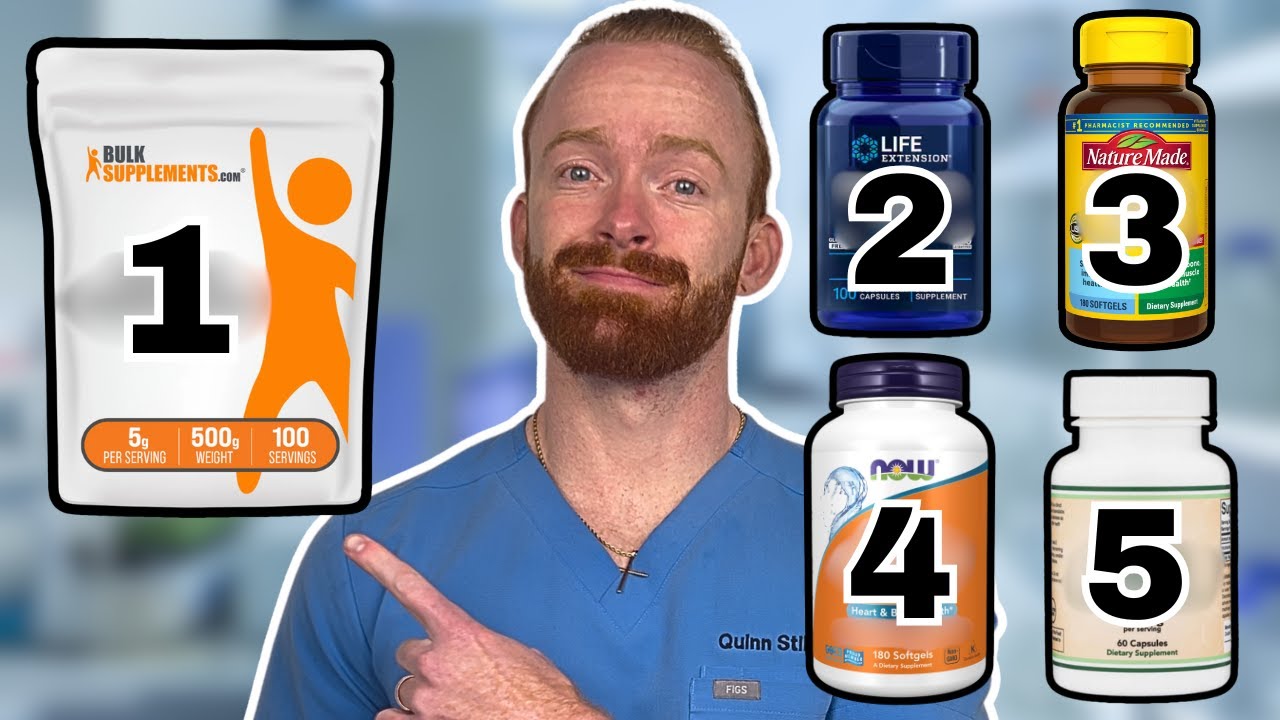
I’m Taking THESE 5 Supplements for Longevity, Performance, and Overall Health
💊 Confused about supplements? Not sure which ones actually work or how to take them? In this video, I break down the 5 best supplements for longevity, health, and peak performance, backed by research. As a licensed medical doctor & strength coach, I’ll share the exact doses, best supplement forms, when to take them, and top brands so you can build a science-backed supplement routine that fits your budget.
🚀 TOP 5 SUPPLEMENTS YOU NEED TO KNOW ABOUT
1️) Creatine – Not just for muscle! Enhances strength, fat loss, brain function & recovery. (Best form? Monohydrate vs. HCl?)
2️) Magnesium – Critical for muscle recovery, sleep, insulin sensitivity, & heart health. (Are you one of the 80% of people deficient? Best form? What dose do YOU need?)
3️) Vitamin D – Essential for bone strength, immune function, & metabolic health. (Why most people need supplementation! Optimal dose and form?)
4️) and 5) Watch until the end out which 2 supplements are EASILY the top 2 supplements you should be taking – and also what doses, forms, timing, and brands are best!
🔥 Timestamps
00:00 Intro – Importance of a Detailed Supplement Plan
00:36 #5 – Best Supplement for Strength, Muscle Mass, and Brain Health
03:06 #4 – Most Versatile Supplement
06:15 #3 –You Have Suboptimal Levels of this Supplement
09:03 #2 – Most Underrated Supplement
12:08 #1 – The King: Heart, Muscle, AND Brain Health!
14:24 Total Cost and Plan Comparison to All-In-One Supplements
📢 Got questions? Drop them in the comments! What supplements do YOU take daily? What’s your favorite brand for these supplements? Let’s discuss!
🔔 Subscribe for more science-backed health & fitness tips!
⚕️ Medical Disclaimer:
This video is for educational and informational purposes only. It is not medical advice, nor does it establish a doctor-patient relationship. Always consult a qualified healthcare professional before making any medical decisions, including starting or stopping medications. The information presented here is based on my professional knowledge and interpretation of the available evidence at the time of recording.
#Supplements #Longevity #Performance #Creatine #Magnesium #VitaminD #Fiber #Omega3 #HealthOptimization
feeling overwhelmed by a sea of supplements and unsure on which ones actually work and are you also unsure on the doses the forms or the brands to actually trust well as a licensed medical doctor and certified strength and conditioning coach I’m here to cut through all the clutter in the supplement industry and give you the top five most effective and most studied supplements that actually work for overall health and performance and we’re getting super practical we’re talking doses timing Brands cost all of this to give you an actual plan and an actual daily supplement routine that will add years to your life and give you Peak Performance today coming in at number five for our top five supplements that everyone should probably be taking is creatine and creatine is mostly known for its ability to increase muscle mass and increase muscle strength it can increase your muscle mass in only a few months by about 4 pounds and it can increase your muscle strength by up to 10 lbs for upper body strength and 25 lb for lower body strength and creatine does this by increasing h TP or energy production within muscle cells and it also does this by bringing more water into muscle cells which increases muscle synthesis however creatine also works in the brain and again by that increased ATP production it also will improve memory improve attention and improve just overall cognitive function and it also acts as an antioxidant in the brain which will lower your risk for dementia and other causes of brain decline when supplementing with creatine there’s two main forms creatine monohydrate and creatine HCL creatine HCL on average is almost double the price of creatine monohydrate but is it worth that high price tag well probably not in the studies creatine HCL does dissolve more in water however it’s not substantially absorbed more and when they do head-to-head studies comparing the two creatine monohydrate is just as good as creatine HCL and it’s much more studied in general so I would stick with that form especially given the lower price tags for the dose that you want this is a very well studied supplement with a consistent dosing and you want 5 G per day as a maintenance but for a loading phase to get to the max effect of creatine faster you want to do five grams four times a day for a week and then go into that maintenance phase as far as when you should take creatine the timing actually doesn’t matter too much they’ve done studies on pre-exercise and post exercise and truly based on those results it doesn’t really matter so I would pick a convenient time for you and stick with that and finally what brand of creatine should we be using well for the rest of this video for all five sub ments we’re going to analyze Brands based on multiple factors cost rigorous in-house testing rigorous thirdparty testing Purity and bioavailability and after doing that analysis for creatine I’ve come up with the thorn brand of creatine monohydrate as the best brand to purchase for creatine it is a super pure supplement it’s rigorously thirdparty tested and you know you’re going to get an effective result from taking this supplement even though it might be a little bit more expensive than some other budget options I think it’s worth the price tag and for 180 service vings of 5 G servings it’s going to run you $72 and that is 40 per serving or per day coming in at number four is magnesium and magnesium is super involved in over 300 enzymatic processes within the body making it super important for Optimal Performance and Longevity specifically it’s highly involved in muscle contraction and relaxation meaning higher magnesium levels are more correlated with higher strength and higher muscle mass magnesium is also very important for insulin sensitivity and and blood sugar regulation meaning that higher magnesium levels are correlated with a lower risk for diabetes it’s also heavily used in the brain meaning that there are multiple studies on its benefits for sleep and overall relaxation and finally magnesium is also very important for cardiovascular disease prevention and osteoporosis prevention with multiple studies demonstrating a higher level of magnesium being associated with less risk for cardiovascular disease and a higher bone mineral density so because it has all of these positive effects it’s very important that we maintain Ain optimal levels of magnesium and it’s very difficult to get to Optimal levels with our diet alone it’s estimated that up to 80% of Americans could be suboptimal on their magnesium levels so it’s very important that we supplement with magnesium when we do the form does matter the form I want you to go with for overall health and performance is a keel form or magnesium glycinate or bisglycinate studies show that these forms are much higher absorbed and therefore will raise your magnesium levels higher and give you all those positive effects we just talked about compared to a non-chelated magnesium oxide or magnesium citrate I generally use for better bowel movements as they’re less absorbed and pull more water into the intestines and I also use magnesium 3 andate if I want to focus solely on sleep or cognitive effects but for overall health stick with that glycinate or bisglycinate form as far as dose goes ideally you’d measure your storage form of magnesium or the red blood cell magnesium and get it above 5.8 however if this is unobtainable to you what you should do instead is think about three main factors that will influence how much magnesium you should take one how stressed is your mind and body currently two how active of a lifestyle do you live and three how insulin resistant are you these three things highly correlate with how much we’re going to burn through magnesium so if you’re someone who is highly stressed you’re a little insulin resistant and you live a very active lifestyle you should be taking an upper range of magnesium supplementation or about 500 milligrams of magnesium glycinate however if you’re someone who doesn’t exercise that much you don’t have a very stressful life and you’re not insulin resistant then you can go for a more lower range of magnesium supplementation or about 250 Mig of magnesium glycinate as far as timing goes I would split your dose up two times throughout the day I would take one dose before you exercise to give you Peak muscle contraction and relaxation during that exercise and then I would take the second half of your dose before sleep as it will probably improve your Sleep Quality slightly and as far as a brand for magnesium glycinate after doing that analysis I like pure encapsulations it’s a great thirdparty tested brand that’s about mid-range cost so for $1 servings of 120 mg of magnesium glycinate that’s going to run you $446 which is about 25 c a serving so for our total calculation we’ll say you’re going to be taking three of those or 360 milligram and that would be 75 cents a day on your magnesium supplementation coming in at number three is vitamin D and the reason it’s so important to supplement with vitamin D is very similar to the reasons for magnesium it’s involved in a ton of processes within the body and two you’re almost certainly going to be insufficient in it 40% of Americans have a level of less than 20 which is classified as deficient but then 70% of Americans have a level of less than 30 which is classified as insufficient and I believe based on other studies that an optimal range for vitamin D is closer to 40 or even 60 so you’d imagine that at least probably 90% of Americans are below this range and will need Vitamin D supplementation to get to that optimal level but why is it important to get to that optimal level well a higher level of vitamin D is associated with much better long-term outcomes of health and performance first of all higher V vitamin D levels are again associated with higher bone mineral density and lower vitamin D levels are associated with higher risk for cardiovascular disease and for higher risk for metabolic syndrome also vitamin D is super important for immune system regulation and for mood regulation and inhibiting depression or cognitive decline and finally just like magnesium vitamin D is also very important for muscular health and strength as well there are many forms of vitamin D but vitamin D3 is the one that generally raises your levels the most for for the general population there are also though many forms of vitamin D3 the two forms to talk about here are an oil-based form the more traditional and two the liposomal form the liposomal form does have some studies proving that it’s better absorbed and can reach higher Peak concentrations however it’s 5 to 10 times more expensive so I would stick with an oil-based traditional form because you’re going to be able to get a higher dose at a lower price tag that will probably get you to the level that you need however if you have absorption problems AKA you have some gut issues then a liposomal form might be better for you so that you can ensure that you’re more likely absorbing it as far as dose goes again ideally you would measure your vitamin D level and try to get it above 40 I even like to see it above 60 however if this is unattainable Studies have shown that you’re going to need at least 2,000 to 5,000 IUS per day to get to that optimal level I like to generally shoot for 4,000 per day with patients initially so I find this generally gets them above that 60 nanog per milliliter level and I think a lot of studies back this up as far as timing goes I would take your vitamin D with meals because the fat in the meals will help it be better absorbed and as far as brands for vitamin D goes I like to stick with pure encapsulations here they have a great 4,000 IU vitamin D3 along with 100 micrograms of vitamin K2 for basically no additional cost and that’s a great amount of vitamin K2 and basically what that’s going to do is inhibit calcium from going to blood vessels and instead it’s going to take that calcium to the Bone and for this vitamin D3 with K2 that’s going to run you $33.60 for1 20 servings or about 28 cents per day for your vitamin D supplementation coming in at number two is a supplement that should be way more sexy than it is and that is fiber and the reason is is that fiber has crazy effects seen in the literature one high intakes of fiber are shown to lower cardiovascular disease risk and Stroke by about 20% two it will also lower risk for color rectal cancer and three for every 10 G increase in dietary fiber you’re going to get an 11% decrease in all causes of death and all these positive effects are driven by fiber’s ability to regulate the gut and promote lower gut inflammation and therefore total body inflammation and also its ability to lower cholesterol and better regulate blood sugar and when we’re talking about supplementing with fiber we have to break it down into two main types there’s insoluble fiber or basically fiber that increases the bulk of your stool it’s basically going to allow you to have regular bowel movements and this is super important to get in your diet however the second form of fiber is the one I want you to supplement with and that’s soluble fiber soluble fiber is called that because it dissolves in water and when it does so it creates a gel-like substance that sits in the intestine and inhibits cholesterol from being reabsorbed it also slows down carbs from being absorbed which basically lowers glucose spikes after eating also soluble fiber is food for the microbiome those good bacteria in your gut when the microbiome eats this soluble fiber which better help regulate the gut lower gut inflammation Etc a specific form of soluble fiber that is very well studied is partially hydrolized guar gum and in studies it’s been proven to improve gut microbiome it’s been proven to lower fasting glucose and improve insulin sensitivity and it along with other soluble fibers has been shown to decrease your LDL or that bad cholesterol by about five points for every increase of 5 gr that you take in so how much of this soluble fiber or guar gum should we take well in general the amount of fiber that you need is dependent on age and sex with the Dietary Reference intakes being the highest for men and younger ages however I like to say for males you need about 40 G per day and for females you need about 30 G per day and it’s unlikely that in a standard diet you’re going to get this amount so that’s where we need to supplement and specifically we need to supplement with that soluble fiber how much of that should we supplement with though I say we supplement with about 10 G of that reason being is there’s studies that show that supplementing with 10 G of Prebiotic fiber which that gu gum would be is going to really improve your microbiome and a high dose such as that is really going to help our cholesterol and blood sugar regulation ideally you’re going to spread that 10 gram amongst your two biggest meals for the day reason being is it’s going to help with blood sugar regulation the best because if you have it with a meal it will slow down how fast you absorb the carbs from that meal also spreading it out throughout the day will help its ability to regulate your cholesterol as well and you’re still going to get those positive microbiome effects as well as far as a brand goes I think definitely stick with sunfiber here which is the trademarked partially hydrolized guar gum and it’s going to run you about $65 for 90 servings with each serving being about 7 G so to get that 10 g a day you’re looking at about A1 and3 cents per day and coming in at number one the best supplement to be taking for Optimal Health and performance is omega-3 and if you’ve been on this channel before you’ve probably seen that I have a long video on Omega-3s covering any question that you might have about the topic however we’ll give you a quick rund down here basically Omega-3s improve cell membrane fluidity decrease inflammation and decrease triglyceride and through these effects it has major major positive long-term Health outcomes we’re talking a 35% lower cardiovascular disease risk if supplemented correctly we’re talking improved muscle recovery and decreased fatigue we’re talking decreased dementia risk improvements in cognition decreased depression and anxiety and the list kind of goes on and on when you’re supplementing with an omega-3 I would stick with a fish oil versus AC Krill and algae unless you’re doing it for sustainability purposes the fish oil is generally going to have a higher amount of the Omega-3s you actually want in it or those EPA and dhas and for fish oil specifically you want a triglyceride form not the ethyl Ester form the triglyceride form is better absorbed it’s much less likely to oxidize it’s much less likely to have contaminants in it it’s just overall the only way to go here and what about the dose well again ideally you’d be able to measure this and you can actually get your omega-3 index and you’d want it to be above 8% however if you’re not able to do this to get above 8% generally you’re going to need about or a little bit more more than 2 G of EPA plus DHA and most studies on the positive effects of Omega-3s have the subjects taking over 2 G of EPA plus DHA as well and the ratio of EPA to DHA also matters for overall health and performance I say stick to about a 1:1 to 2:1 ratio of EPA to DHA if you want more cognitive effects I would increase the DHA and if you want more anti-inflammatory effects I would increase the EPA timing wise it’s generally best to take these Omega-3s with meals because the fat will again help with absorption and finally the brand for Omega-3s that I love is orthomolecular their Ortho Omega 820 has 820 Mig of EPA and DHA per Soft gel and for 120 of those it’s going to run you about $65 so to get to over two G you’re going to need to take three of those for 2,460 mg of EPA and DHA and that’s going to run you about 162 per day so if you use this exact supplement routine you’re going to be spending $48 a day to add years to your life and improve your Peak Performance today and this compared to an ag1 or an im8 an all-in-one daily supplement that is 330 per day and has none of these ingredients at correct doses or just doesn’t include them at all despite them being the top five supplements to include in your supplement routine and if you want to learn about more supplements that might benefit you check out all the supplement reviews in this playlist