




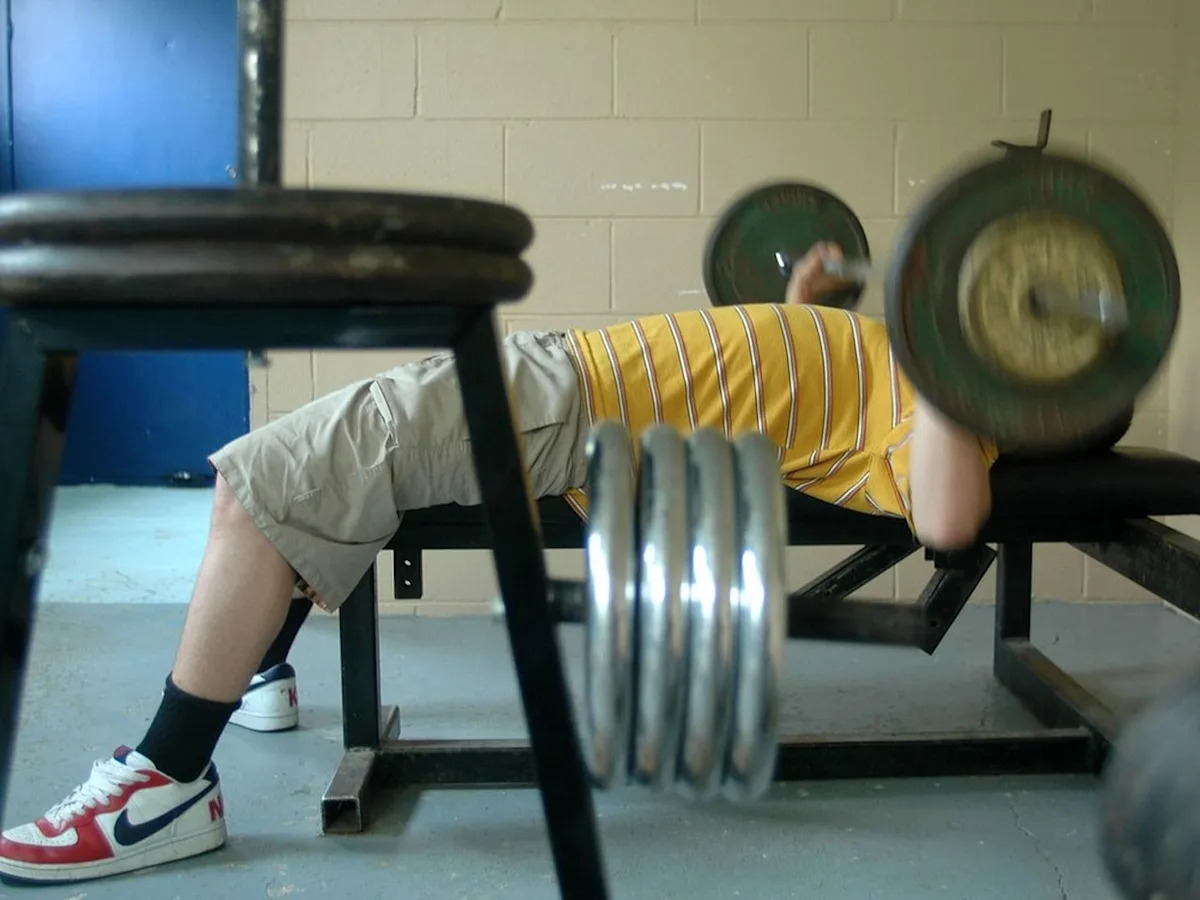
Budgeting time to exercise in a schedule already packed with work, family and social commitments isn’t easy. And those who do manage to get in the recommended 150 minutes of moderate to vigorous intensity aerobic activity a week, often struggle to accomplish the additional two strength training workouts per week that are part of a healthy exercise prescription.
But the benefits of strength training are too important to ignore. Improvements in strength, speed and power are well-documented. So, too, are the many health and wellness benefits, including building strong bones, slowing the natural loss of muscle that occurs with age and reducing the risk of several chronic diseases.
But what if it didn’t take as long as once thought to build muscular strength, size and endurance. Would more people make the effort to hit the gym twice a week if they could get in and out in less than an hour?
Citing statistics suggesting a lack of time is a primary barrier to exercise adherence, a study out of CUNY Lehman College in New York investigated the effectiveness of single-set training on muscular fitness. Different from more traditional strength-training programs that utilize multiple sets of a single exercise to build strength, single-set training is based on one set of repetitions per exercise. So rather than performing 2-3 sets of 6-12 repetitions of squats, for example, single-set training allows the exerciser to perform one set, or just 6-12 repetitions of squats — effectively reducing the time it takes to train a single muscle by at least half.
This isn’t a new type of workout, or is it the first time researchers have tested the efficacy of single-set training. But most of the past studies were based on the exerciser reaching muscular failure, the point where no further repetitions can be performed by the end of the set.
“This can be problematic for some individuals as reaching failure causes high levels of perceived discomfort and negative post-exercise feelings, which may be a deterrent to long-term exercise adherence,” the researchers said.
The goal of the Lehman College research team was to investigate whether training to failure was a necessary requirement to achieving results using one set per exercise.
Back in the day, training to failure was considered essential to achieving strength gains. But in the last few years, numerous studies have reported ending a set one or two reps short of failure doesn’t comprise results. But all of those studies were done using a methodology of multiple sets per exercise. This is the first study to explore whether single-set workouts can also be effective without training to failure.
To test the theory, the researchers divided exercisers already familiar with weight training into two groups. Both performed the same single-set, 8-12 reps per set, upper and lower body workout, twice a week on non-consecutive days for eight weeks. The only difference between the two groups is that one lifted to failure and the other stopped one or two reps short of their ability to perform another rep in good form.
The results demonstrated little difference in the gains achieved by both groups. There were some slight variations, including a marginally greater increase by the multiple-set group in the size of the quads and triceps, but there was little to differentiate between the two groups when it came to improvements in muscle strength and muscular endurance.
“Improvements in measures of strength and local muscular endurance appear to be independent of proximity-to-failure,” the researchers said. “Thus, trainees can realize beneficial effects from time-efficient routines with less discomfort than believed.”
Also interesting to note is the study subjects were university age and were already strength training at least three times a week and had been for the last year or longer. So, they weren’t novices, or de-conditioned. This makes the results even more impressive than if they were achieved by older and/or less fit individuals, who tend to realize greater improvements because of their lower baseline level of strength.
These findings are important for the time-crunched. They also help athletes, who already spend several hours a week working on aerobic conditioning or sport specific training, streamline their strength training workouts without compromising overall results. The duration of the weight-training sessions in the study was 30 minutes (9 exercises, 8-12 reps per exercise with two minutes rest between exercises).
Single-set training is also an easy adaptation for those with less experience in the weight room. It’s nice to know you can get stronger, add muscle and benefit from greater muscular endurance without suffering through those last couple of agonizing repetitions.
That doesn’t mean those locked into their traditional multi-set routine need abandon what works for them. Instead, it should be seen as an option on days when a 30-minute workout is a better fit with your schedule, or on low-energy days when performing fewer overall repetitions feels better — especially knowing you aren’t compromising gains you’ve already made.
Time is a precious commodity, so if spending less of it in the gym and more with friends, family or pursuing other interests sounds good to you, single-set training is worth a try.
Related