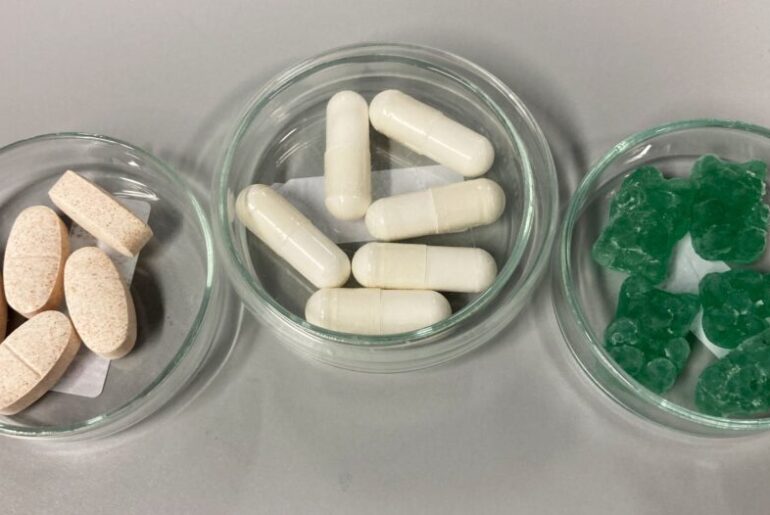
 Excessive hair fall often stems from hidden nutritional deficiencies, not just stress. Doctors highlight iron, vitamin D, and B12 as key culprits, explaining the body prioritizes vital organs over hair growth when nutrients are scarce. Early blood tests are crucial for diagnosis and effective treatment, preventing more serious health issues. Hair fall gets blamed on long workdays, poor sleep, or emotional strain. It feels like an easy explanation. But doctors say that the real reason may sit deeper, often inside the body, and it usually goes unnoticed for months.As Dr Deepashree R explains, “The first thing people associate hair fall with is stress, but in clinical practice, we frequently see underlying nutritional deficiencies as a key, yet an overlooked cause.”This is where the conversation shifts. Hair loss may not always be about what is happening outside, but what is missing within.
When hair fall is more than “just shedding”
Hair sheds naturally. Losing 50-100 strands a day is considered normal. But something changes when the pattern shifts.It starts subtly. The ponytail feels thinner. The parting looks wider. Strands appear on the pillow more often than before. These are not dramatic signs, yet they carry meaning.According to Dr Deepashree R, “When patients report increased hair shedding, thinning, or loss of hair volume, it can be an early warning sign of deficiencies such as iron, vitamin D, vitamin B12, and even protein.”The body rarely raises alarms loudly. It whispers first.
Iron deficiency: The most ignored trigger
Among all causes, iron deficiency stands out. It is especially common in women, yet often missed until it becomes severe. Iron helps carry oxygen in the blood. Without enough of it, hair roots do not get the support they need to grow. The result is slow regrowth and more shedding.A report published in the NIH has highlighted how iron deficiency anaemia remains widespread in India, particularly among women of reproductive age. Hair fall is often one of its earliest visible signs.Dr Deepashree notes, “Iron deficiency can be considered the main reason for hair fall… as it interferes with the process of hair growth.”The concern is simple: most people treat the symptom, not the cause. 
These deficiencies weaken hair growth from within and often go unnoticed.
Vitamin gaps that quietly weaken your hair
Hair health depends on a mix of nutrients, not just one.Vitamin D helps maintain healthy hair folliclesVitamin B12 supports blood flow to the scalpProtein builds the structure of hair itselfWhen any of these fall short, the body adjusts. But hair pays the price.As explained by Dr Deepashree R, “Vitamin D deficiency makes hair follicles weaker, and vitamin B12 deficiency affects blood flow to the scalp, depriving hair follicles of the required nutrients.”A study supported by the World Health Organization has also noted widespread vitamin deficiencies across populations, especially in urban settings where sunlight exposure and diet quality are inconsistent.Hair becomes an early casualty of these silent gaps.
Why the body chooses survival over hair
There is a reason hair suffers first. Hair is not essential for survival. The body knows this. So when nutrients are limited, it redirects them to vital organs like the brain, heart, and lungs.Dr Deepashree explains it clearly: “Hair is a non-essential tissue for the body, so when there is a lack of vital nutrients, the body prioritises essential organs over hair growth.”This leads to a longer resting phase for hair follicles. Growth slows down. Shedding increases. It is not damage. It is the body trying to cope.
The danger of waiting too long
Many people ignore early signs. They switch shampoos, try home remedies, or wait for the problem to pass. But deficiency-related hair loss does not correct itself.“Hair loss from deficiencies is relatively harder to treat because it does not go away by itself; instead, it continues to progress if left unchecked,” says Dr. Deepashree R.What starts as hair fall may later reveal deeper issues like anaemia, thyroid imbalance, or hormonal disturbances. The turning point is simple: early testing.Blood tests can identify deficiencies quickly. With the right diet or supplements, recovery is not just possible, it is often complete. 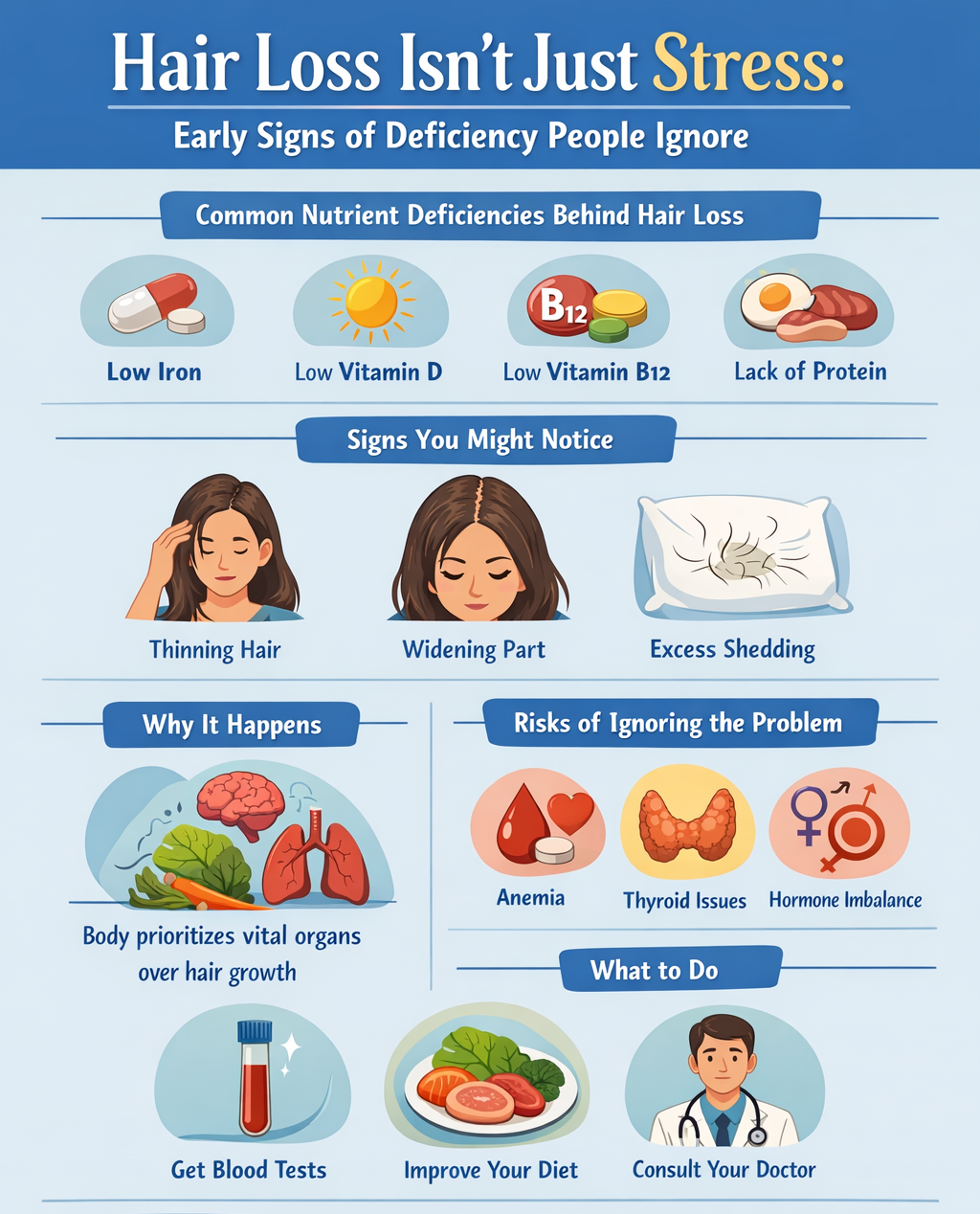
Early diagnosis through blood tests and proper treatment can reverse the condition effectively.
What should actually be done
There is a tendency to act quickly but not wisely. Hair products promise results, but they rarely address internal causes.Doctors recommend a more grounded approach:Check nutrient levels through basic blood testsImprove diet with iron-rich foods, protein, and vitaminsAvoid self-diagnosing or random supplementationSeek medical advice if shedding feels unusualAs Dr Deepashree puts it, “If hair loss is detected at any unusual stage, consulting your doctor should be the first thing you consider doing.”Hair fall is not always cosmetic. Sometimes, it is clinical.Medical experts consultedThis article includes expert inputs shared with TOI Health by:Dr Deepashree R, Attending Consultant Dermatologist, KIMS Hospitals (Krishna Institute of Medical Sciences), Mahadevpura, Bengaluru.Inputs were used to explain why excessive hair loss may not always be due to stress, highlight early signs of underlying nutrient deficiencies, and emphasise the need for timely evaluation and appropriate treatment.