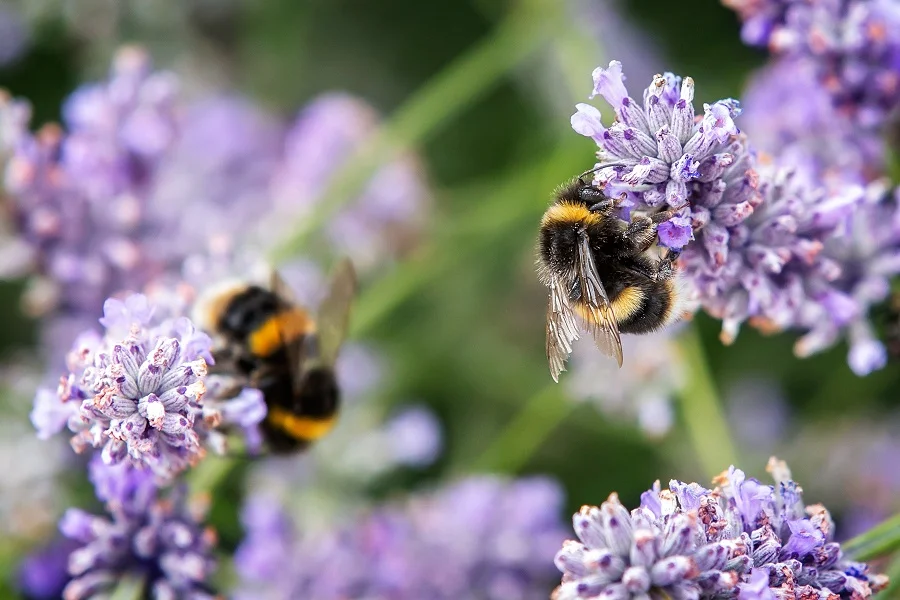
By mapping the gut microbiome of wild bumblebees, food scientists have discovered a particular bacteria strain Lactococcus lactis NFICC2835 that can be used for both fermentation and increasing vitamin B2 (riboflavin) in soy beverages.
They found that L. lactis NFICC2835 produces up to 1.23 mg/L of riboflavin in soy drinks, even in those already containing added vitamin B2, demonstrating “robust and stable production.”
“L. lactis is widely recognized as safe and commonly used in food fermentation,” study author Hang Xiao, a postdoctoral researcher from the DTU National Food Institute, Ireland, tells Nutrition Insight.
“However, because the strain in this study originates from the bumblebee microbiome, it may require strain-specific safety assessment (e.g., virulence factors, antimicrobial resistance, and toxin production) in line with European Food Safety Authority guidelines before use in food production.”

He further explains that bacteria stop producing vitamin B2 once they have just enough for their own growth, which limits the natural accumulation of vitamin B2 in fermented foods. “In contrast, continuous overproduction of vitamin B2 during fermentation enables us to provide clean-label and natural fermented products while meeting dietary vitamin B2 needs.”
Droplet screening method
In the study at the DTU National Food Institute, Denmark, the researchers applied a technology known as “droplet screening.” They tested bumblebee microbes in microscopic droplets to assess their ability to produce vitamin B2.
“Unlike conventional agar plate-based methods for microbial cultivation and screening, we encapsulated the bee gut bacteria in microscopic droplets so that each droplet contained only one bacterium and acted as an enclosed culture chamber,” elaborates Xiao.
“In this way, the individual bacterium could be analyzed at ultra-high speed by using our microfluidics screening platform, enabling us to screen millions of bacterial cells within just a few hours.”
Encouraged by the success of vitamin B2 screening in this work, Xiao says the researchers are aiming to apply this ultra-fast droplet platform to tackle other key nutritional challenges, such as vitamins and amino acids, which are lacking in plant-based foods but essential to human health.
Rapid screening of microbial communities
The study published in LWT – Food Science and Technology addresses a problem common to many plant-based dairy alternatives. Typically containing fewer vitamins and minerals than cow’s milk, plant milks commonly lack vitamin B2.
 L. lactis NFICC2835 produces up to 1.23 mg/L of riboflavin in soy drinks, even in those already containing added vitamin B2.The researchers set out to identify bacteria that could both thrive in soy drinks and produce vitamin B2 themselves during fermentation.
“Bumblebees live close to plants, and their guts contain many microorganisms that are already adapted to plant-based environments. That is why it was interesting for us to test whether we could find bacteria in bumblebees capable of producing vitamin B2 in soy drinks,” explains Xiao.
Study author and associate professor Claus Heiner Bang-Berthelsen from the DTU National Food Institute says the research method demonstrates the possibility of screening entire microbial communities directly and rapidly.
In this way, he notes promising bacteria can be identified from environmental samples without prior isolation and analysis of individual bacteria. “This can make the development of new starter cultures faster and more targeted.”
Clarifying soy sediment
Ordinary soy drinks are often cloudy and full of particles, which can interfere with measurements, note the authors. To make droplet screening compatible with soy-based drinks, they developed a highly transparent soy medium.
“By making the soy liquid transparent, we were able to both screen the bacteria in an environment resembling their future application and, at the same time, obtain more stable droplets and more precise measurements,” says Bang-Berthelsen.
The bacteria were first exposed to roseoflavin, a substance structurally like riboflavin that can promote the growth of the bacteria best suited to producing vitamin B2. The researchers then selected the droplets that glowed the brightest, as high fluorescence indicates high vitamin B2 production.
“This droplet-based microbial screening approach saved months of work and significantly reduced the resource use compared with conventional screening methods,” says Bang-Berthelsen.
Among the bacteria identified, L. lactis NFICC2835 proved particularly interesting. When the researchers tested the bacterium in real plant-based products, it proved especially effective in soy drinks.
“The results suggest that the bacterium works not only under laboratory conditions, but also in actual foods containing a significant amount of protein,” adds Xiao.
Hungry bacteria
The scientists also discovered that the bacterium was capable of utilizing many different types of sugar. This makes it a potential candidate for use as a starter culture in plant-based fermentation processes, as it is not restricted to a single, narrow substrate.
It generally did not perform as well in rice and oat beverages, as well as in some almond drinks, which the researchers suggest is due to their low protein content. They interpret that the bacterium requires a certain level of fermentable protein to grow well and produce vitamin B2 effectively.
“The exciting thing about the method is that it can not only identify vitamin B2-producing bacteria in soy drinks. It can also be adapted to identify other interesting substances, provided they can be detected using fluorescence. However, the method only works if the medium is transparent and has a low fluorescence background,” says Xiao.
Fortification moves forward
A recent landmark study estimated that food fortification currently prevents seven billion nutrient gaps globally at a cost of US$0.18 per person. The practice is deemed a cost-effective approach, with a return on investment of US$27 per dollar for health and productivity, according to the report authors.
In other recent advances, Particles for Humanity published research supporting the high stability of its proprietary vitamin A palmitate, which has been a long-running challenge for fortification programs. Fortifying foods with the essential eye health nutrient has been historically challenging due to its instability.
Bioengineering nutritious crops, incorporating antioxidant-rich species, is another high potential research area, particularly in outer space missions where astronauts generally have a higher risk of deficiencies in calcium, iron, magnesium, and vitamins D, C, E, and B12.