This article was made possible by the support of Yakult and produced independently by Scientific American’s board of editors.
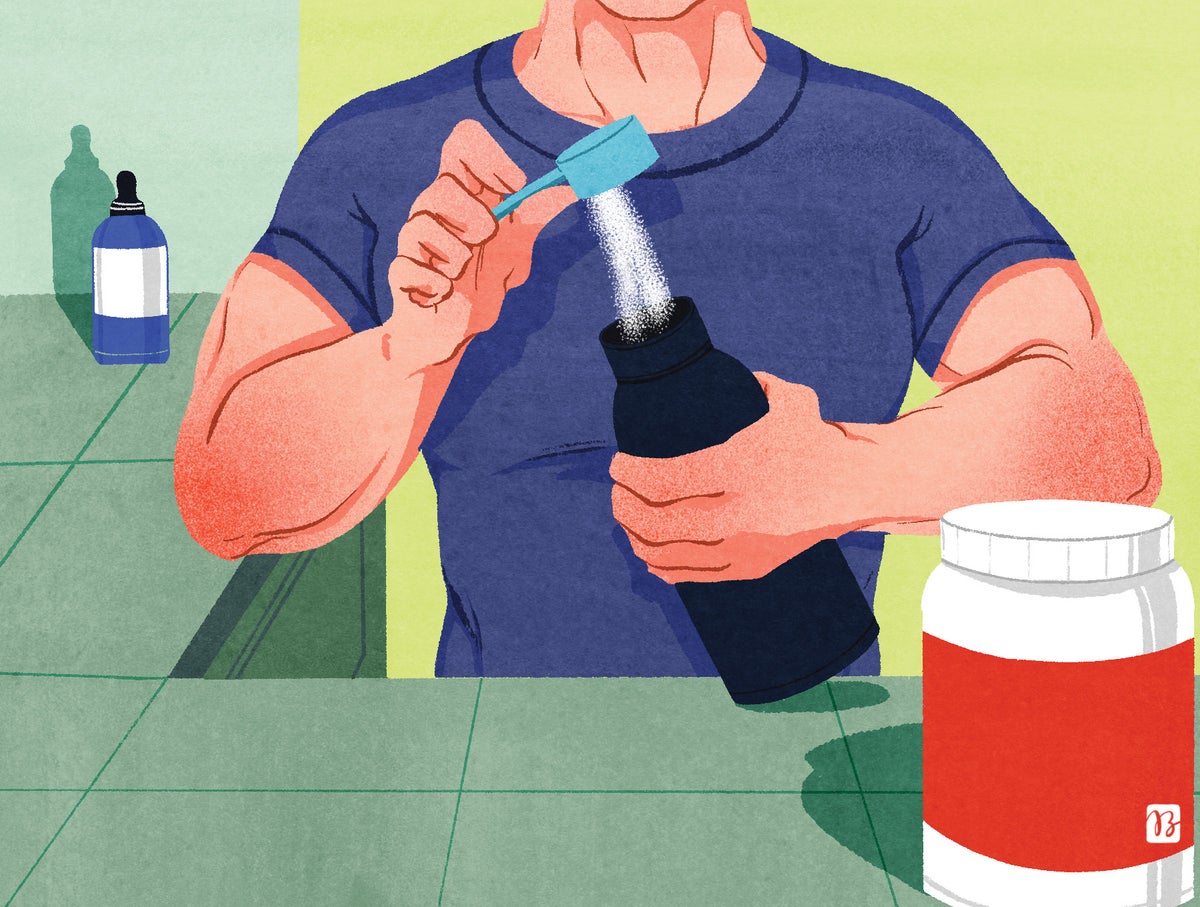
My husband, a fitness fanatic, drinks powdered creatine mixed in water every day. “There’s good evidence it helps to build muscle,” he tells me. I took up strength training two years ago, so I’m interested. But I’m also a science journalist, and I’m suspicious of claims about supplements, especially social media favorites such as creatine. Lots of supplement tests are poorly done, and the pills and powders are not held to the same standards as government-approved medications. I wondered what evidence Mark, my generally sharp-minded husband, was talking about.
It can be hard to separate fact from fiction in the torrent of information found online. “Some of the pseudoscience producers are very good at what they do,” says Joe Schwarcz, professor of chemistry and director of the Office for Science and Society at McGill University. “They have learned to cloak themselves in the garb of science. They can sound very seductive, and they’re very adept at misleading people and selling them stuff that nobody really needs.” Right now, for instance, creatine is frequently mentioned along with methylene blue, a synthetic dye that—social influencers claim—boosts cognition and slows aging. It also turns your tongue blue.
On supporting science journalism
If you’re enjoying this article, consider supporting our award-winning journalism by subscribing. By purchasing a subscription you are helping to ensure the future of impactful stories about the discoveries and ideas shaping our world today.
For creatine by itself, it’s very likely that Mark is right and not being misled. Creatine is a naturally occurring compound in the body made of amino acids that helps to maintain energy in our cells. It is “like a backup battery” to adenosine triphosphate (ATP), the foundational energy source in every human cell, says exercise physiologist and nutrition researcher Richard Kreider of Texas A&M University. Even at rest, cells consume ATP, and they need more of it when they become more active. Creatine in cells is transformed into another molecule, phosphocreatine, and this compound is what acts to replenish ATP levels. “Creatine generates ATP very, very quickly,” Schwarcz says. That is especially useful for explosive, demanding movements such as those of high-performance athletes.
There are decades’ worth of studies showing that creatine supplementation builds strength and power. This research includes randomized controlled trials, the scientific gold standard for tying a particular cause to a specific effect. According to the International Society of Sports Nutrition, taking creatine increases the amount of phosphocreatine in the muscles and can improve performance. It may also help with recovery, injury prevention and rehabilitation.
More recent research suggests creatine might also be useful for nonathletes, although the benefits are clearer when us regular folks do strength training. Some studies have found benefits from creatine as a supplement for aging adults. It could help older people maintain muscle mass, Kreider says, and “keeping people with more muscle and stronger as they age is extremely important for longevity.” And Schwarcz says a few trials have linked creatine to improvement in cognition. Creatine might limit the harm from ischemia—low blood flow that can reduce the oxygen supply in a critical organ such as your heart or brain—although not all studies show the same positive effects. “If I don’t have enough oxygen in the brain or heart or tissues, that extra phosphocreatine provides a reserve, so I don’t have as much damage from a concussion or from a stroke,” Kreider says.
The body produces about half of the creatine we need every day. The rest comes from food such as red meat and seafood—or from supplements. Creatine powder is highly bioavailable: when ingested, its active ingredients reach the relevant cells ready for use. (Various other kinds of supplements reach cells only in low quantities.) Many people take two to five grams per day. For athletes, Kreider says the dose depends on age and weight and can be as much as 10 grams.
Even with all this good evidence of creatine’s benefits, the Internet still gets some things wrong about it. Despite all the product types marketed out there, only one kind of creatine has been proved effective: powdered, pure creatine monohydrate. Claims for any other type have not been verified by research studies. There’s also some negativity to dispel. Anecdotal reports of bad side effects from creatine, such as muscle cramping, have circulated around social media. But a review of 685 clinical trials involving 26,000 people found no significant increased risk of them.
Methylene blue, however, is “a totally different kettle of fish,” Schwarcz says. It has a long history, but there is not yet good evidence that it is a cognitive aid to the average person. “There are no compelling human clinical trials that have shown any benefit,” he notes.
One of the first synthetic dyes, methylene blue has been around since the 1870s. Early researchers discovered that it killed off malaria-causing parasites in people, so it is sometimes used in place of quinine. The dye is also a recognized treatment for methemoglobinemia, a rare blood disorder usually caused by an ingested drug or toxin.
The idea that the blue dye can boost brainpower comes from preliminary studies on methylene blue as a treatment for Alzheimer’s disease; this research is based on the theory that the dye might combine with the tau proteins that are implicated in that disease. But most of that work is in animals, and the few studies of people are very small and show only tiny effects.
It’s still possible methylene blue could be beneficial, but there is no proof yet, experts say. “It’s quite interesting, but there’s not enough there,” Kreider says. Plus, it poses significant risks of side effects to anyone who takes antidepressants or certain other psychiatric medications.
I told Mark he was right about creatine as far as I—and science—could tell. And he graciously didn’t gloat as he mixed more powder into a glass. But if I see any signs of blue on his tongue, it had better be the color of his mouthwash and nothing else.