




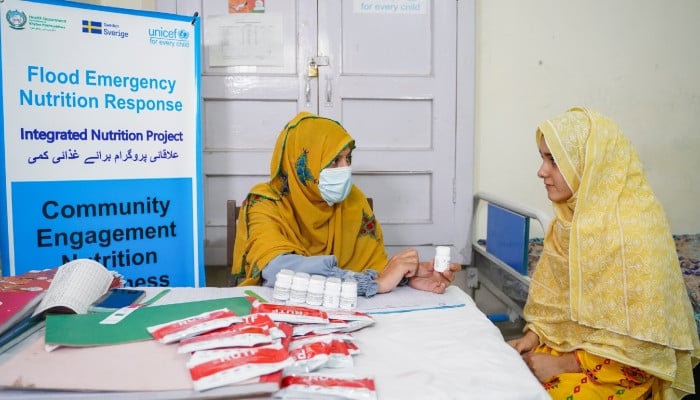
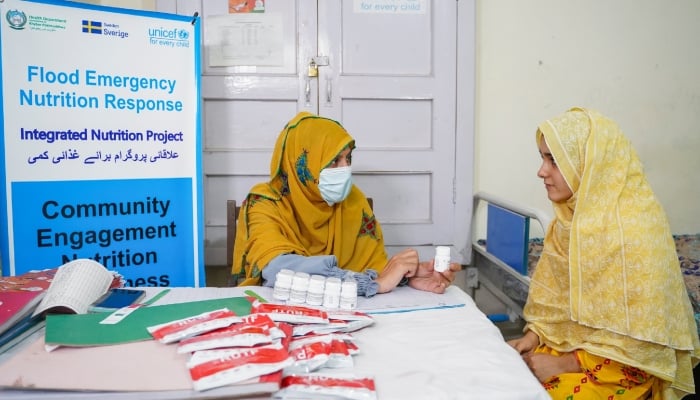
A nutrition assistant guiding a girl about multivitamin pills. —Facebook@unicefpakistan/File
PESHAWAR: A project titled “Building Resilience to Improve Nutrition Status in Suburban Areas, Khyber Pakhtunkhwa, Peshawar” is transforming the way communities approach food security.
Implemented by SABAWON with technical support from Welthungerhilfe (WHH) and financial backing from the German Federal Ministry for Economic Cooperation and Development (BMZ), the initiative is targeting semi-urban populations that often fall between rural and urban policy priorities.
Operating in Khazana and Gulbela union councils, the project covers seven village councils where residents face a dual burden, limited agricultural productivity, and rising food costs. Households are now able to access a wider variety of foods for longer periods throughout the year, while knowledge of nutrition and hygiene practices has increased.
In a country where food production remains a backbone of the economy, millions of households continue to struggle with access to nutritious and affordable diets.Pakistan’s ongoing battle with malnutrition and food insecurity has once again been highlighted by global indicators, but a community-driven initiative in Peshawar is offering a practical and hopeful solution. These challenges have historically resulted in poor dietary diversity, inadequate nutrition awareness, and heavy dependence on market-based food supplies.
Pakistan continues to rank among countries facing serious hunger levels, according to the Global Hunger Index, while organizations such as UNICEF and the World Food Programme have repeatedly raised concerns about child stunting and malnutrition. Against this backdrop, the Peshawar initiative focuses not only on food production but also on ensuring access to safe, diverse, and nutritious diets at the household level.
What sets the project apart is its strong evidence-based framework. It employs internationally recognized indicators such as the Months of Adequate Household Food Provisioning (MAHFP) and the Household Dietary Diversity Score (HDDS), along with Knowledge, Attitude, and Practices (KAP) assessments related to nutrition, hygiene, and food production.
Baseline surveys conducted at the start of the project highlighted gaps in food diversity and awareness. However, follow-up assessments indicate measurable improvements.
At the core of this transformation is the introduction of simple yet innovative agricultural techniques tailored for suburban settings where land is scarce. These include rooftop kitchen gardening, hydroponic vegetable production, tunnel farming, and mushroom cultivation in straw bags.