



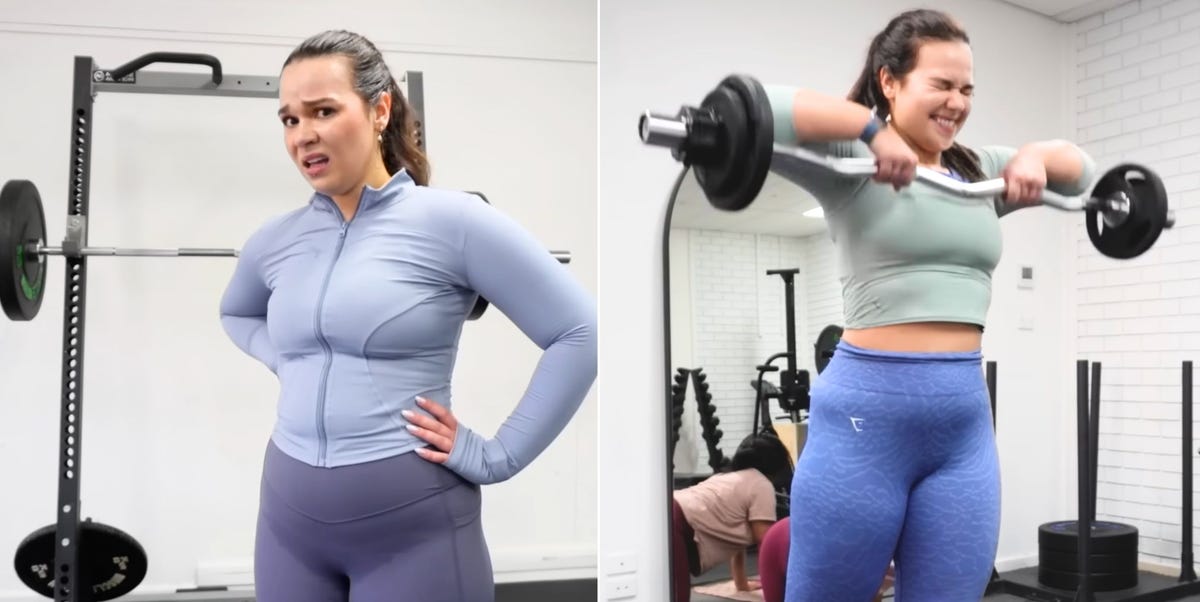
For Australian makeup artist and content creator Susie Todd, fitness hasn’t always been a constant. While she ‘got in the best shape of my life and the strongest I had ever been’ in 2020, it wasn’t until 2024 that she decided to get back into a regular routine and committed to Stronger By B’s Build programme, designed to build muscle and strength.
‘Before this challenge, I was getting up at 11am. Now, I’ve pledged to getting up at 6am to go to Stronger by B’s 6.45am gym sessions,’ she says on her YouTube video documenting her journey, in which she prioritises strength over cardio and fad diets to prove to others that it is possible to ‘achieve results without intense restrictions’.
On day one of her 30-day challenge, she says: ‘Here I am at 6am, belly out, feeling dead to the world. There is nothing wrong with my “before body”; fitness should be about feeling good, not the number on a scale.’ So, did she reach her goal and get fit in 30 days? Here’s her honest results, and everything she learned.
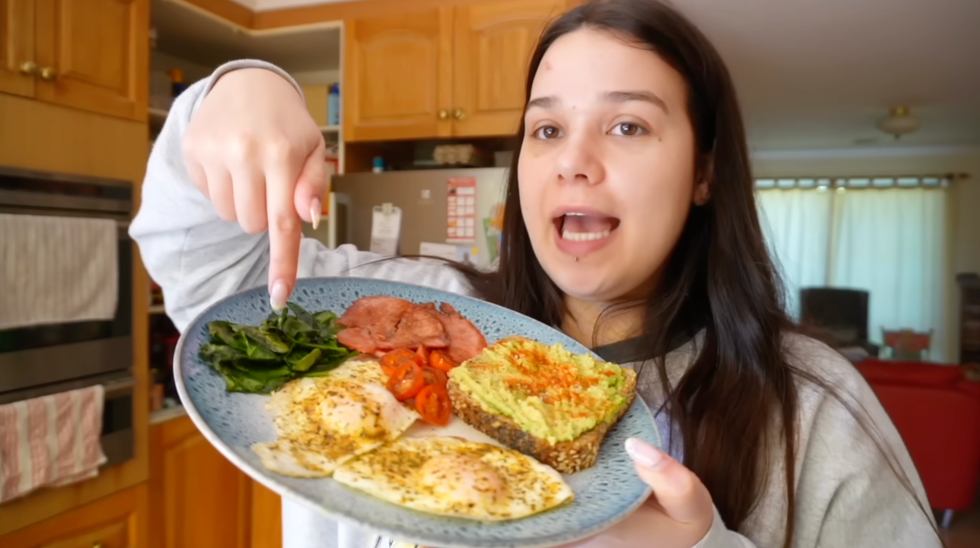
While Susie didn’t follow a diet, she did prioritise protein in order to manage her PCOS symptoms, with studies showing an increase in protein consumption can improve blood sugar control and insulin response, which reduces cravings, fatigue and fat storage – all possible side effects of PCOS. ‘I focused on having a high protein breakfast in the morning,’ Susie explained, caveating that, ‘food can be for enjoyment, it doesn’t have to just be for fuel, and this girl loves food’.
 YouTube
Susie implemented high protein breakfasts like eggs and turkey bacon
1. Early workouts feel productive – but fitting in pre-workout fuel isn’t easy
Getting up early to exercise is hard, but getting up even earlier to eat before training is harder. The bad news is that experts are unanimous: women (especially those with hormonal conditions like PCOS) should always eat before exercising in order to stabilise their blood sugars, as a small meal or snack provides your body with glucose for energy, which reduces blood sugar dips during or after your session. Blood sugar dips can cause cortisol spikes which exacerbate PCOS symptoms, as well as low energy, which is something Susie experienced firsthand when training fasted.
‘I did feel really weak today, I’m not going to lie. I’m going to try and have something to eat before I go to the gym tomorrow morning, but it’s just so hard to eat something at like 5.30am, but other than that it was a good session.’
If this is you, Adam Clarke, run coach at Purdue Performance recommends trying four rice cakes with honey and a banana, or two slices of white toast with strawberry jam + a banana before a workout. Avoid anything too high fibre, he says.
2. Strength came sooner than she thought 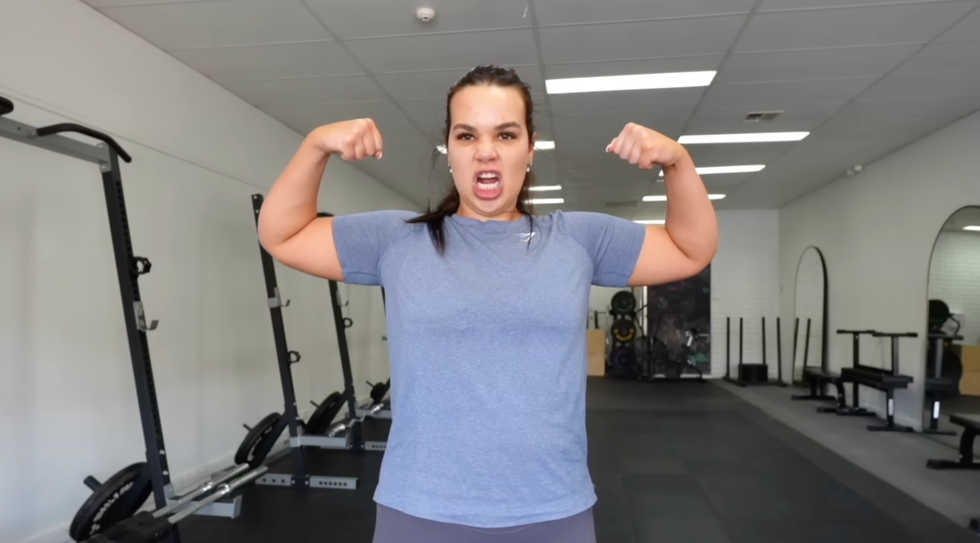
YouTube
Scientifically, women start to feel stronger after two to three weeks of consistent strength training, while visible strength gains typically take around six to twelve weeks. For Susie, the turning point came at week four.
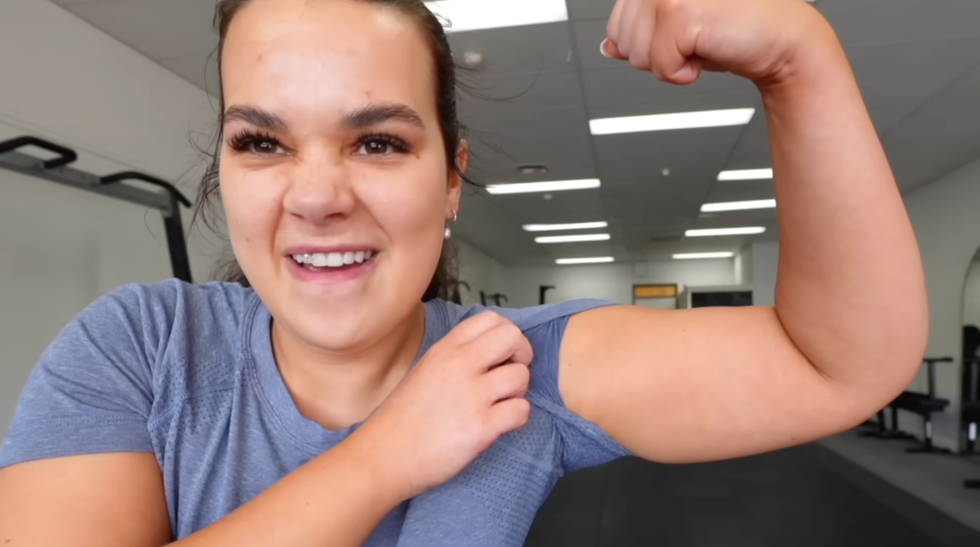
‘It’s already week four. How has this gone so quick? It was upper-body day which is my favourite day ever. I already feel so much stronger than when I started and I managed to get up for the morning session, so proud of myself for doing that.
‘I can’t believe I lifted 9 kilos in bench press today, that’s 18 kilos in total. I already feel so much stronger. Look at these guns. You can kind of see it, and we’re only at the halfway point of the eight-week programme. I’m starting to see some baby gains.
‘I already feel so much stronger and I can’t wait to be lifting those real heavy weights that I used to lift. Feeling strong is honestly the best thing ever.’
YouTube
A quick caveat: fitness, including strength and muscle growth, isn’t driven by exercise or nutrition alone. Movement helps preserve muscle, support metabolic health and improve how your body uses energy, but what you eat still matters. The most effective approach combines smart training with nourishing, realistic nutrition habits you can maintain long term.
3. She progressed her workouts after two weeks 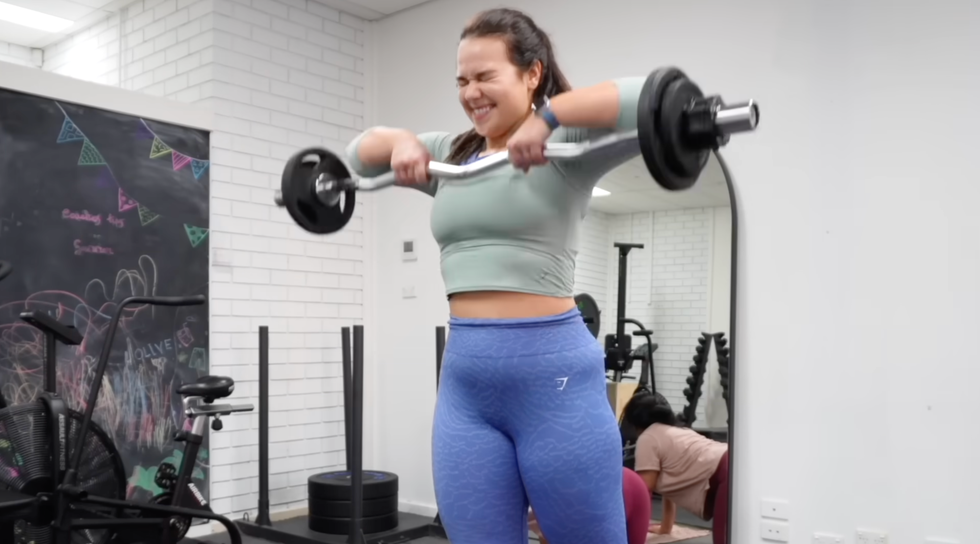
YouTube
Progressive load – the focus of laying a slight incremental increase in training stress on top of another, session after session, week after week, so you continue to improve – is an essential factor behind muscle and strength growth. It lightly damages your muscles, which forces your body to lay down more muscle tissue, which means they become stronger. When you start progressively overloading depends on various factors, including your base fitness level, injury history and more. For Susie, she began adding weight to her exercises from week two.
‘This week (week two) is progress week, so that means that we’re trying to do heavier weights than we did the week before, or if we couldn’t finish the exercise we’re trying to finish the exercise, or if we didn’t have any weight then we’re trying to add weight. I added weight onto my Bulgarian split squats and I managed to do those. I think I just need to work on my timing because I’m either going too fast for the exercises or I’m going too slow.’
Check out our example progressive overload plans for increasing weight, increasing reps, switching up tempo, or increasing frequency.
4. She struggled to focus on form when training alone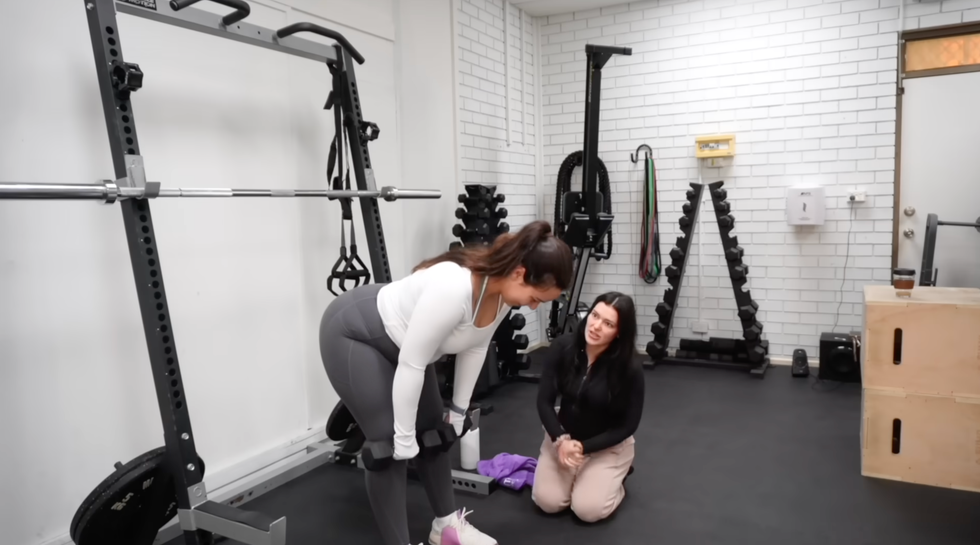 YouTube
When Susie wasn’t able to make her online fitness sessions, she would try to train with friends in order to monitor her technique
Performing exercises with the correct technique is crucial for strength and muscle growth – without it, you won’t be loading the right muscles or instigating the adaptations needed for them to get stronger. Knowing whether you’re doing them correctly or not can be difficult without a coach, which Susie found for herself.
‘I didn’t make it to my Stronger by B online session this morning, and I find the only issue is that when I go to the gym by myself, I don’t keep slow and controlled like Bianca tells me to do, like “Susie, that form right there is nasty, stop that right now.”’
Try filming yourself or ask a friend to film and compare your form to our official instructions for each relevant strength exercise.
5. Ditching the ‘all or nothing’ mindset helped her stay committed
Setting yourself unrealistic, unsustainable and intimidating goals can hinder you hitting them. This is something Susie experienced in the past, and recognising that shorter workouts were just as effective meant she felt capable of sticking to them – even on busy days.
‘I got the quickest workout done this morning because I woke up late and I have stuff to do today. So, this is your reminder that even if you only have time for a quick workout, it’s better than not moving your body at all. I think the main thing that helped me stick to my new routine was not having an ‘all or nothing’ mindset anymore.’
Susie’s results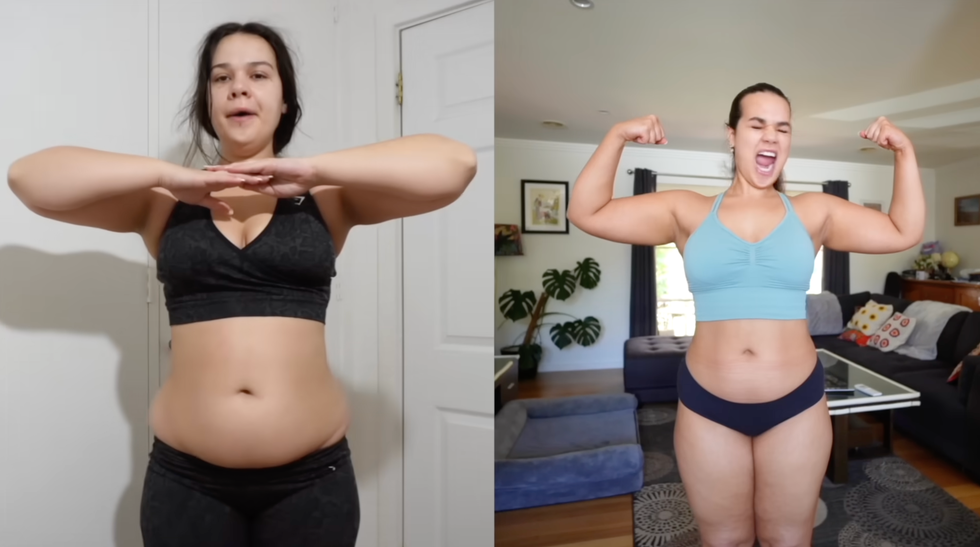 YouTube
While Susie did notice physical changes in her body during the challenge, she says the biggest change was how confident she felt in her body
While Susie noticed a significant improvement in her strength, the mental effects had the biggest impact: ‘I started this challenge wanting to fall in love with fitness again; fall in love with weight training and make it a habit that I stuck to – and I’ve done that.
‘I’m starting to love my early morning workout routine even though I absolutely want to die when my alarm goes off in the morning. I’ve pushed myself so hard this past four weeks and fixed my sleep schedule, got back into a healthy routine and I’m so proud of myself.
‘I already feel so much stronger and have seen amazing results in my physical and mental health, and I can’t wait to be lifting those real heavy weights that I used to lift.’
RELATED STORIES
As Women’s Health UK’s fitness director and a qualified Pilates and yoga instructor, Bridie Wilkins has been passionately reporting on exercise, health and nutrition since the start of her decade-long career in journalism.
After earning a first-class degree in journalism and NCTJ accreditation, she secured her first role at Look Magazine, where she launched the magazine’s health and fitness column, Look Fit, before going on to become Health and Fitness writer at HELLO!
Since, she has written for Stylist, Glamour, Cosmopolitan, Marie Claire, Elle, The Metro, Runner’s World and Red. Today, she oversees all fitness content across Women’s Health online and in print, spearheading leading cross-platform franchises, such as ‘Fit At Any Age’, which showcases the women proving that age is no barrier to exercise.
She has also represented the brand on BBC Radio London, plus various podcasts and Substacks – all with the aim to encourage more women to exercise and show them how. Outside of work, find her trying the latest Pilates studio, testing her VO2 max for fun (TY, Oura), or posting workouts on Instagram.