




Gibraltar macaques have been observed eating soil, perhaps to cope with the negative effects of human junk food, according to a study published in Scientific Reports.
This strange new habit seems to help the monkeys digest treats taken from tourists that would otherwise cause an upset stomach – for instance, when these lactose-intolerant animals pilfer ice cream.
“Foods brought by tourists and eaten by Gibraltar’s macaques are extremely rich in calories, sugar, salt and dairy,” said lead author Dr Silvain Lemoine, a biological anthropologist from the University of Cambridge.
“This is completely unlike the foods typically consumed by the species, such as herbs, leaves, seeds and the occasional insect.
“Soil-eating may allow them to keep consuming food that has negative digestive effects but is as delicious for them as it is for us.”
A team of researchers monitored the 230 macaque inhabitants of Gibraltar and found that each monkey ate dirt 12 times per week, on average.
Geophagy – deliberately eating soil – was 40 per cent less common during winter than in summer months, when there were more tourists.
And the scientists found that monkeys with more contact with humans – which therefore ate more junk food – were also more frequent soil-eaters.
In fact, out of the eight macaque groups, the three which lived in tourist hotspots accounted for 72 per cent of all geophagy incidents.
Meanwhile, the only group which had no access to tourists or their food was also the only group that was never observed eating dirt.
The scientists concluded that geophagy was directly linked to human junk food, and perhaps acted as a gut-health supplement, used to counteract the harm of cookies, ice cream and other snacks on the macaques’ microbiomes.
“We think the macaques started eating soil to buffer their digestive system against the high energy, low fibre nature of these snacks and junk foods, which have been shown to cause gastric upsets in some primates,” explained Lemoine.
“The consumed soil acts as a barrier in the digestive tract, limiting absorption of harmful compounds… Soil may also provide friendly bacteria that help with the gut microbiome.”
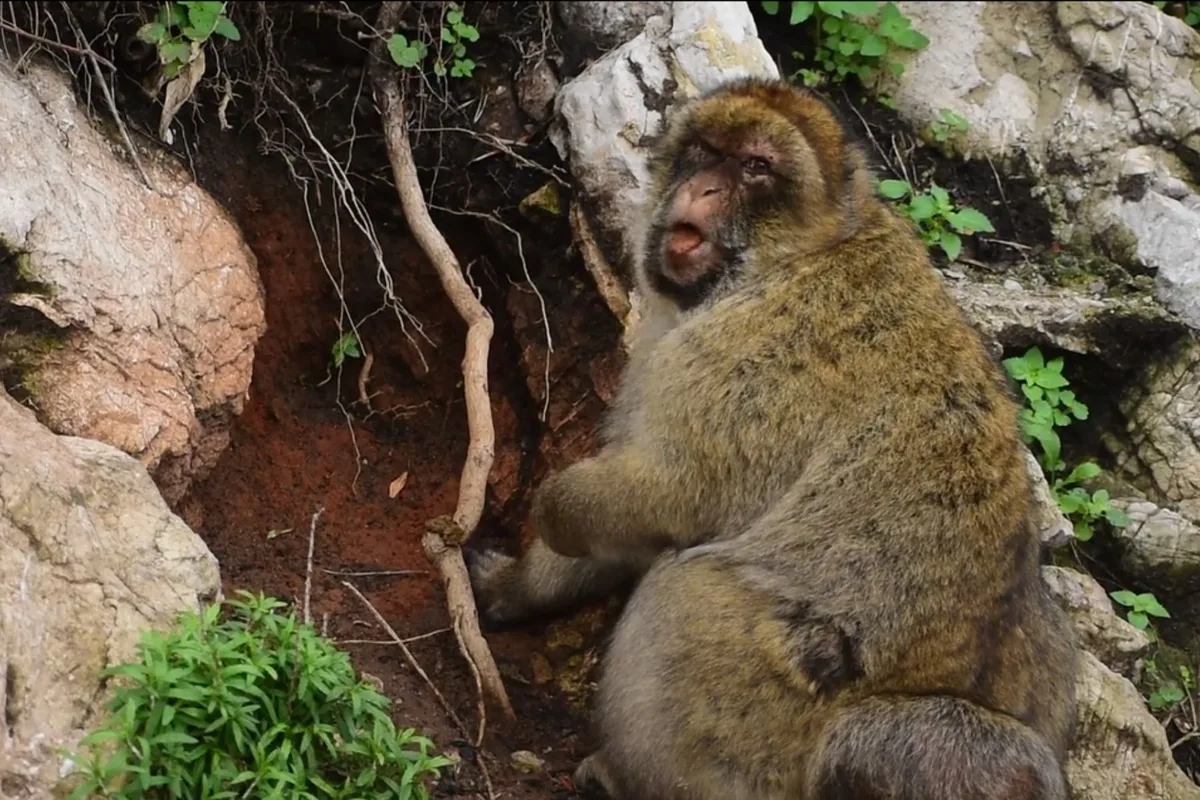 Different groups of macaques had their own dirt preferences. Most of them sought out red clay soil, but one group favoured tar-clogged soil collected from potholes – Credit: Martin Nicourt/Gibraltar Macaques Project
These macaques aren’t the only primates to deliberately eat dirt. Ring-tailed lemurs do so 16 times per week on average, and East African chimpanzees around 14 times. Geophagy is even common in some human cultures, particularly during pregnancy.
But among the Barbary macaques of North Africa – where Gibraltar’s population originates – the behaviour is very rare.
However, there is one macaque group with even more recorded geophagy than those in Gibraltar.
The macaques of Hong Kong’s Jam Shan Country Park have been observed eating dirt more than 33 times per week – and crucially, these animals have access to huge amounts of human junk food from visitors.
Lemoine said the study highlighted how humans impact the behaviour and culture of other species.
“Gibraltar’s macaques are deeply entwined with human history, offering a striking example of a human-primate interface,” he said.
“The range of human interaction across Gibraltar’s macaque groups create a natural experiment for understanding how anthropogenic landscapes affect primate behaviour and culture.”
Read more: