



By: Chad Hanson | April 22, 2026 | 10 min. read |
Since joining the University of Miami Miller School of Medicine, Dr. Pilar Alcaide has launched a collaborative research program exploring how immune‑driven inflammation contributes to heart failure, chemotherapy‑related cardiotoxicity and cardiovascular disease in people living with HIV.
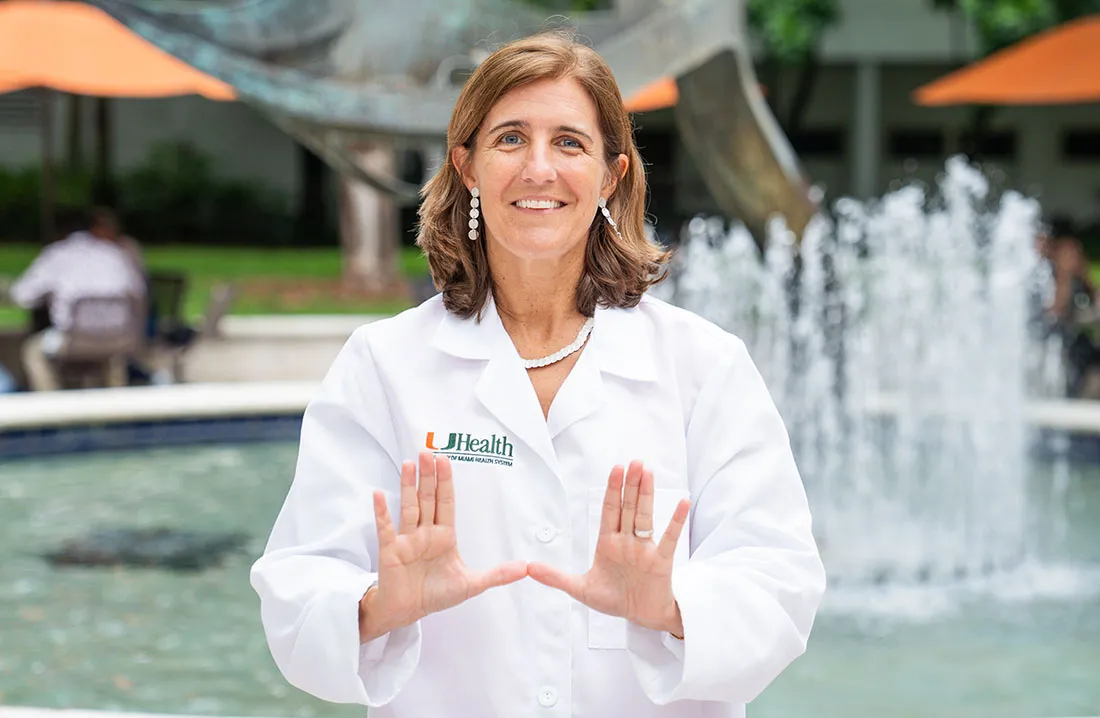
When Pilar Alcaide, Ph.D., arrived at the University of Miami Miller School of Medicine, she brought a research program already known for reframing cardiovascular disease through the immune system. Her work in Miami has expanded into a rapidly integrated, cross‑disciplinary effort to understand how inflammation reshapes the heart across conditions ranging from heart failure to cancer therapy to chronic viral disease.
That swift transition allowed Dr. Alcaide, professor and vice chair of the Department of Microbiology and Immunology at the Miller School, to move immediately into science by seeking out the collaborative research for which the Miller School is known.
“From day one, I connected,” Dr. Alcaide said. “I met with the chief of cardiology and cardiology faculty. I went to retreats and seminars and group discussions to see how the system works. And I met with my department members to learn about our current research and how we can integrate.”
Building Collaborative Cardio‑Immunology Research at the Miller School
As her lab came together, including placing the researchers who accompanied her from Tufts University, Dr. Alcaide put her ear to the ground to learn about the work going on at her new academic home.
“I listened a lot,” she said, adding that she was immediately excited about the research already in flight. “A lot of interdisciplinary research is already ongoing and I’m asking questions to see what might be needed for our team to contribute to the already existing strengths and make discoveries together.
Since relocating, Dr. Alcaide has focused her lab on three interconnected research pillars that reflect both her expertise in cardio‑immunology and the collaborative impetus of the Miller School:
• Heart failure with preserved ejection fraction (HFpEF)
• Chemotherapy‑induced cardiotoxicity and fibrotic remodeling
• Inflammation‑driven vascular disease in people with HIV
At the core of Dr. Alcaide’s work is a question with major clinical implications. How do immune cells contribute to cardiac injury and changes in the heart’s physical properties over time?
The Immunology of Heart Failure
HFpEF is a form of heart failure that accounts for roughly half of all cases yet remains difficult to diagnose and treat. Unlike heart failure caused by direct injury to the heart muscle, HFpEF develops more subtly in patients with cardiometabolic comorbidities such as obesity, hypertension and aging.
“None of the current treatments for heart failure work for this subset of patients,” Dr. Alcaide said.
In HFpEF, the heart continues to eject a normal percentage of blood, but the muscle becomes stiff.
“It contracts, but it doesn’t relax,” Dr. Alcaide said. “So the heart doesn’t fill in well.”
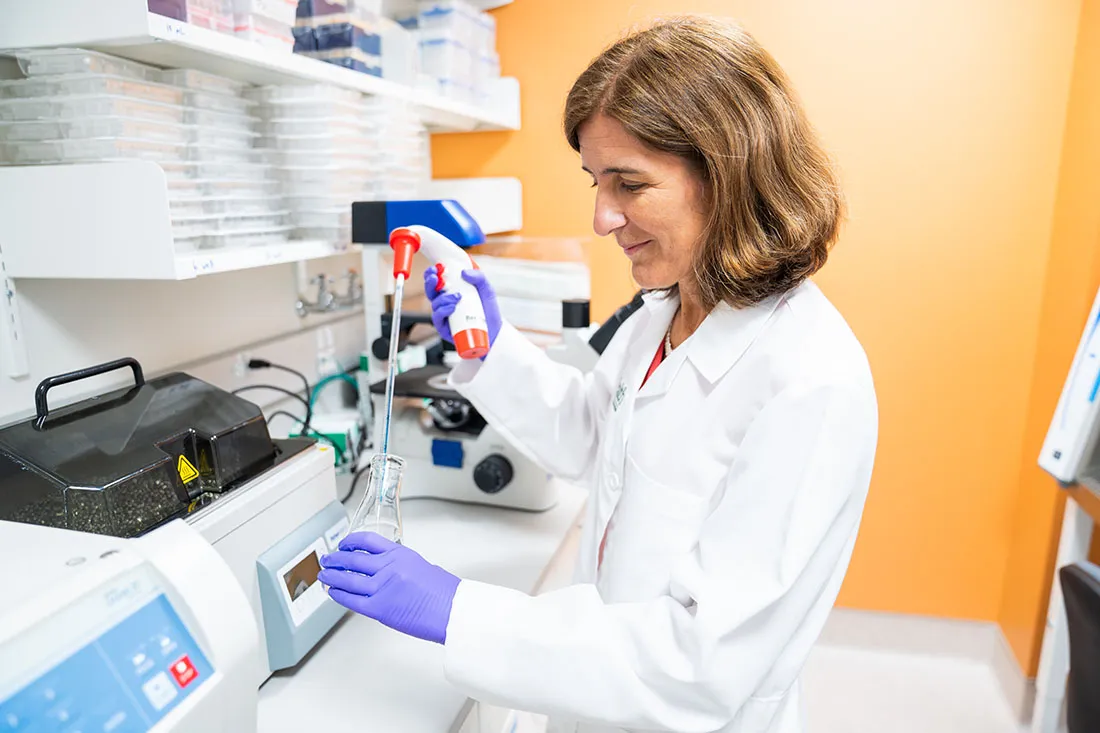 Dr. Pilar Alcaide is fitting right in with the Miller School’s collaborative ethos.
Working closely with postdoctoral fellow Ramona Emig, Ph.D., Dr. Alcaide is helping redefine how this stiffness develops. The lab’s work points to immune cells as active drivers of changes in cardiac mechanics, not just downstream responders to damage.
“One observation that we made is that the immune cells are contributing to the stiffening of the heart that prevents it from relaxing,” Dr. Alcaide said.
Dr. Emig and Dr. Alcaide have also embedded this work within the Miller School’s broader cardiovascular research ecosystem, collaborating with Miller School cardiology faculty including Joshua Hare, M.D., Lina Shehadeh, Ph.D., Jose Condor-Capcha, Ph.D., and Jeffrey Goldberger, M.D., on a large HFpEF grant proposal.
“They were already having conversations about HFpEF. Every time they presented, the question was, ‘What about inflammation?’” Dr. Alcaide said. “So now we’ve combined our energies together.”
Chemotherapy and Heart Failure
A second major research pillar focuses on chemotherapy‑induced cardiotoxicity, particularly heart failure that develops after treatment with anthracycline drugs.
“These are people who are treated with anthracyclines, and the cumulative doses of this chemotherapy for cancer ends up inducing heart failure with reduced ejection fraction,” she said. “Chemotherapy accumulates in cardiac cells and, because they don’t regenerate very fast, cardiomyocytes, the contractile cells of the heart, are replaced by fibrosis and by other cells. And this impacts the contractility of the heart.”
Traditionally, this form of heart failure has been attributed to direct toxicity within heart muscle cells. Dr. Alcaide’s work challenges that view.
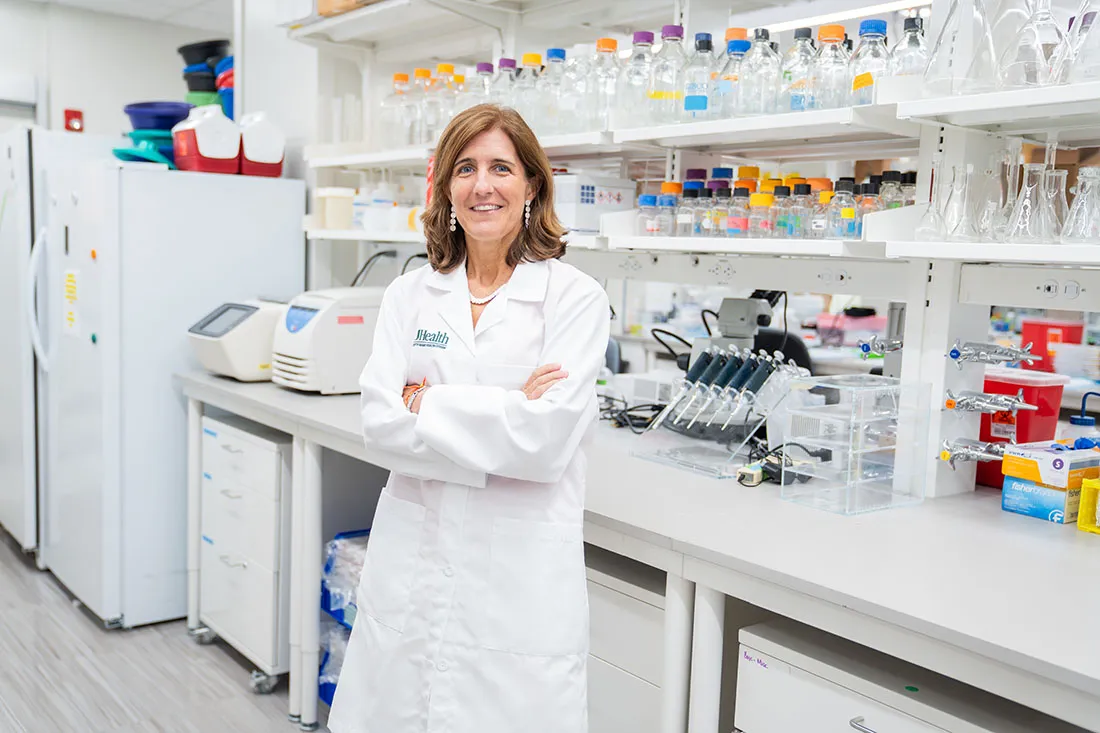 Dr. Alcaide found several ongoing Miller School research projects dovetail perfectly with her work.
“This long‑term response might not just be because the drug accumulates in the heart,” she said. “It might be because conditions inside the heart trigger an immune response that is long‑lasting and ends up attacking the heart.”
This line of inquiry has accelerated through Dr. Alcaide’s appointment at Sylvester Comprehensive Cancer Center, part of the Miller School. Graduate student Maria Zambrano is leading this work and preparing a manuscript for submission.
“The cancer center is one of the things that attracted me to the University of Miami,” Dr. Alcaide said.
HIV and Cardiovascular Disease
A third research direction emerged directly from Miami’s strengths in infectious disease, public health and vascular biology. Through conversations with clinicians and collaborators, Dr. Alcaide began exploring inflammation‑driven cardiovascular disease in people living with HIV.
“This population of people with HIV develops microvascular disease and inflammation,” she said. “We have no idea of the mechanism.”
With collaborators in cardiology (Claudia Martinez, M.D.), public health (Tulay Koru-Sengul, Ph.D.), neurosurgery (Juan Pablo Rivero Vaccari, Ph.D.) and infectious diseases (Dr. Alcaide’s sister, Maria Alcaide, M.D.), Dr. Pilar Alcaide’s lab is investigating how chronic immune activation affects endothelial cells, blood vessels and, ultimately, the heart.
“We received a Team Science award from the Executive Dean for Research office to really work on how this basal high‑level inflammation impacts the vessels, the endothelial cells and then, eventually, the heart, as well,” she said.
Team Science and Mentorship
Across all research areas, Dr. Alcaide has emphasized mentorship and integration. Two trainees, Dr. Emig and Maria Zambrano, came with her. A third, Zach Robbe, is in Boston but collaborates with Dr. Alcaide extensively in Miami.
“They do a lot of the work,” Dr. Alcaide said. “I think it’s important to have them recognized.”
Rather than building her lab in isolation, Dr. Alcaide said she approached Miami with purpose.
“I went about it with intention,” she said. “There were many initiatives already in place to really integrate research.”
For Dr. Alcaide, Miami has proven to be a new home and an environment where cardio‑immunology can move decisively from mechanism to translation.
“This last project has been completely new,” she said of her HIV‑related work, “and a good example of how I’ve been able to integrate not only through my own research, but through collaborating with others who had ongoing research programs where I could add my expertise.”
Tags: cancer research, chemotherapy, collaborative research, Department of Microbiology and Immunology, Dr. Pilar Alcaide, heart disease, inflammation, mentoring, microbiology and immunology, team science