



Some people are naturally competitive. Others, not so much. If you’re anything like me, watching your friends smash a Hyrox or complete a marathon doesn’t exactly inspire you to sign up for the next one.
Don’t get me wrong: those are incredibly impressive feats, and I’m always proud and supportive of friends who love doing them. I’m just not a competitive person.
In the gym, at work, at school – I’ve always wanted to be good at what I do, but I’ve also been comfortable with others being better. Of course, there are things I want to improve – but I want to get better for my own sake, not to beat anyone else. A need to be the best simply isn’t in my nature, and I’m fine with that.
But as a trainer and fitness enthusiast, I’ve noticed a few things. First: my fittest trainer friends and clients are almost always the most competitive. Second: the fitness landscape has increasingly prioritised competition in recent years. It feels like everyone is doing a Hyrox, marathon or Ironman.
And, honestly, that’s felt a little uncomfortable at times. Am I at a disadvantage in my own fitness because I’m not competitive? How do I stay motivated and consistent with movement if competition doesn’t drive me? I asked the experts.
Being competitive can boost motivation – but only up to a point
There’s an ‘Achilles heel’ to competitiveness, says Kristen Dieffenbach, PhD, director of the Center for Applied Coaching and Sport Sciences at West Virginia University. It can fuel motivation and create a strong internal drive to push and succeed – but the desire for ‘the top podium spot’ can start to overlap with perfectionism in unhealthy ways.
That can show up when competitiveness interferes with your ability to take a rest day, keep up with work or maintain healthy relationships. If you go for a run and don’t beat your previous metrics, it can feel like failure – when, in reality, that’s just how training works. Any good coach will tell you there will be days when your body doesn’t perform at its best. That’s part of recovery, and often a sign of progress.
If you’re constantly trying to outdo yourself, you’ll quickly realise progress isn’t linear. And the same applies if you’re overly competitive with yourself, Dieffenbach says.
‘Even from a self-competition perspective, if training isn’t balanced and effort isn’t applied at the right times, it can undermine what you’re trying to achieve,’ she explains.
Motivation doesn’t have to come from competition
There are different types of motivation, often referred to as ‘motivation profiles’. Two key types are intrinsic motivation – doing something because you genuinely enjoy it – and extrinsic motivation, which is driven by rewards or outcomes.
Competition tends to tap into extrinsic motivation – medals, rankings, recognition – but it’s not the only way to stay driven. Many people are motivated by how exercise makes them feel.
Maybe it helps you feel strong or energised. Maybe it clears your head, helps you switch off or gives you a sense of achievement. Whatever it is, that internal reward is what keeps you coming back, Dieffenbach says.
You can also be motivated by your environment. ‘Think about local five-a-side teams or social sports leagues. People might be competitive, but they’re often there for the camaraderie as much as anything else,’ she says.
Others are motivated by the process itself. Take rock climbers – many are less focused on speed or competition, and more interested in solving the physical challenge in front of them.
The key is finding motivation that lasts
No one type of motivation is inherently better than another. But when it comes to fitness, sustainability matters.
Fitness is a long-term commitment. The goal is to stay as functional and capable as possible for as long as possible – so the motivation behind it needs to hold up over time.
‘The most impactful motivation long term is intrinsic,’ says Dieffenbach. ‘It comes from within – from a sense of enjoyment, satisfaction, competence, pride or purpose.’
And there are plenty of ways to train that encourage those feelings. If competition doesn’t drive you, you’re an ex-athlete looking for your next focus, or you’re stuck in a motivation rut, these expert-backed strategies can help.
How to stay motivated when competition doesn’t fuel youFind fulfilling ways to move
It’s easy to get stuck in a routine of repetitive gym sessions. While those workouts have their place, they can start to feel monotonous.
‘There are so many different ways to move. We can become overly focused on what’s trending or competition-based, and forget about things like dance, Zumba or other forms of movement that are about the experience, not performance,’ says Kristen Feemster, LMFT, CPT, therapist and personal trainer.
Your move: switch up your routine regularly. Try a new class, go dancing, head out for a long walk or pick up a new sport. Variety challenges your body in new ways – and makes exercise more enjoyable. And enjoyment is what drives consistency.
Create consistency challenges
Even if you’re not competitive, having a goal can still be motivating. The key is focusing on consistency rather than outcomes.
Choose something you want to improve and commit to practising it regularly. That might mean running a mile each day for a month, stretching for 10 minutes daily, or working on pull-ups three times a week.
Consistency-based challenges can help you stay engaged without the pressure of hitting specific performance targets.
Set your own fitness goals
You can still sign up for a marathon without worrying about your time or comparing yourself to others. Do it for the experience.
Equally, you don’t need an organised event at all. You could set your own challenge – whether that’s running a set distance, hiking a long trail or training for a personal milestone.
There are plenty of meaningful goals outside traditional competitions. Climbing a mountain or completing a long-distance hike can be just as rewarding – with or without a medal.
Think about your future self
Consider how you want to feel in your day-to-day life.
‘Ask yourself: can I move comfortably? Do I have aches, stiffness or limitations I want to improve? Can I do the things I enjoy?’ says Feemster.
Functionality might not come with a medal, but it pays off long term. If you want to stay active and independent later in life, the habits you build now matter.
The benefit of this approach is that it’s practical. If you want stairs to feel easier, train step-ups. If you want to carry heavy shopping more easily, practise loaded carries. Focus on movements that directly improve your daily life.
Fitness is a long-term investment. Focus on movement that feels good and meaningful to you – and if that doesn’t include competition, that’s completely valid.
Not every workout needs to prove something. Training to support your physical and mental wellbeing is just as worthwhile.
‘Building a fitness routine around your lifestyle and preferences makes it far more sustainable,’ says Campbell. ‘Exercise shouldn’t feel like punishment – it should feel like something you want to do.’
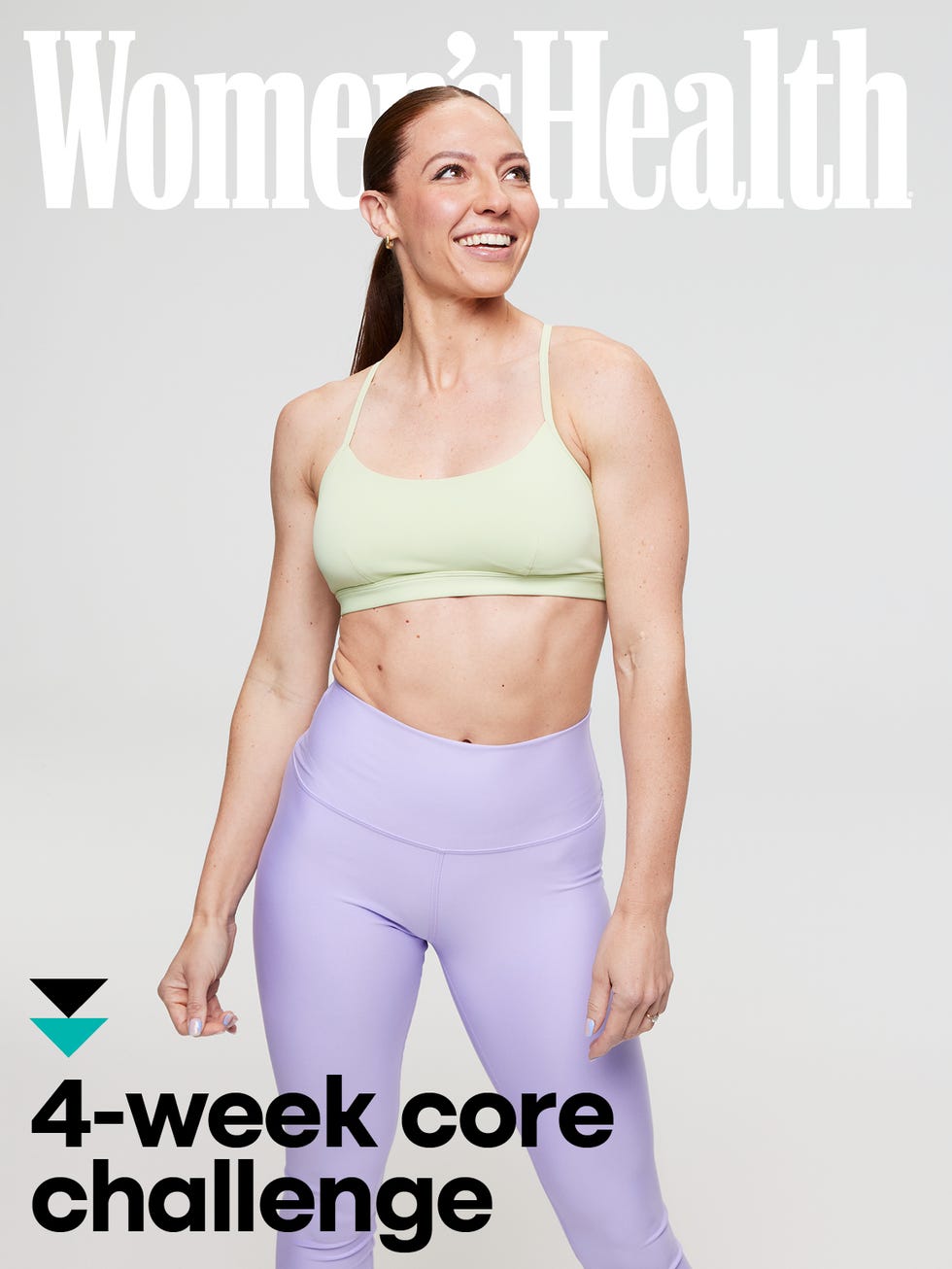
Having a strong core is about far more than sporting a six-pack. Build functional mid-section strength – while also improving your power, posture, coordination and balance – with WH COLLECTIVE coach Izy George’s 4-week core challenge. Download the Women’s Health UK app to access the full training plan today.
 Related Story
Cori Ritchey, C.S.C.S., is the fitness editor at Women’s Health, as well as a certified strength and condition coach and group fitness instructor. She’s reported on topics regarding health, nutrition, mental health, fitness, sex, and relationships for several years. You can find more of her work in Men’s Health, HealthCentral, Livestrong, Self, and others.