


Similar to sunburns, dehydration and rashes from poison ivy, bites from mosquitoes, ticks and other insects are a drawback of being outside when it’s warm. Not to mention, they can carry illnesses like malaria and Lyme disease. Applying insect repellent is one preventative measure you can take to avoid getting bitten, but figuring out which ones are actually effective can be confusing, seeing as the labels are often covered with complicated ingredients and jargon like “DEET” and “all-natural.”
To help simplify your shopping, we consulted experts to find the best bug repellents on the market. Using their guidance, we also rounded up highly-rated products you can use to prevent bug bites.
Best insect repellents for mosquitoes and more
Below, we included insect repellents that are direct recommendations from our experts and/or have at least a four-star average rating from 500 reviews or more on Amazon, or at least 100 reviews on their brand sites. We also included repellents with and without DEET.
What we like
Sweat resistantNo greasy residueWorks on clothes
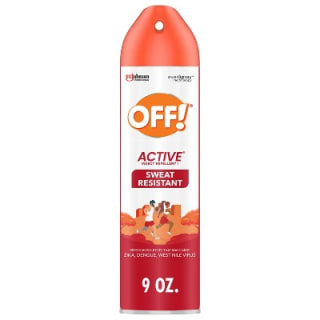
This repellent is formulated with a concentration of 15 percent DEET, which amounts to six hours of protection, and it works against mosquitoes, biting flies, gnats, ticks, chiggers (mites) and fleas, the company says. The sweat-resistant spray is meant for outdoor activities like running and hiking.
What we like
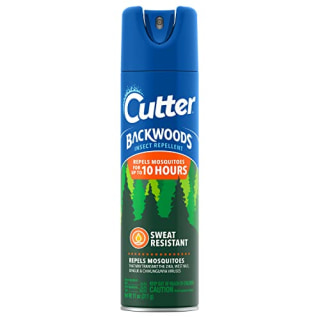
Sweat resistantSafe for clothesOdorless
This sweat-resistant repellent features 25 percent DEET in its formula, which the company says protects for up to 10 hours. In addition to mosquitoes, this repellent is meant to ward off ticks, biting flies, gnats, no-see-ums, chiggers and fleas.
What we like
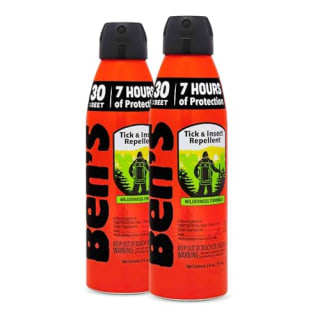
Works for seven hoursScent is subtleHas a fine mist
Something to note
Doesn’t repel bees or wasps
This unscented spray is meant to protect against ticks and mosquitoes. The formula contains 30 percent DEET and is water-based rather than alcohol-based, which means that less of the product evaporates on the skin as you apply, according to the brand. The spray nozzle also delivers a continuous mist, making it easy to cover any exposed skin (like on your back).
Best DEET-free insect repellents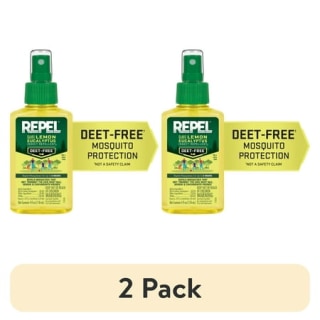
What we like
Plant-basedDoesn’t have a greasy residue
Repel’s bug spray is made with lemon eucalyptus oil and protects against mosquitoes for up to six hours, the brand says. Repel also says that the lemon eucalyptus in the repellent is meant to be non-greasy so your skin doesn’t feel sticky when applying it.
What we like
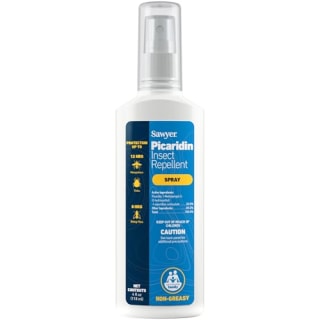
Doesn’t have a greasy textureWorks for clothesOdorless
This repellent features 20 percent picaridin in its formula with up to 12 hours of protection against mosquitoes and ticks, along with eight hours of protection against flies, gnats and chiggers, the company says. The insect repellent comes in a pack of two.
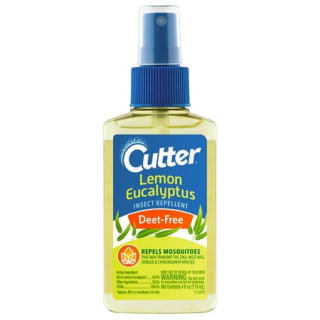
What we like
It’s plant-basedProtects against virusesPortable size
Made with 30 percent lemon eucalyptus oil, this bug-repellent formula is meant to ward off mosquitoes for up to six hours, the brand says. According to Cutter, it leaves a lemon eucalyptus scent on the skin but doesn’t feel oily.
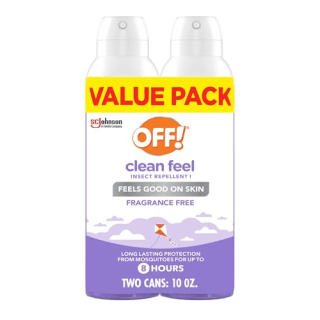
What we like
UnscentedWorks for 8 hoursHas an even mist
This aerosol insect repellent has picaridin as its active ingredient and is DEET-free. It works for up to eight hours at a time and is fragrance free, which shoppers also love about it. People who bought the product also mention that it doesn’t have a greasy feel and sprays an even mist that makes it easy to apply. It should only be applied to skin that will be exposed (and not covered by clothes), according to the brand.
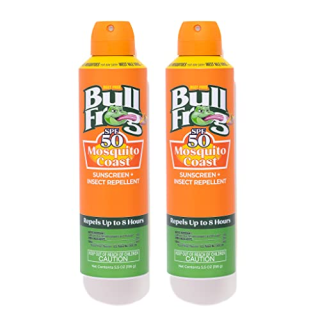
What we like
WaterproofPerfect for the beachIt has aloe
This multi-tasker combines SPF 50 with insect repellent to protect skin from both the sun and bugs. The main active ingredient keeping bugs away is IR3535 (an EPA-approved ingredient used in insect repellents as an alternative to DEET and picaridin) and it promises to repel mosquitoes for up to eight hours, according to the brand.
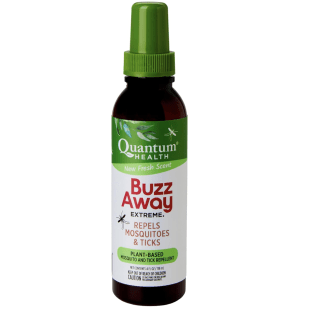
What we like
Works for hoursTSA-approved sizeDoesn’t have a greasy residue
Made to keep mosquitoes and ticks away, this spray utilizes essential oils like lemongrass, peppermint and citronella to repel insects. To use, shake the bottle well before applying and reapply every three and a half hours for maximum protection, according to the brand.
How I picked the best insect repellents
To pick the best insect repellents, we asked experts what criteria to keep in mind when shopping. Here’s what they said:
Ingredients: Experts shared that DEET is the most effective ingredient for repelling insects, so we included options with that as the main active ingredient. Some people prefer to avoid DEET due to its reputation for being toxic — something our experts all said was false and has been disproven. For those people, we still also included a number of DEET-free sprays.Bugs they repel: All sprays on our list promise to repel mosquitoes. Since those aren’t the only bugs that people want to keep away, our experts suggested reading the fine print to see if the spray you choose also works on other bugs. How to shop for insect repellent
Many products on the market claim to repel insects, but they’re not all equally effective — and they don’t all have comprehensive data or research to support their claims.
“I think the key to choosing a proper insect repellent is to get something that you can do some research on and see effective scientific data that shows it works,” says Daniel Markowski, a technical advisor for the American Mosquito Control Association. “If something seems too good to be true, it probably is.”
With that being said, experts said there are a few factors you should consider while shopping for insect repellent, which we detailed below.
Is the repellent registered with the EPA?
All the experts we spoke to recommended finding an EPA-registered insect repellent. The EPA has an online search tool that helps you look up registered bug repellents, and we used it to check the registration numbers on each of the products we recommend. All registered repellents offer protection against mosquitoes, but only some work against ticks.
How do DEET, DEET-free and natural options compare?
Most experts agreed that DEET is the most effective active ingredient in an insect repellent. While DEET has gotten a bad reputation as being unsafe, experts told us there are no health risks associated with using it. “DEET is a controversial ingredient, largely because of misinformation. Some folks confuse it with DDT, an unrelated and banned compound in the United States, and others worry about reported neurological issues associated with DEET use that have been disproven by the medical community,” noted Erika T. Machtinger, an assistant professor of entomology at Penn State’s College of Agricultural Sciences.
Despite assurance from the medical community that DEET is safe, shoppers may consider looking for DEET-free insect repellents or ones labeled “natural.” There are some EPA-approved DEET-free bug repellents with other chemical active ingredients. Natural insect repellents tend not to be EPA-approved and incorporate ingredients found in, you guessed it, nature.
Which bucket a product falls into may impact what active ingredients it’s made with. Both the experts we spoke to and the Centers for Disease Control and Prevention (CDC) recommend finding an insect repellent that’s registered with the EPA and features one of the following active ingredients:
DEET: (diethyl meta toluamide), the most common ingredient found in bug repellents, it’s in the most EPA-registered repellents on the market.Picaridin: an active ingredient used in insect repellents that is EPA registered.IR3535: (ethyl butylacetylaminopropionate) a common, EPA-registered active ingredient in some insect repellents and an alternative to DEET products.Oil of lemon eucalyptus: a plant-based, EPA-registered insect repellent derived from the Corymbia citriodora treePara-menthane-diol (also referred to as PMD): a pesticide made from eucalyptus that repels mosquitoes and biting flies. 2-undecanone: (methyl nonyl ketone) an EPA-registered insect repellent.Is the concentration of an active ingredient in a product important?
Our experts told us that a higher percentage of an active ingredient does not increase your level of protection, though it does keep you protected for a longer period. In other words, the higher the concentration of an active ingredient, the longer the repellent will be effective, says Eva Buckner, the medical entomology extension specialist at the University of Florida.
Concentrations can range anywhere from 10 to 100 percent, and according to Machtinger, repellents will generally work the same for the first couple of hours after they’re applied.
Markowski says most experts will advise against using a bug repellent that contains over 30 percent of an active ingredient. “You don’t really gain additional repellency from a product with a 70 or 100 percent concentration of active ingredients, but you are putting much more of the actual chemical on your skin,” he says. “Therefore, you’re much more likely to have adverse effects like allergic reactions.”
Why is EPA registration important for insect repellents?
As we mentioned above, all the experts we spoke to recommend finding an EPA-registered insect repellent. But why does the EPA regulate insect repellents? While it might seem surprising, insect repellents are considered pesticides even though these sprays are meant to repel, rather than impair, insects. As such, most skin-applied insect repellents have to be registered by the EPA before being marketed to the public, and it’s up to the EPA to regulate them, a spokesperson for the agency confirmed.
The EPA reviews each repellent independently to confirm its efficacy before registration, the spokesperson added. A company applies for registration and the “EPA determines whether the product actually works and weighs the product’s benefits against its risks,” the organization told us. Registration means that a product has passed safety standards, is approved for use as the directions on the label state and can be sold and distributed in the U.S.
Not all insect repellents need to be registered with the EPA, though. Repellents with ingredients like citronella and cedar don’t need to be registered with the organization; while the EPA found they didn’t pose any health risks, they weren’t proven to be effective, either, “which is why typically we do not recommend these products,” explained Sonja Swiger, an associate professor at Texas A&M University’s department of entomology.
The EPA’s repellent database was last updated in June 2019 — the EPA confirmed that the products listed all remain registered and more recently registered repellents haven’t been added yet. A product remains registered as long as:
Registrants pay annual maintenance feesThe EPA isn’t forced to change the registration given emerging factors like adverse effectsThe company doesn’t voluntarily cancel the registrationHow to apply insect repellent
If the first step of preventing bug bites is buying an effective insect repellent, the second step is applying the product correctly, experts said. Many people are specifically concerned about mosquitoes in the warmer months, and Markowski said “they’re very good at finding a host” during this time. ”Even if a quarter-sized amount of skin is not protected with repellent, they’re going to find it,” he says.
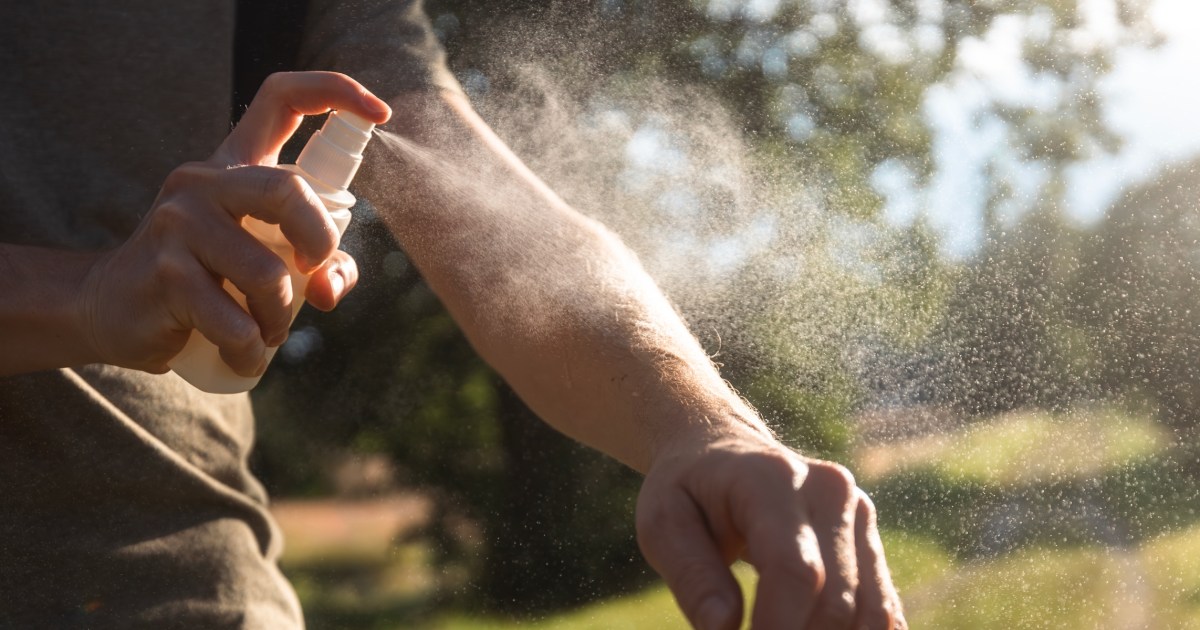
To ensure you’re fully protected, apply mosquito repellent like you would sunscreen. Spray or dollop it onto any exposed skin and be sure to rub it in, and read the product’s label to find the suggested reapplication time. You don’t need to reapply insect repellent more frequently than the brand suggests unless you’re sweating or spending time in the water where it can wash off your skin, Markowski says.
Frequently asked questions
What is insect repellent?
The term “insect repellent” or “bug repellent” might seem broad — there are a lot of insects in the wild — but bug sprays usually cover mosquitoes, ticks or both, experts told us.
An insect repellent works by jamming an insect’s radar, thus altering its ability to find a host. Experts explained that insect repellent compromises the ability of the sensory devices on the antennae to find a suitable host. A repellent affects senses like smell and taste, too, but it usually doesn’t kill the insect, according to Buckner.
What is DEET insect repellent?
Of the three insect repellents, DEET (diethyl meta toluamide) repellents are “by far the most effective,” Markowski says. “It’s kind of the gold standard if you will.”
DEET was developed by the U.S. Army in 1946 and was approved for public use in 1957, so it’s been around for a while. As such, it’s “one of the most well-studied repellents on the market,” says Neeta Pardanani Connally, a biology professor at Western Connecticut State University (WCSU). While there’s “some disagreement on exactly how DEET works, the general consensus is that it interferes with the pest’s host-finding ability — basically, they can’t smell you anymore,” Machtinger explains.
By a wide margin, DEET is in most EPA-registered insect repellents — more than 500 products feature it as an active ingredient (in second place is IR355 with about 45 products and in third is picaridin with more than 40).
What is DEET-free insect repellent?
Like DEET, DEET-free insect repellents formulated with the active ingredients we listed above are safe and effective, experts told us. However, they haven’t been around as long as DEET, which means experts haven’t had as much time to study their efficacy.
Picaridin, for example, performs just as well as DEET when it comes to insects, but it hasn’t been studied as long, according to Buckner. Machtinger echoed this and added that though picaridin can be a “reasonable alternative to DEET,” it might “be more challenging to find in some places” — it can also be more expensive. Some people shop for DEET-free alternatives on the belief that, as a pesticide, it is potentially toxic and could hypothetically cause reactions in some people, though the EPA and our experts confirm that DEET doesn’t pose health risks when used as directed.
What is natural insect repellent?
The experts we consulted cautioned against using insect repellents that are branded as natural. Consumer Reports has also found them less effective than other insect repellents.
The EPA doesn’t allow the use of the terms “natural” or “naturally” on the label of any registered pesticide product “because the terms cannot be well defined and may be misconstrued as safety claims,” a spokesperson told NBC Select. Natural repellents usually contain botanicals, which Consumer Reports noted are not registered with the EPA, and essential oils, which experts said don’t have as much scientific data to back up their efficacy claims as other active ingredients.
“It’s the ‘Wild West’ out there with natural products right now,” notes Connally, who oversees WCSU’s Tickborne Disease Prevention Laboratory. The natural repellent market can get especially complicated because some products with “natural ingredients” like clove and lemongrass oil are accepted as “minimum risk” pesticides, according to the EPA, but aren’t held to the same high standards as those that are registered to show “that a product does indeed have the repellency effects that the label claims,” Connally added.
At NBC Select, we work with experts with specialized knowledge and authority based on relevant training and/or experience. We also ensure all expert advice and recommendations are made independently and without undisclosed financial conflicts of interest.
Eva Buckner is the medical entomology extension specialist at the University of Florida.Neeta Pardanani Connally is a biology professor at Western Connecticut State University.Erika T. Machtinger is an assistant professor of entomology at Penn State’s College of Agricultural Sciences.Daniel Markowski is a technical advisor for the American Mosquito Control Association.Sonja Swiger is an associate professor at Texas A&M University’s department of entomology.Why trust NBC Select?
Ambar Pardilla is a former reporter for NBC Select. For this story, she interviewed entomologists for their guidance.
Zoe Malin is a reporter for NBC Select. She writes about wellness, fitness, health, pets and more. She’s updated this story. Bethany Heitman is a commerce editor at NBC Select and a journalist who regularly covers topics like beauty, home and lifestyle. She updated this story with additional reporting.
Catch up on NBC Select’s in-depth coverage of tech and tools, wellness and more, and follow us on Facebook, Instagram and Twitter to stay up to date.