




What should you try?
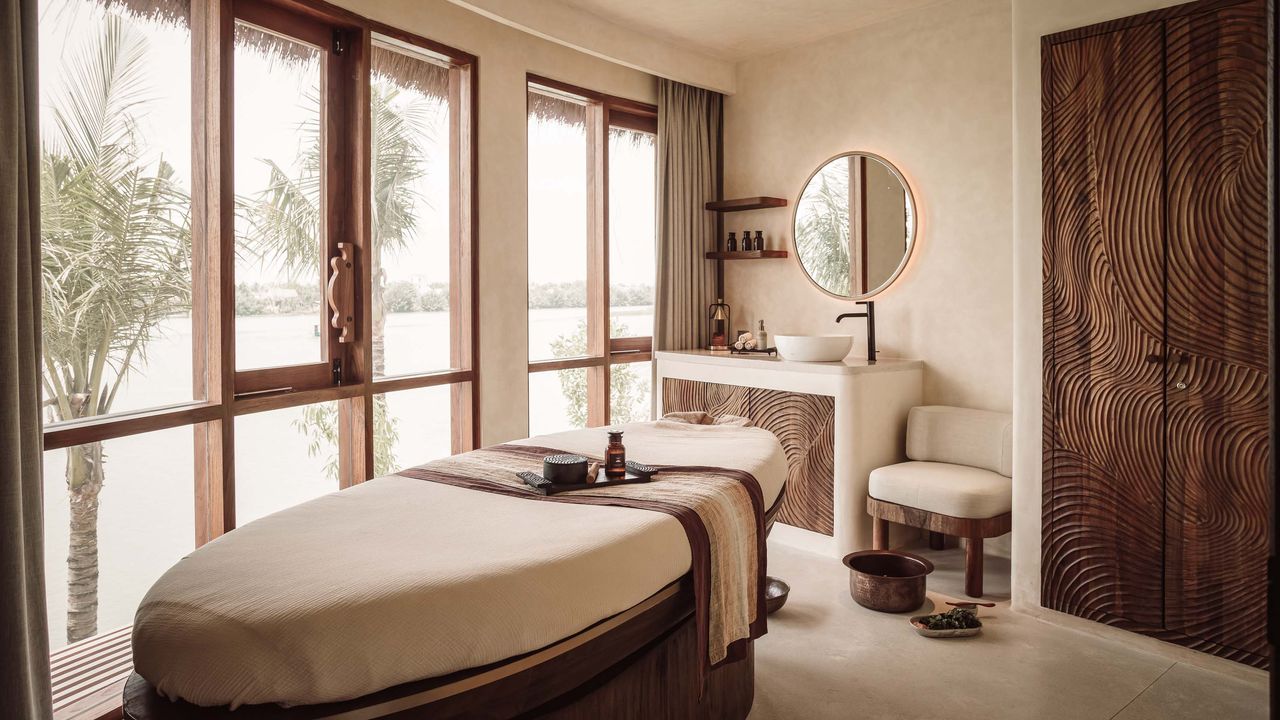
Your time at Lumina will begin with an assessment to determine where you fall on the yin-yang spectrum, where adjustments to the former call for a focus on relaxation while the latter is centered on physical well-being. This not only determines which herbs will be the most beneficial, but also in part dictates your treatments, although you’re welcome to make adjustments. I leaned more yang and was prescribed a mix of mugwort, Vietnamese ginseng, and perilla leaves to help with blood circulation, metabolic balance, and inflammation, respectively. These three ingredients were then incorporated into the hammam sessions that preceded my treatments, which included a Vietnamese massage, an herbal poultice therapy, and cupping.
Quite frankly I’d sign up for all three again. The Vietnamese massage used traditional kneading techniques to release knots while a mugwort moxa stick was used to promote healing and circulation. Over the past few years, I’ve discovered a predilection for poultices, finding that the combination of heat, herbs, and pressure relieves my weight-of-the-world shoulders, so it came as no surprise that a more targeted approach with a personalized concoction proved to be highly effective. I also tried cupping—out of curiosity more than anything else. The suction cups were uncomfortable at times, but my back felt noticeably looser afterward. It does, however, leave not-subtle bruise-like circles—my friend’s daughter squealed “alien!” and ran off when she saw my back—so perhaps not the best choice for anyone who plans on, say, taking photos frolicking in the pool.

Photo: Frederik Wissink/Courtesy of Namia River Retreat
How environmentally friendly is it?
The hotel and spa has implemented environmental and social responsibility practices that include waste management initiatives and conscious partnerships to uplift the local community. Intentional sourcing also plays a key role in their ethos, from working with local ethical vendors to eco-friendly cleaning supplies.