




SPEARFISH, S.D., April 24, 2026 (Newswire.com)
–
Disclaimers: This article contains affiliate links. If you purchase through these links, a commission may be earned at no additional cost to you. This compensation does not influence the accuracy or integrity of the information presented. This article is for informational purposes only and is not a substitute for professional medical advice. Always consult a qualified healthcare professional before starting any supplement, especially if you have existing health conditions, take prescription medications, or are under treatment for any bone condition. This product is not intended for the treatment or management of osteoporosis, osteopenia, or any bone disease.
Osteo Shield Review 2026: Independent Analysis of Ingredients, Research Context, and Consumer Considerations
You saw the ad. Something in it landed – maybe the language about calcium not working, maybe the framing around staying active and independent, maybe just the recognition that what it described felt uncomfortably familiar. So you did the right thing: you came to Google first.
This review is written for exactly that moment.
What you are about to read is not a rewrite of the sales page. It is a research-grounded, compliance-first analysis of Osteo Shield’s five-ingredient formula, built from published peer-reviewed science, live verification of the brand’s own website, and a deliberate commitment to giving you accurate information rather than the kind of inflated claims that litter this supplement category. The goal is to be the most useful resource you encounter in your research – not the most persuasive.
Here is what we will cover: what Osteo Shield actually is and is not, the biology behind why the formula is assembled the way it is, what the published research says about each ingredient, what the brand claims versus what can be independently verified, who this product may genuinely be worth considering for, how pricing and the guarantee actually work, and what honest limitations exist. Nothing will be exaggerated in either direction.
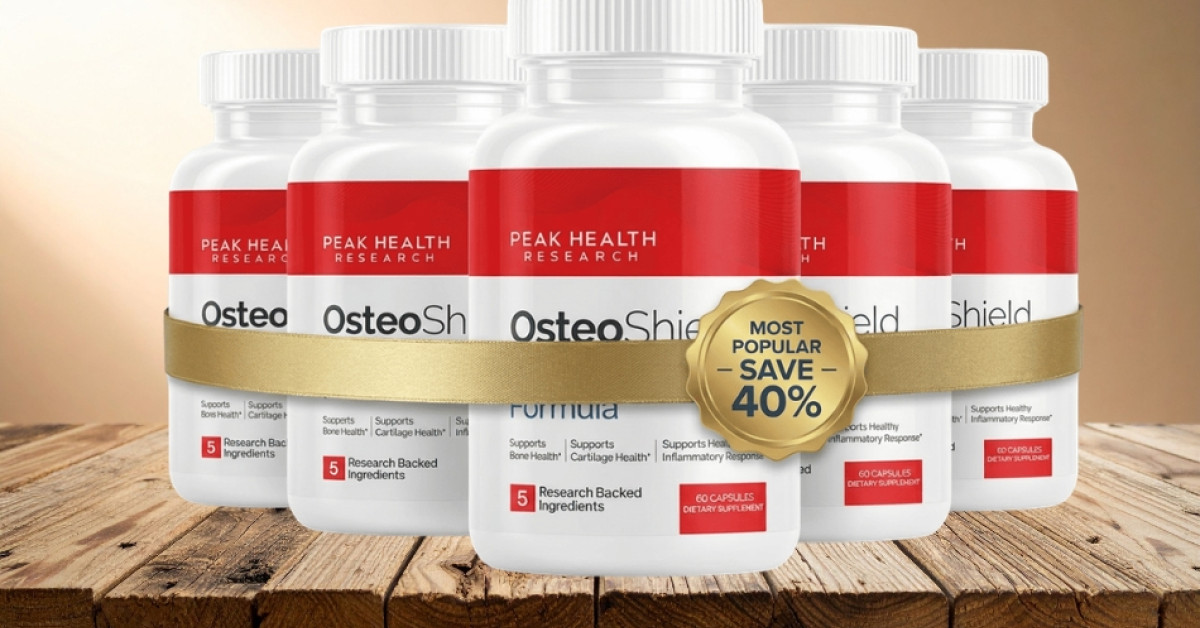
Osteo Shield is a dietary supplement produced by Peak Health Research. It combines five ingredients – Aquamin (a marine multi-mineral complex), palmitoylethanolamide (PEA), undenatured Type II collagen (UC-II), Vitamin D3, and Vitamin K2 in MK-7 form – and positions them as working together to support bone density, joint comfort, and mineral absorption in adults over 40.
The standing instruction for this entire article, stated now and reinforced throughout: Osteo Shield is a dietary supplement, not a medication. These statements have not been evaluated by the Food and Drug Administration. This product is not intended to diagnose, treat, cure, or prevent any disease. It is not a treatment for osteoporosis or any bone condition, and it should not replace physician-supervised care. Consult your doctor before starting.
Check current Osteo Shield pricing and availability on the current offer page
Disclosure: If you buy through this link, a commission may be earned at no extra cost to you.
What Osteo Shield Is – and What It Is Not
Osteo Shield is a daily capsule supplement formulated for adults over 40 who want nutritional support for bone and joint health. Two capsules per day is the suggested use. Each bottle contains a 30-day supply of 60 capsules. According to the brand’s website at peakhealthresearch.com, it is manufactured in a GMP-certified, FDA-registered facility in the United States. The brand states it is a one-time purchase – there is no automatic subscription or recurring shipment.
It is important to draw the line clearly and keep it visible throughout this article. Osteo Shield is a dietary supplement. It is not a bisphosphonate. It does not inhibit osteoclast activity the way Fosamax or Actonel do. It does not block RANKL signaling the way Prolia (denosumab) does. It does not provide the pharmacological mechanism by which prescription osteoporosis treatment works. It is a nutritional product that provides mineral inputs, anti-inflammatory support, and nutrients that support the absorption pathway. That is a real and meaningful category of support – but it is a different category from pharmaceutical treatment, and that distinction must be maintained.
This product is not intended for the treatment or management of osteoporosis, osteopenia, or any bone disease. Anyone with a diagnosed bone condition is under a physician’s care, and supplementation decisions belong in that clinical relationship.
The Biology Behind This Formula: Why the Five Ingredients Were Chosen
To evaluate Osteo Shield fairly, it helps to understand what bone remodeling actually is – because the formula’s architecture only makes sense in that biological context.
Bone is not passive tissue. It is continuously being rebuilt through a cycle involving two cell types. Osteoclasts break down old or micro-damaged bone tissue; osteoblasts build new bone matrix and mineralize it into dense, load-bearing structure. In a healthy adult, these populations operate in coordinated balance, replacing roughly ten percent of total bone mass each year. That cycle maintains bone strength and resists fractures.
Several forces disrupt this balance with age. Estrogen decline – particularly through perimenopause and early postmenopause – removes a major inhibitory signal on osteoclast activity, allowing bone breakdown to accelerate relative to formation. Vitamin D absorption decreases, impairing the calcium uptake process. The trace mineral inputs that osteoblasts require to build bone matrix – not just calcium, but magnesium, zinc, strontium, and many others – often fall in aging populations eating Western diets.
A third factor, the subject of substantial recent research, involves cellular senescence. Senescent cells are cells that have stopped dividing but have not been cleared from the tissue. They accumulate in aging bone and joint structures, remain metabolically active, and secrete a cluster of inflammatory molecules known as the senescence-associated secretory phenotype. Those molecules include signaling agents that activate osteoclasts and suppress osteoblast activity, creating an inflammatory environment that favors bone breakdown over formation. Research from Mayo Clinic, the Buck Institute, and Johns Hopkins has documented this process specifically in bone tissue.
The five ingredients in Osteo Shield each address a different input in this picture. PEA targets the inflammatory cytokine signaling associated with this cellular aging process. UC-II works through an immune-modulating mechanism that may reduce inflammatory activity in joint and bone-adjacent tissue. Aquamin provides not just calcium but the full mineral matrix – including magnesium, zinc, strontium, and more than 70 additional trace minerals – that osteoblasts need when remodeling conditions are more favorable. Vitamin D3 activates calcium transport. Vitamin K2 directs absorbed calcium into the bone matrix rather than soft tissue.
This multi-mechanism design is the scientific rationale for the formula’s complexity. Whether it produces clinically meaningful outcomes in any individual is a question that physician monitoring and bone density testing can answer – not a supplement review. What can be said accurately is that the formula reflects a coherent biological rationale based on published ingredient-level research. That is more than most products in this category can honestly claim.
This is an educational context, not medical advice. Consult your physician before starting any supplement.
Osteo Shield is not intended for the treatment, prevention, or management of osteoporosis, osteopenia, or any medical condition. It should not replace physician-directed care.
Read: Osteo Shield Claims Evaluated
Why Calcium Source Matters More Than the Label Suggests
The most common reason adults research Osteo Shield is that they are already taking calcium and it does not appear to be working. DEXA scores continue declining. Bone density markers stay flat. The bottle of calcium carbonate on the counter feels increasingly like ritual.
Understanding why requires a brief look at absorption chemistry.
Calcium carbonate – the form found in the vast majority of drugstore supplements – is derived from limestone. It requires adequate stomach acid to dissolve before calcium ions can be absorbed in the small intestine. That requirement is a practical limitation that worsens with age: stomach acid production declines, and adults over 60 are disproportionately affected. People taking proton pump inhibitors or antacids – widely prescribed medications for heartburn – have further compromised stomach acid, which directly impairs calcium carbonate absorption. Beyond the absorption issue, calcium carbonate in isolation delivers only calcium. Bone matrix requires a precise coordination of many minerals, none of which calcium carbonate provides.
Aquamin occupies a structurally different category. It is sourced from Lithothamnion red algae harvested off the coasts of Iceland and Ireland, and calcium in Aquamin is embedded within the natural cellular matrix of a living marine plant. That matrix carries not just calcium but magnesium, zinc, strontium, manganese, selenium, and more than 70 additional trace minerals in the ratios and forms that occur in ocean-grown plant tissue.
The published research on Aquamin versus calcium carbonate is the strongest evidence base in this formula. A study published in Calcified Tissue International compared Aquamin to calcium carbonate in an ovariectomized rat model – a standard preclinical model for postmenopausal bone loss – and found that Aquamin supplementation produced significantly greater preservation of bone volume fraction, bone mineral composition, and trabecular bone structure compared to calcium carbonate at equivalent calcium doses. These findings apply to the ingredient in isolation and in a preclinical model; results in humans may differ, and this research does not establish that Osteo Shield as a finished product produces the same outcomes. A separate human clinical trial in patients with knee osteoarthritis found that Aquamin participants reported significantly greater improvements in joint pain and stiffness than the calcium carbonate group over 12 weeks. A study published in Osteoporosis International found that Aquamin supplementation helped maintain bone mineral density in postmenopausal women over 12 months. These findings apply to the ingredient in isolation and do not establish that Osteo Shield produces the same outcomes.
For adults who have been taking standard calcium carbonate for years without improvement in bone density markers, this ingredient distinction is the most scientifically relevant part of Osteo Shield’s formula. The question worth bringing to your physician is not just whether to take calcium, but what form of calcium your body can actually absorb given your age, acid levels, and medication profile.
The Five Ingredients: What the Peer-Reviewed Research Shows
Every claim in this section is grounded in ingredient-level published research. These findings apply to the individual ingredients in isolation and do not establish that Osteo Shield as a finished product treats, manages, or prevents any medical condition. What studies show about isolated compounds may not translate to equivalent outcomes in a multi-ingredient supplement. Individual results vary based on age, baseline bone density, diet, physical activity, medications, hormonal status, and many other factors. Consult your healthcare provider before starting.
Aquamin – Marine Multi-Mineral Complex (900mg)
Aquamin is sourced from Lithothamnion red algae and delivers calcium embedded within a natural mineral matrix containing more than 70 trace minerals. Published research has studied it in direct comparison to calcium carbonate in both preclinical models of osteoporosis and in human clinical trials. In a preclinical model, Aquamin produced significantly better preservation of trabecular bone structure and mineral composition compared to calcium carbonate – though results in humans may differ. In human research, a clinical trial found superior improvements in joint pain and stiffness compared to calcium carbonate over 12 weeks. A separate investigation found it helped maintain bone mineral density in postmenopausal women over 12 months. The magnesium naturally present in Aquamin is also worth noting: magnesium is required for the conversion of Vitamin D from its storage form to its active form, meaning Aquamin supports the D3 also present in this formula at a foundational biochemical level.
The 900mg dose is consistent with quantities examined in published research. These findings apply to the ingredient in isolation and do not establish that Osteo Shield produces the same outcomes.
Palmitoylethanolamide / PEA (300mg, referred to by the brand as Palm-Collagen)
PEA is a naturally occurring fatty acid amide that the human body produces in response to tissue injury and inflammation. Supplemental PEA has been studied as a way to support endogenous anti-inflammatory signaling pathways relevant to joint and bone health. Chronic low-grade inflammation is a documented accelerator of bone resorption. Osteoclasts are activated by specific inflammatory signaling molecules, and when the inflammatory environment in bone tissue is persistently elevated – as the cellular senescence research suggests occurs with aging – the remodeling balance tips toward breakdown.
A meta-analysis in Pain Physician covering multiple randomized controlled trials found PEA supplementation associated with meaningful reductions in chronic pain scores compared to placebo. Research in Arthritis Research and Therapy found reductions in pro-inflammatory cytokines in osteoarthritis models. The 300mg dose in Osteo Shield aligns with quantities used in published investigations.
One naming note: the brand calls this ingredient “Palm-Collagen,” which is not a standard scientific term. The active compound is palmitoylethanolamide (PEA), a fatty acid amide – not a collagen protein. This review uses both names for accuracy and transparency.
These findings apply to the ingredient in isolation and do not establish that Osteo Shield produces the same outcomes. Consult your physician before starting.
UC-II – Undenatured Type II Collagen (40mg)
UC-II works through a mechanism called oral tolerance, which is different from how standard hydrolyzed collagen supplements operate. Where hydrolyzed collagen provides amino acid building blocks, UC-II – taken at a small dose of intact, structurally undenatured collagen – may help train the immune system to reduce its inflammatory response to collagen in joint tissue, potentially reducing immune-mediated activity that contributes to joint deterioration and bone remodeling disruption.
A randomized, double-blind, placebo-controlled study published in the International Journal of Medical Sciences compared UC-II at 40mg daily against 1,500mg glucosamine combined with 1,200mg chondroitin. The UC-II group produced significantly greater improvements in WOMAC and VAS scores – validated measures of joint function and pain. That comparison matters because glucosamine and chondroitin represent decades of joint supplement research. UC-II performing favorably against that benchmark in a controlled trial is a notable finding.
The 40mg dose in Osteo Shield is consistent with the dose studied in published trials. These findings apply to the ingredient in isolation and do not establish that Osteo Shield produces the same outcomes.
Vitamin D3 – Cholecalciferol (1,000 IU)
Vitamin D3 is one of the most extensively researched nutrients in bone science. Without adequate Vitamin D, calcium absorption in the gut is severely impaired regardless of how much calcium is consumed. The cellular mechanism requires Vitamin D to activate calcium transport proteins in the intestinal wall; without those proteins, dietary and supplemental calcium largely passes through unused.
The National Institutes of Health Office of Dietary Supplements reports that Vitamin D insufficiency is common in adults over 50, particularly those with limited sun exposure or living in northern latitudes. Research published in the New England Journal of Medicine and reviewed extensively in JAMA has consistently associated lower Vitamin D status with reduced bone mineral density and increased fracture risk. These references are included for general scientific context and are not specific to Osteo Shield.
The 1,000 IU dose falls within the commonly used supplemental range for adults. Optimal individual dosing depends on serum Vitamin D levels, which require a blood test. Discussing a Vitamin D test with your physician is one of the most informative low-cost steps available for understanding baseline bone health risk. This is a supplement providing nutritional support, not a treatment for Vitamin D deficiency, which is a medical diagnosis.
Vitamin K2 – Menaquinone-7, MK-7 Form (100mcg)
Vitamin K2 in its MK-7 form plays a role distinct from and complementary to Vitamin D3. Where D3 supports calcium absorption into the body, K2 helps direct absorbed calcium toward bone matrix rather than arterial walls, primarily by activating osteocalcin – a protein produced by osteoblasts that anchors calcium within bone tissue. Without adequate K2, absorbed calcium may be less effectively incorporated into bone.
A meta-analysis in Frontiers in Public Health examining K2 across multiple randomized trials found associations with reduced vertebral fracture risk in postmenopausal women. Research in Osteoporosis International found MK-7 supplementation over three years associated with improvements in bone mineral density and bone strength in postmenopausal women. These references are for general scientific context and are not specific to Osteo Shield. The MK-7 form’s biological half-life of approximately 72 hours – compared to roughly 4 hours for the MK-4 form – supports once-daily dosing with consistent biological presence.
Important interaction note: Vitamin K2 can interact with anticoagulant medications including warfarin. This is a real drug-nutrient interaction requiring explicit physician clearance before starting. Do not begin Osteo Shield without your physician’s knowledge if you take any anticoagulant medication.
These findings apply to the ingredient in isolation and do not establish that Osteo Shield produces the same outcomes. Individual results vary.
Where Supplementation Fits – and Where It Does Not
Menopause-related bone loss is the most common driver of osteoporosis diagnoses in women. Estrogen keeps osteoclast activity in check; when estrogen levels fall sharply in perimenopause and the years following it, bone breakdown accelerates significantly. Research suggests women can lose up to 20 percent of bone density in the five to seven years following menopause. This is often when a DEXA scan delivers news that was not visible even two years earlier.
Prescription osteoporosis medications – bisphosphonates, Prolia, Evenity, and others – work through pharmacological mechanisms that directly inhibit bone resorption at a molecular level. The 2023 American College of Physicians guidelines reinforced bisphosphonates as first-line treatment for most people with a confirmed osteoporosis diagnosis. These medications have extensive clinical trial data, specific indication profiles, and are prescribed within a clinical framework that includes monitoring and follow-up.
Where does a supplement like Osteo Shield fit? Precisely and honestly: it does not substitute for physician-indicated pharmaceutical treatment. This product is not intended for the treatment or management of osteoporosis or any bone disease. Anyone whose physician has recommended pharmaceutical intervention should follow that recommendation. Declining medically indicated treatment in favor of a supplement carries real clinical risk, and nothing in this article minimizes that.
What supplementation may appropriately provide – and what is worth discussing with your physician – is nutritional foundation. Pharmaceutical bone treatments work more effectively when baseline calcium and Vitamin D status are adequate. Poor nutritional status limits the benefit even of well-indicated prescriptions. In this context, a supplement providing marine-sourced calcium with a multi-mineral matrix, D3, and K2 may function as a useful complement within a clinically supervised bone health strategy – not as a replacement for one.
For adults who have not yet reached a clinical osteoporosis diagnosis – those managing osteopenia through monitoring and lifestyle, or those proactively maintaining bone health before a concerning result – the independent role of supplementation is more substantial and worth discussing directly with your physician. Consult your healthcare provider. This is educational information, not clinical advice.
What the Published Research Tells Us – and What It Does Not
A deeper look at the evidence base gives readers doing serious due diligence a clearer picture of where the science is strong, where it is extrapolated, and where it is simply absent.
The strongest evidence in this formula belongs to Aquamin, UC-II, and Vitamin K2 MK-7. Aquamin has both preclinical bone model data and published human trial data – including the Osteoporosis International 12-month postmenopausal women study. UC-II has head-to-head randomized trial data against glucosamine and chondroitin in a validated human study design. Vitamin K2 MK-7 has a three-year randomized trial and a meta-analysis behind it. Vitamin D3 has the broadest evidence base of any ingredient in the formula and decades of established clinical research. PEA has meta-analytic support for anti-inflammatory mechanisms with plausible bone-relevant pathways, though direct bone density trial data in humans is more limited – its rationale is strong, its direct bone-specific proof in humans extrapolated from anti-inflammatory and joint research.
What the evidence base does not include is published clinical trials testing Osteo Shield as a completed multi-ingredient product in human populations. That gap is shared by most dietary supplements and is not a unique failing here – but readers should understand that ingredient-level evidence, however compelling, is categorically different from finished-product clinical proof. The formula’s rationale is coherent and supported by ingredient-level research. It is not proven by the kind of clinical trials that pharmaceutical drugs must clear before approval.
The dosages in Osteo Shield are consistent with amounts studied in published research for each ingredient – Aquamin at 900mg, UC-II at 40mg, PEA at 300mg, D3 at 1,000 IU, and K2 at 100mcg. That consistency is a meaningful detail. Many supplements include ingredients at token doses that do not reflect the clinical research. Dose alignment with published literature is a quality signal worth noting.
Ingredient-level evidence varies in strength across this formula, and not all ingredients have direct human clinical trial data for bone density outcomes specifically. That honest assessment is part of what separates a useful review from a promotional one.
Understanding Your DEXA Results: Context for Readers Who Have Had Bone Density Testing
Many people who research Osteo Shield have already had a DEXA scan and received a number without a full explanation of what it means. This section provides educational context.
A DEXA scan measures bone mineral density and reports it as a T-score, which compares your bone density to that of a healthy 30-year-old adult at peak bone mass. The World Health Organization defines normal bone density as a T-score of -1.0 or above. A T-score between -1.0 and -2.5 indicates osteopenia – lower than optimal but not yet meeting the osteoporosis threshold. A T-score of -2.5 or lower meets the WHO classification for osteoporosis.
The T-score alone does not determine fracture risk. Physicians also use the FRAX fracture risk calculation, which incorporates age, body weight, prior fracture history, family history, smoking status, corticosteroid use, and bone density together to estimate ten-year fracture probability. It is FRAX, in combination with T-scores, that typically guides whether pharmacological treatment is recommended.
For readers with T-scores in the osteopenia range, many physicians take a watchful approach combining lifestyle measures, nutritional support, and monitoring before prescribing pharmaceuticals – particularly in younger postmenopausal women with lower FRAX scores. In this context, nutritional supplementation is frequently part of the conversation. Osteo Shield, if your physician considers it appropriate for your specific situation, falls within that category of nutritional support.
For readers with T-scores at or below -2.5, pharmaceutical treatment is more likely to be on the table, and supplementation’s role is as a complement to that treatment, not a replacement for it. This determination belongs with your physician, not a supplement review.
Verified Pricing, Packaging, and Shipping
According to information verified from Peak Health Research’s official website at peakhealthresearch.com in April 2026, Osteo Shield is offered in the following configurations. All pricing should be verified directly at the official website before purchasing, as promotional offers are subject to change.
A single bottle providing a 30-day supply is listed at approximately $69 per bottle. A three-bottle package providing a 90-day supply is listed at approximately $59 per bottle. A six-bottle package providing a 180-day supply is listed at approximately $49 per bottle, with free U.S. shipping included on that package.
According to the brand’s product page, orders ship via USPS Priority Mail from the United States. The brand states that delivery typically arrives within 7 to 14 business days of order placement, with most orders shipping the same day on weekdays and Saturdays. Osteo Shield is a one-time purchase – according to the brand’s FAQ, there is no auto-ship enrollment. The brand also recommends taking Osteo Shield 30 minutes before or after prescription medications to minimize potential absorption competition.
See full Osteo Shield product details and package options on the current offer page
One note on retail availability: the brand’s advertising materials state Osteo Shield is not sold on Amazon. A listing for Osteo Shield by Peak Health Research was visible on Amazon as of April 2026, which conflicts with that claim. The brand recommends purchasing through its official website to ensure product authenticity and guarantee eligibility. Verify current availability directly with the brand if this matters to your decision.
The 180-Day Guarantee: What the Policy on the Official Website Actually Says
The brand promotes a 180-day money-back guarantee. The return policy on the brand’s canonical domain at peakhealthresearch.com states: “Our policy lasts 180 days. If 180 days have gone by since receiving your order, unfortunately we can’t offer you a refund or exchange. To be eligible for a return, your item must be in the same condition that you received it. It must also be in the original packaging. You may request a refund if you never received the product or if it didn’t work for you.”
That final clause is the operative language for anyone who tries the product and finds it unsatisfying. According to the return policy on peakhealthresearch.com, refund requests may be submitted within 180 days, including cases where the product did not meet expectations, subject to the specific terms outlined on the official website. To initiate a return, contact Peak Health Research by email with the reason for return and your order number.
As with any guarantee, verify current terms on the official website before purchasing, as policies can be updated.
View current guarantee terms and pricing on the current offer page
Who Osteo Shield May Be Worth Considering For
Rather than testimonials – which represent self-selected individual experiences and are not reflective of typical results – the framework below is designed to help you determine whether Osteo Shield’s formula matches your situation. Work through this honestly, and then take your conclusions to your physician.
Osteo Shield May Be Worth Considering If You:
Are an adult over 40 focused on proactive bone and joint maintenance. Bone remodeling is most responsive to nutritional support before density loss becomes clinically significant. Adults who want to support skeletal health as a long-term strategy – particularly those who understand that the D3/K2 calcium absorption pathway and the trace mineral inputs from marine calcium are different from basic calcium carbonate supplementation – may find this formula’s multi-mechanism approach more comprehensive than what they have tried before.
Have been taking standard calcium carbonate for years without seeing improvement in bone density markers. The Aquamin research is directly relevant to your experience. There is a published scientific rationale for why a different calcium source with a broader mineral matrix may behave differently in your body. Whether it will produce different results for you specifically is not predictable from ingredient research alone – but the question is worth bringing to your physician.
Experience both joint stiffness and bone density concerns simultaneously. Osteo Shield’s formula addresses both through the UC-II and PEA components directed at inflammatory signaling in joint tissue, alongside the mineral and absorption-pathway components directed at bone density. Adults managing both concerns simultaneously may find a single comprehensive formula more practical than maintaining multiple separate supplements.
Are interested in a supplement whose ingredients have published peer-reviewed research behind them. All five ingredients in Osteo Shield have relevant published literature. The dosages align with what appears in that research. In a supplement category frequently built on marketing language without scientific substance, that combination is a meaningful differentiator.
Are prepared to commit to four to six months of consistent daily use. The brand recommends this timeline, and it is biologically coherent. Bone remodeling operates on timescales of weeks to months. Anyone expecting rapid changes will be disappointed with any bone health supplement. The commitment to consistent long-term use is the only context in which this category of product can be fairly evaluated.
Osteo Shield Is Not the Right Fit If You:
Have been diagnosed with osteoporosis and are under active prescription treatment. This product is not intended for the treatment or management of osteoporosis. Pharmaceutical treatment prescribed by your physician should be followed. Supplementation as a complement to that care is worth discussing with your doctor – but not as a replacement.
Are pregnant or nursing. The formula has not been studied in pregnant or nursing women. Supplementation during pregnancy requires specific medical guidance.
Take anticoagulant medications such as warfarin. Vitamin K2 can affect anticoagulant therapy. This interaction requires explicit physician clearance before starting.
Have a known sensitivity to marine-derived ingredients. Aquamin is sourced from red algae. Review the full ingredient panel with your physician.
Are looking for a short-term fix. The published research supporting these ingredients describes outcomes over 8 to 52 weeks. Bone health is a sustained commitment.
Questions to Ask Yourself Before Deciding
Have you had a DEXA scan in the past two years, and do you know your T-score? Without that baseline, there is no way to know whether any intervention is working for you.
Are you on medications that affect calcium, Vitamin D, or bone metabolism – including corticosteroids, proton pump inhibitors, thyroid medications, anticoagulants, or certain antidepressants?
What does your diet look like for protein, calcium-rich foods, and magnesium? No supplement performs well on top of a severely nutrient-deficient diet.
Are you doing weight-bearing exercise? This is the most consistently evidence-supported intervention for bone density, and no supplement substitutes for it.
Have you discussed bone health supplementation with your physician? If not, that conversation should happen before any purchase.
How Osteo Shield Compares to Standard Supplementation
The most common supplement approach to bone health is calcium carbonate combined with Vitamin D3. This combination has decades of research behind it and remains what most physicians recommend as a starting point. What Osteo Shield adds beyond that baseline is threefold: Aquamin’s multi-mineral matrix replacing isolated calcium carbonate, Vitamin K2 for calcium direction into bone tissue – absent from most basic calcium plus D3 formulas – and the anti-inflammatory and immune-modulating compounds PEA and UC-II addressing cellular inputs that neither calcium nor Vitamin D addresses.
Each addition has a published research rationale. Whether the combination produces meaningfully better outcomes than simpler supplementation for any individual depends on factors that ingredient research alone cannot predict.
A note on AlgaeCal, the other well-known marine algae calcium supplement in this space: both products use algal calcium sources and have published ingredient research. Osteo Shield adds PEA and UC-II, directed at inflammatory and joint mechanisms. AlgaeCal has its own proprietary research. Neither product has been studied head-to-head in a published clinical trial. This review cannot make a superiority claim for either product without independent market data to support it. Readers comparing both should review the ingredient profiles and research on each brand’s website and discuss with their physician which profile suits their specific situation.
Review current Osteo Shield package options on the current offer page
What the Evidence Actually Prioritizes for Bone Health
A complete, honest picture of bone health requires acknowledging what the published evidence ranks above supplementation – because supplementation, while genuinely useful as a nutritional support tool, is not at the top of the evidence hierarchy.
Weight-bearing exercise is the most consistently evidence-supported intervention for maintaining and building bone density across adult populations. Resistance training, walking, jogging, dancing, and other load-bearing activities place mechanical stress on bone that triggers osteoblast activity and new formation. The osteogenic effect of weight-bearing exercise is established across decades of research. No supplement replicates it. Adults serious about long-term bone health who are not doing regular weight-bearing activity are missing the most powerful tool available to them.
Adequate dietary protein is consistently underemphasized. Bone matrix is approximately one-third collagen protein by composition. Insufficient protein limits the raw materials available for bone formation regardless of mineral status. Older adults frequently undereat protein relative to their bodies’ needs, and research associates below-recommended protein intake with poorer bone density outcomes.
Magnesium and trace mineral cofactors beyond calcium are required for bone formation and are often deficient in Western diets. Leafy greens, legumes, nuts, seeds, and whole grains are primary sources. Aquamin addresses this partially through its multi-mineral matrix, but dietary intake remains the most bioavailable foundation.
DEXA monitoring and physician oversight are the only way to know whether any intervention is working. Bone density is not perceptible through how you feel. Periodic DEXA scans within physician-supervised care are the only meaningful measure of whether your approach – whatever it includes – is producing results.
Osteo Shield, if your physician agrees it is appropriate for your situation, may be a useful component of a comprehensive strategy that includes exercise, diet, physician oversight, and where needed, appropriate medical treatment. It is a support tool, not a standalone solution.
A Note on the Marketing You Encountered
Many readers arrive at this review after encountering advertising materials that feature dramatic narrative framing – a physician persona describing a suppressed discovery, named patients with specific test score improvements, warnings about pharmaceutical industry interference, countdown timers creating urgency. This review addresses that framing directly, because part of serving you well is being honest about what can and cannot be verified.
What is independently verifiable: the five-ingredient formula exists and has peer-reviewed research behind it. The dosages align with published literature. Peak Health Research is a real company with a functional website, phone number, email address, and physical address on record. The manufacturing claims – according to the brand – describe a GMP-certified, FDA-registered facility.
What cannot be independently verified as published fact: the specific outcome figures cited in marketing narratives, the personal history of the physician persona, the pharmaceutical interference framing, the urgency language around inventory and pricing.
The gap between those two columns is where this review lives. The formula deserves to be evaluated on what the ingredient research actually shows, not on the basis of a narrative designed to trigger urgency. When evaluated that way – stripped of the drama, assessed on published science, verified company standing, and honest policy terms – Osteo Shield is a dietary supplement produced by a verifiable company with publicly listed contact information and a defined ingredient profile. That is a fair and accurate summary. Not sensational. Just true.
Consult your physician before starting. This is educational content, not medical advice.
How to Get Started
According to the brand, Osteo Shield is available through the official Peak Health Research website. The suggested use is two capsules daily. The brand advises spacing Osteo Shield 30 minutes before or after prescription medications to support optimal nutrient absorption. The brand recommends consistent use for at least four to six months before evaluating results, which reflects the pace of bone remodeling biology rather than a sales tactic.
Also Read: Osteo Shield Reviews and Complaints
Frequently Asked Questions
Is Osteo Shield worth considering in 2026? That depends on your specific situation, which is why this review provides a self-assessment framework rather than a blanket answer. The formula has a genuine published research rationale, consistent ingredient dosages, and a real company with verifiable contact information behind it. Whether it is worth considering for you depends on your bone health status, current supplement regimen, physician’s guidance, and willingness to commit to four to six months of consistent use. The self-assessment section above is the right place to start.
Is Osteo Shield a legitimate supplement? It is produced by a verifiable company with publicly listed contact information, a defined ingredient profile, and a published return policy. The five ingredients each have peer-reviewed research supporting a rationale for their inclusion. The advertising materials use dramatic framing that overstates the evidence, but the product itself is a dietary supplement produced by a real company with a real formula. Whether it is the right supplement for your situation is the more useful question.
Is Osteo Shield intended to treat osteoporosis? No. This product is not intended for the treatment or management of osteoporosis or any bone disease. It is a dietary supplement that provides nutritional support for bone and joint health. Osteoporosis requires clinical diagnosis and physician management. Supplementation decisions for someone with a diagnosed bone condition belong in a conversation with their physician.
What are the ingredients? According to the brand’s official product information, Osteo Shield contains Aquamin marine multi-mineral complex at 900mg, palmitoylethanolamide (PEA, called Palm-Collagen by the brand) at 300mg, UC-II undenatured Type II collagen at 40mg, Vitamin D3 at 1,000 IU, and Vitamin K2 in MK-7 form at 100mcg. Always verify the current formula on the official brand website, as formulations can change.
How long until I notice results? The brand recommends at least four to six months of consistent daily use before evaluating results. Individual timelines vary based on baseline bone density, diet, activity level, hormonal status, age, and other factors. Changes in bone density, if they occur, would typically only be detectable through DEXA testing over longer timeframes – not through how you feel day to day.
Can I take Osteo Shield with my medications? The brand states that the ingredients are generally considered safe alongside prescription medications but recommends consulting your physician or pharmacist first. The specific exception requiring physician clearance is anticoagulant medications – Vitamin K2 (MK-7) can interact with warfarin and other anticoagulants. The brand also recommends spacing Osteo Shield 30 minutes before or after taking prescriptions to minimize absorption competition.
Where is Osteo Shield made? According to the brand’s website, Osteo Shield is manufactured in the United States in a GMP-certified, FDA-registered facility.
What is the refund policy? According to the return policy on peakhealthresearch.com, the brand offers a 180-day return window. The policy states you may request a refund if the product never arrived or if it did not work for you. Contact the brand at support@peakhealthresearch.com with your reason and order number to initiate a return. Always verify current terms on the official website before purchasing.
Is there an auto-ship or subscription? According to the brand’s FAQ, Osteo Shield is a one-time purchase. There is no automatic subscription or recurring shipment enrollment.
How many capsules per bottle? Each bottle contains 60 capsules, providing a 30-day supply at two capsules per day.
Should I tell my doctor before taking Osteo Shield? Yes – and this recommendation is genuine, not a formality. Your physician knows your bloodwork, medication list, DEXA history, and full health context. That information shapes whether any supplement is appropriate for you, at what dose, and alongside what other interventions. The bone health conversation genuinely benefits from physician input, especially if you have an existing diagnosis or take any prescription medications.
Final Verdict: Is Osteo Shield Worth Considering?
Osteo Shield is a five-ingredient bone and joint supplement with a more carefully assembled scientific rationale than most products in this category. The marine calcium source has been studied in direct comparison to calcium carbonate. The UC-II component has been tested head-to-head against glucosamine and chondroitin in a randomized trial. Vitamin K2 MK-7 has multi-year randomized trial and meta-analytic support. Vitamin D3 has the most extensive research base of any ingredient in the formula. PEA has meta-analytic support for anti-inflammatory mechanisms with plausible relevance to bone-adjacent tissue. The dosages are consistent with what appears in the published literature.
The strongest case for considering Osteo Shield is built around two specific situations. The first is the adult who has been taking standard calcium carbonate for years without seeing improvement in bone density markers – the Aquamin research provides a legitimate scientific basis for trying a different calcium source, and the conversation with your physician about calcium bioavailability is worth having. The second is the adult managing both bone density concerns and joint stiffness who wants a formula addressing both through a single, research-grounded product.
The honest limitations are these. Osteo Shield is a dietary supplement, not a pharmaceutical. The ingredient-level research, however compelling, does not constitute finished-product clinical proof. This product is not intended for the treatment of osteoporosis or any bone disease, and anyone under active medical treatment for a bone condition needs their physician in the decision before making any supplementation change. Single-bottle pricing is at the higher end of the supplement category, and the multi-month commitment necessary to fairly evaluate the formula is a real financial consideration.
For adults proactively focused on long-term bone and joint health who have found standard calcium supplementation unsatisfying, who are prepared to commit to consistent use, and who will maintain appropriate physician oversight, Osteo Shield is a formulation worth discussing with their healthcare provider. The self-assessment framework in this review is designed to help determine whether that conversation is worth having for your specific situation.
The bone health supplement industry is large and unevenly regulated. Marketing claims frequently outpace evidence. Read carefully, verify independently, and keep your physician in the conversation. That is the standard this review holds itself to, and it is the standard we recommend you apply to everything you read in this category.
See full product details and verify all current terms on the current offer page
Contact Information
For questions before or after ordering, according to the official Peak Health Research website verified in April 2026:
Company: Peak Health Research
Phone: (888) 811-1186, available 24/7 per the brand
Email: support@peakhealthresearch.com
Mailing address: Peak Health Research, 41 W Highway 14, STE 1763, Spearfish, SD 57783
Related: Peak Health Research MagnesiumFreeze (Magnesium Niacinamide Relief) Review
Disclaimers
FDA Health Disclaimer: These statements have not been evaluated by the Food and Drug Administration. This product is not intended to diagnose, treat, cure, or prevent any disease. Always consult your physician before starting any new supplement, especially if you have existing health conditions, take prescription medications, or are pregnant or nursing.
Professional Medical Disclaimer: This article is educational and does not constitute medical advice. Osteo Shield is a dietary supplement, not a medication, and is not intended for the treatment or management of osteoporosis or any bone disease. If you are currently taking medications, have existing health conditions, are pregnant or nursing, or are considering any changes to your health regimen, consult your physician before starting Osteo Shield or any new supplement. Do not change, adjust, or discontinue any medications or prescribed treatments without your physician’s guidance.
Scientific Context Note: References to published research throughout this article – including citations of NIH resources, peer-reviewed journals, and medical institutions – are included for general scientific context only and are not specific to Osteo Shield. Ingredient-level research does not establish that Osteo Shield as a finished product produces the same outcomes observed in those studies.
Results May Vary: Individual results will vary based on factors including age, baseline bone density, dietary intake, physical activity level, hormonal status, medication use, genetic factors, and other individual variables. The brand publishes customer reviews; those represent self-selected individual experiences and should not be interpreted as typical or guaranteed results.
FTC Affiliate Disclosure: This article contains affiliate links. If you purchase through these links, a commission may be earned at no additional cost to you. This compensation does not influence the accuracy, neutrality, or integrity of the information presented. All descriptions are based on published research, brand-published materials, and publicly available information. The affiliate link in this article routes to the brand’s current offer page, not directly to the brand’s primary domain. The official Peak Health Research website is at peakhealthresearch.com.
Pricing Disclaimer: All pricing, promotional offers, and guarantee terms mentioned were based on publicly available information verified in April 2026 and are subject to change without notice. Always verify current pricing and terms on the official Peak Health Research website before purchasing.
Publisher Responsibility Disclaimer: The publisher has made every effort to ensure accuracy at the time of publication. We do not accept responsibility for errors, omissions, or outcomes resulting from the use of this information. Readers are encouraged to verify all details directly with Peak Health Research and their healthcare provider before making decisions.
Ingredient Interaction Note: Vitamin K2 (MK-7) can interact with anticoagulant medications including warfarin. Consult your healthcare provider or pharmacist if you take blood thinners, blood pressure medications, diabetes medications, or have any chronic health conditions before starting Osteo Shield.
SOURCE: Peak Health Research
Source: Peak Health Research