





Irritable bowel syndrome, or IBS, is a chronic condition that can drastically affect a person’s daily life—whether they’re at work, running errands, or sitting at home. Because IBS generally involves some form of gastrointestinal distress, the symptoms can feel especially challenging in workplaces or other public settings. And while it’s a chronic condition, people may turn to supplements to help with symptom management.
Probiotics have been shown to help ease symptoms of IBS, and there are tons on the market—including specific formulations for men and women. So, we took a closer look at some of the most popular options. We also asked testers to give them a try and had a dietitian review the supplements. Finally, we had two board-certified gastroenterologists weigh in on whether probiotics actually work, what to avoid, and whether probiotics can be taken with a GLP-1 medication.
Why Trust Fortune
Our team of expert testers has tried hundreds of the most popular supplements on the market today, using our comprehensive supplement testing methodology to find the best products for most people.
Best Probiotics for IBS of 2026
Best Probiotics for IBS Comparison Table
Seed DS-01 Daily SynbioticCFUs or AFUs53.6 billion AFUsStrains24FormCapsuleServing Per Container30VSL#3CFUs or AFUs112.5 billion CFUsStrains8FormCapsuleServing Per Container30 if taking two per day, but can take up to eight capsules per dayRitual Synbiotic+CFUs or AFUs11 billion CFUsStrains2FormCapsuleServing Per Container30AG1CFUs or AFUs10 billion CFUsStrains5FormPowderServing Per Container30Swolverine ProbiotixCFUs or AFUs5.75 billion CFUsStrains7FormCapsuleServing Per Container30
Best Probiotic for IBS Overall: Seed DS-01
Seed DS-01
This is an excellent all-around option

Our Thoughts on Seed DS-01 Daily Synbiotic
Seed’s DS-01 Daily Synbiotic is a probiotic and prebiotic designed to relieve bloating, gas, and irregular bowel movements. The formula includes 24 strains, primarily from the Lactobacillus genus and the Bifidobacterium genus, which research shows are the two most commonly used in probiotics. You can view all 24 strains on the company’s website.
Our tester, Pete, used Seed’s DS-01 Daily Synbiotic. He first noted that the product packaging was very thoughtful, as the capsules come in a glass jar that can be reused with Seed’s refill packs. Pete said he also received “a slim, travel-friendly glass vial that looks almost like a test tube,” which makes it easy to bring the capsules on trips (instead of packing the entire glass jar).
Pete said the capsule itself “is well-designed for a probiotic,” explaining that, “The capsule has an outer layer (chlorophyllin) and inner layer (hypromellose) which can help the capsule stay intact through the stomach acid.” In short, this helps ensure that the actual bacterial strains reach your gut.

Our tester found the instructions easy to follow, rating them a 5 out of 5. After taking two capsules on an empty stomach, as instructed, Pete said, “The capsules aren’t totally tasteless; there is a slight earthy taste to them, but you can swallow them quickly and won’t really taste much.” He rated the product a 3 out of 5 for swallowability and another 3 out of 5 for taste.
While he didn’t notice any side effects, Pete also said he only used the probiotic once during testing. However, he added, “Seed’s DS-01 has been studied fairly extensively, and there are four double-blind, placebo-controlled clinical trials performed on this product. This does allow Seed to make actual efficacy claims and provides some peace of mind to the consumer knowing they are taking a well-studied product.”
It’s also worth noting that Seed uses AFUs rather than CFUs to measure probiotic cells. AFU and CFU are different measurement techniques for estimating viable bacterial count. In short, CFU counts cells that are both alive and capable of forming colonies, whereas AFU uses a different measurement technique that counts cells that may be alive but not forming colonies.
Best Probiotic for IBS-D: VSL#3
VSL#3
This probiotic offers a high potency
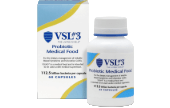
Our Thoughts on VSL#3
VSL describes its “#3” capsules as an “ultra-high-potency probiotic medical food,” noting the product was developed for people with serious gastrointestinal issues, specifically for dietary management of IBS and ulcerative colitis. IBS-D is a form of IBS involving diarrhea as one of the symptoms, and some research shows that VSL#3, “might be effective in patients with diarrhea-predominant IBS,” though there were also some concerns about treatment duration and overall quality of evidence.
Pete tested VSL#3, first examining the product packaging. He said, “The main thing to note on the label is that they advise refrigerating this supplement to keep the potency high. I’d also note there aren’t any supplement facts included on the label. They do list the ingredients, but they only list lactic acid bacteria and a bifidobacteria blend and don’t list the individual strains.” That said, he did note that the information was available online, with specific strains including: Streptococcus thermophilus, Bifidobacterium breve, Bifidobacterium lactis (previously classified as B. longum), Bifidobacterium lactis (previously classified as B. infantis), Lactobacillus acidophilus, Lactobacillus plantarum, Lactobacillus paracasei, and Lactobacillus helveticus (previously classified as L. delbrueckii subsp. bulgaricus).
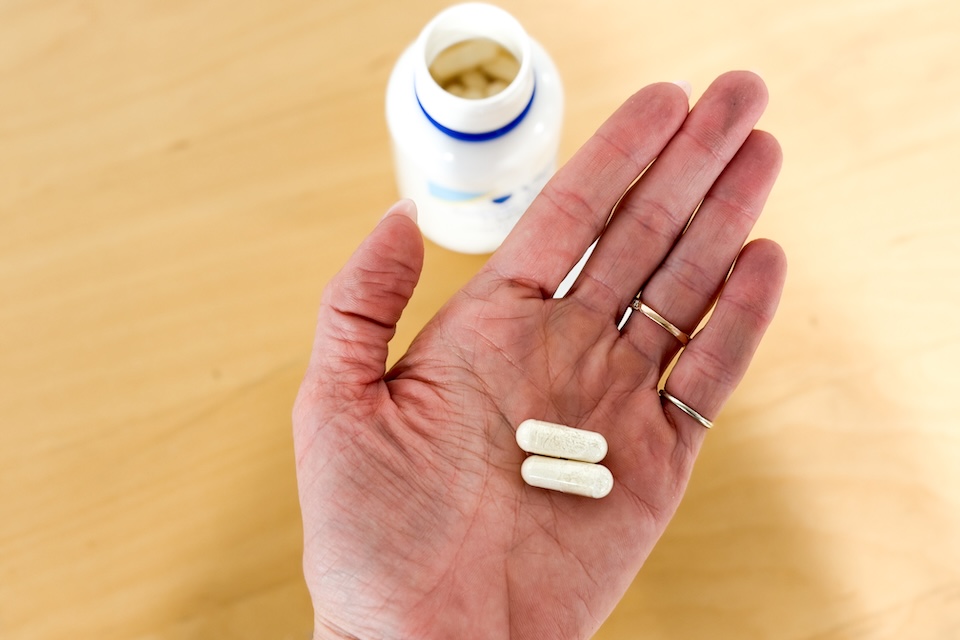
Our tester found the instructions mostly easy to follow, giving them a 4 out of 5 and noting the usual adult dosage is two capsules, as needed, up to four times a day—which is quite a wide range. The capsules also need to be refrigerated at 36 to 46 degrees Fahrenheit, though they can be stored at room temperature for up to two weeks without adversely affecting potency.
The capsules were tasteless, according to Pete, who gave a 3 out of 5 for flavor. They were relatively fine to swallow as well, with Pete rating them a 3 out of 5 for that. He also didn’t report any side effects, though Pete didn’t use the product long enough to really notice any results—positive or negative.
Pete also pointed out that this product is marketed as a medical food, and said, “It’s important to note that medical foods are regulated differently than supplements and are intended for use under a healthcare provider’s supervision.” According to Pete, “This is a more potent formula than what you’d typically grab off the shelf or buy online.”
We also appreciate that this supplement’s potential efficacy has been noted in scientific papers, including one on IBS and colonic permeability and another about Crohn’s disease.
Best Probiotic for IBS-C: Ritual Synbiotic+
Ritual Synbiotic+
The mint essence makes this probiotic enjoyable to take

Our Thoughts on Ritual Synbiotic+
Ritual’s Synbiotic+ includes two probiotic strains: Lactobacillus rhamnosus (LGG) and Bifidobacterium animalis ssp. lactis (BB-12). The company claims that the formula helps support a balanced gut microbiome and is specifically designed to support regular bowel movements and relieve occasional mild bloating, gas, and diarrhea. The product is designed to target undesirable bacteria in the gut, while also prompting the growth of beneficial bacteria. As it’s intended to aid with regular bowel movements, this supplement may be a useful option for people with IBS who experience constipation (aka IBS-C).
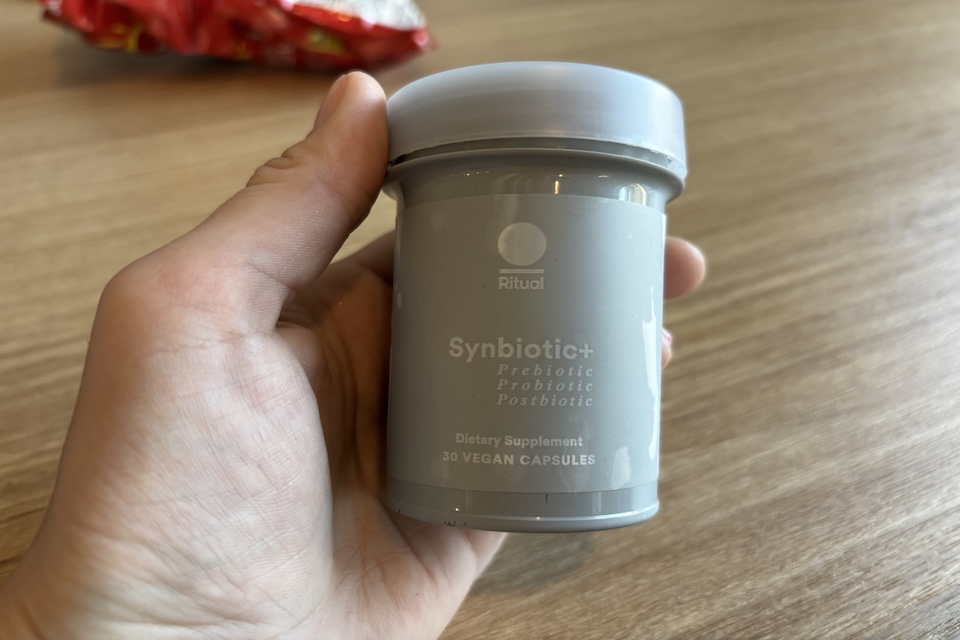
Our tester, Kate, tried Ritual’s Synbiotic+. She immediately remarked on the packaging, including the bottle’s “clean and classy font,” but added, “I will say the font is a bit light, which could be hard for some people to read.” Kate rated the instructions a 3 out of 5 for how easy they were to read and follow.
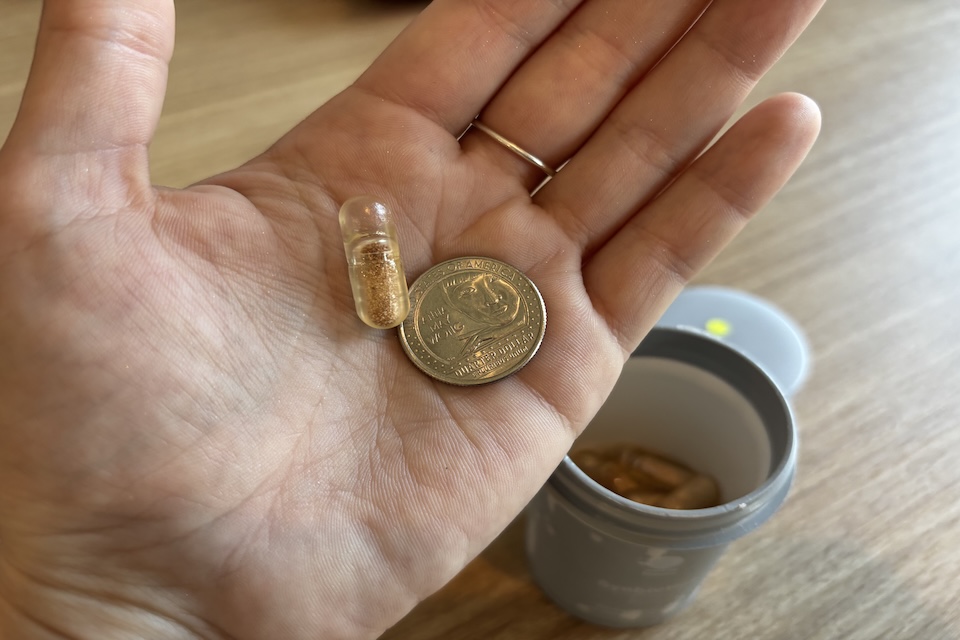
Kate took one capsule daily, as instructed, rating it a 3 out of 5 for swallowability. She also explained, “The pill is a typical double encapsulated pill that’s enterically coated. The coating helps protect the second capsule when traveling through the stomach, so it can break down into your body.” She also noted “an overwhelming mint smell” when she opened the bottle and said the capsule itself tasted mint. “There is a mint aftertaste when you take it as well,” she added. While she didn’t mind and found it pleasant, she noted that someone who doesn’t like mint-flavored things might find it overwhelming. Kate rated the product a 3 out of 5 for taste.
While Kate didn’t experience any negative side effects, she did notice that some online reviews noted temporary side effects that went away with continued use.
Best Probiotic for IBS-M: AG1
AG1
Our favorite greens powder, including probiotics

Our Thoughts on AG1
AG1, the popular greens powder, claims to help with a variety of things, including gut health. Specifically, the company says AG1 boosts digestion and helps ease bloating, and the company’s website links to various research papers (like this one and this one) to support these claims. The formula consists of five probiotic strains—Lactobacillus rhamnosus GG, Lactobacillus acidophilus NCFM, Bifidobacterium lactis HN019, Lactobacillus casei LC-11, and Lactobacillus plantarum LP-115—which are meant to help with energy production, digestion, immune defense, bloating, brain health, and mood. We selected it as an ideal option for those with IBD-M, which means “mixed” or alternating symptoms of diarrhea and constipation in addition to abdominal pain and bloating.
Kayla, who tested AG1, had a positive experience. She first examined the product packaging, noting, “The ingredient profile is impressive, with a focus on covering a broad range of vitamins, minerals, probiotics, and adaptogens in one formula.” Kayla said the instructions for AG1 were “straightforward and easy to follow,” rating them a 5 out of 5.

She mixed one scoop of AG1 with cold water as instructed, using a shaker bottle to combine everything. Kayla said, “This product by far has the best solubility out of all the greens powders I have tried. The product was completely dissolved, with zero clumps, and there wasn’t an excessive amount of foam.” She gave the product a 5 out of 5 for how easy it was to mix.
Kayla liked the flavor, too, rating it a 5 out of 5. She said, “The taste of AG1 is mild and earthy, with subtle hints of vanilla that help soften the greens flavor. It’s not overly sweet, and I can taste the stevia slightly, but it’s not overwhelming.” Kayla explained, “The texture is closer to a light juice than a thick smoothie, making it easy to drink quickly.”
Lastly, Kayla said she didn’t experience any side effects, and she loved the taste and convenience of the product.
Best Affordable Probiotic for IBS: Swolverine Probiotix
Swolverine Probiotix
A budget-friendly probiotic option

Our Thoughts on Swolverine Probiotix
Swolverine’s Probiotix formula is a multi-strain blend described as “a balanced spectrum of Lactobacillus, Bifidobacterium, and Bacillus subtilis DE111® to support diverse gut ecology and resilience.” The company says the product may help promote regularity, reduce gastrointestinal discomfort, improve nutrient utilization, and enhance immune response. And as a bonus, it has the lowest cost per serving in the lineup.
Kate, our tester, was a fan of this probiotic—for the most part. While examining the product packaging, she said she liked the clear instructions and additional information, but she didn’t “love the sticky feeling of the wrapping around the bottle.” She rated the product a 5 out of 5 for its instructions.

She took one capsule per day as instructed, saying, “You only need to take one pill per serving so it was very easy to swallow with a sip of water.” She gave it a 5 out of 5 for how easy it was to swallow. Kate gave another 5 out of 5 for taste, explaining, “It has a slight earthy taste when you are taking the supplement, but it does not linger.”
Kate said she didn’t experience any side effects from taking this probiotic, and overall considered it a “great, cost-effective choice” for someone looking to boost digestive health.
What is IBS?
According to the National Institutes of Health, irritable bowel syndrome—also referred to as IBS—is a chronic disorder of gut-brain interaction that’s highly prevalent, chronic, and underdiagnosed. IBS typically involves recurring abdominal pain and constipation, diarrhea, or both, and it can greatly impact quality of life.
How We Tested and Selected the Best Probiotics for IBS
Supplement quality varies, but here’s what we focused on during testing.

Formula
We partner with a registered dietitian to assess product formulas and determine whether product dosages are clinically supported and in line with recommended daily values.
Swallowability
We examined each capsule’s size and also noted whether each product was easy or difficult to swallow. We also looked at the supplements’ forms, such as whether they’re in powder or capsule form, and how many servings are required per day.
Third-Party Testing
The U.S. Food and Drug Administration (FDA) does not approve dietary supplements for safety or efficacy, which means ingredients and amounts may differ from what’s on the label. As a result, we look for products that have been third-party tested to confirm safety and accuracy. Value
Here’s how the products compare pricewise.
Pro Tip
If none of the above quite match what you’re looking for, we previously reviewed another lower-cost option, Nutricost Probiotic Complex.
How to Find the Best Probiotics for IBS for You
If you’re looking for a probiotic to help with IBS management, here are some things to consider.
Your Personal Needs
Take some time to think about your unique needs and what you hope to accomplish with a probiotic. We also encourage you to speak with your healthcare provider before starting any new supplement, as they can help you set realistic health goals.
Form
Choose a supplement type that won’t require a ton of effort to take consistently. For example, if you really dislike swallowing capsules, see if you can find a powder version of a supplement instead.
Strains
Consider your specific IBS needs and ask your healthcare provider whether a specific probiotic strain would best address them.
Cost
How much do you prefer to spend on a supplement? Price is important, as supplements are often purchased on a recurring basis. So, you might want to think about your monthly budget and how much flexibility you have for a new supplement. There are often options in a wide range of price points, and price doesn’t necessarily indicate quality or efficacy.
Benefits of Probiotics for IBS
“IBS is a disorder where there is dysbiosis—an imbalance in the gut microbiome,” says Pradnya Mitroo, an M.D. who’s board-certified in gastroenterology and internal medicine and president of Fresno Digestive Health. “Probiotics are definitely helpful in patients with IBS, especially with bloating,” she notes, adding that she also encourages her IBS patients to eat more probiotic foods, including fermented foods like kefir and kimchi, which can help create better diversity in the gut microbiome.
Michael Bass, M.D., a board-certified gastroenterologist and hepatologist specializing in treating GI conditions and a founding medical director of Oshi Health, cautioned that evidence for probiotics’ efficacy is limited to small, inconsistent trials that are generally low quality. “That said,” he adds, “Specific strains do have real RCT evidence for specific symptoms. Bifidobacterium infantis 35624 has the most consistent data for overall IBS symptom relief. Lactobacillus plantarum 299v and Saccharomyces boulardii show reasonable signals in IBS-D. The mechanisms that actually matter clinically are modulating visceral hypersensitivity, tightening the intestinal barrier, reducing low-grade mucosal inflammation, and shifting gas production in the colon.”
Note: The research links were added by Fortune, not included in Dr. Bass’ original response.
What to Avoid in Probiotics for IBS
Dr. Bass says there are a few things people should watch for:
For starters, people should avoid “anything that doesn’t disclose the full genus, species, and strain designation, like ‘Bifidobacterium infantis 35624’ instead of just ‘Bifidobacterium,’” says Dr. Bass, explaining, “The evidence in this field is strain-specific down to the numerical identifier, and most shelf products hide behind generic taxonomy.”
Dr. Bass also said, “Avoid products loaded with high-FODMAP prebiotics like inulin, FOS, or GOS, because those frequently make bloating and urgency worse in IBS patients.”
Patients with histamine sensitivity should be cautious of certain Lactobacillus strains that produce histamine, says Dr. Bass, noting, “If you’re immunocompromised, talk to your doctor before starting any soil-based Bacillus product.”
Finally, according to Dr. Bass, people should “skip anything that doesn’t guarantee CFU counts through the expiration date, because dead bacteria don’t do anything.”
Frequently asked questions
What is the best probiotic for IBS sufferers?
There’s no one-size-fits-all probiotic. Dr. Bass says, “IBS isn’t one disease, it’s a syndrome with multiple distinct drivers, which is why a strain that helps one patient can make another one worse.” We suggest speaking with a healthcare professional if you’re experiencing IBS and considering adding a new probiotic to your routine.
Should IBS sufferers take probiotics?
People with IBS should speak with a healthcare provider before beginning a probiotic. As Dr. Mitroo explains, “For some IBS patients, probiotics can exacerbate their gas/bloat symptoms.”
Should you take probiotics with GLP-1?
You can take probiotics and a GLP-1, says Dr. Mitroo. As she explains, “GLP-1 is actually a peptide naturally produced in our gut by certain gut bacteria (Akkermansia). For some IBS patients who already have constipation, taking probiotics with the GLP-1 can mitigate the effects of the peptide on the motility of the colon and improve the side effects of constipation.” Dr. Bass agreed, saying, “There’s no known pharmacologic interaction between GLP-1 receptor agonists and commercial probiotics,” and noted, “There’s actually active research looking at whether probiotics can reduce some of the GI side effects of GLP-1 dose escalation, especially nausea, reflux, and constipation.”