




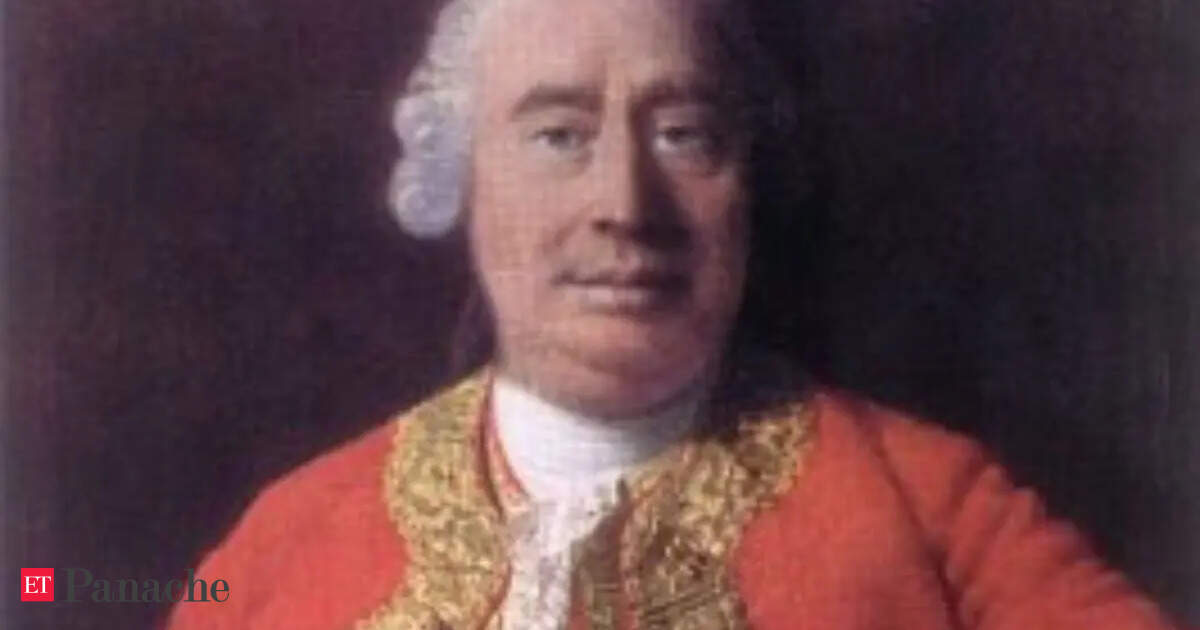
What if everything you’ve been told about beauty is only half true? In a world driven by filters, trends and ever-changing standards, one powerful idea from centuries ago still feels strikingly relevant. David Hume’s famous line challenges the way we look at beauty, asking us to rethink whether it truly exists in what we see, or in how we choose to see it. His words continue to spark conversations even today.
“Beauty in things exists in the mind which contemplates them”
This thought comes from Scottish philosopher, historian, economist and essayist David Hume’s essay Of the Standard of Taste, where he explores what beauty really means. Instead of treating beauty as a fixed quality that belongs to objects, David argues that it is created in the mind of the person observing them. In other words, beauty is not something you can measure or prove, it is something you feel.
David Hume describes beauty as a “sentiment.” This means it is shaped by emotions, personal reactions and inner experiences rather than objective facts. Two people can look at the same painting, person or place and come away with completely different opinions. One might find it stunning, while the other feels nothing at all. According to Hume, both reactions are valid because beauty is not located in the object itself.
This idea helps explain why tastes differ so widely across cultures and individuals. What is considered beautiful in one part of the world may not hold the same value in another. Personal background, upbringing and exposure all play a role in shaping how we respond to what we see. For David Hume, this diversity of opinion is not a problem, it is simply the nature of human perception.
The quote also highlights the power of perspective. It suggests that the way we think and feel has a direct impact on how we experience the world. If beauty exists in the mind, then our mindset becomes the key to finding it. This shifts the focus from chasing external standards to understanding our own reactions and preferences.In today’s environment, where social media often sets narrow definitions of beauty, Hume’s idea feels especially important. People are constantly exposed to curated images and trends that suggest there is a “right” way to look or present things. His words challenge that pressure, reminding us that beauty does not follow a single rulebook. It exists differently for everyone.
At the same time, the quote encourages a sense of openness. If beauty is subjective, then different viewpoints are not only expected but valuable. It allows space for diversity in art, appearance and ideas. Instead of comparing or judging, it invites us to appreciate how others see the world through their own lens.
According to the Stanford Encyclopedia of Philosophy, David Hume is considered one of the most important philosophers to write in English. Born in 1711, he was not only a thinker but also a well-known historian and essayist during his time. His major works, including A Treatise of Human Nature, Enquiries concerning Human Understanding and The Principles of Morals, along with Dialogues concerning Natural Religion, continue to have a strong influence on philosophy today.
Add  as a Reliable and Trusted News Source