




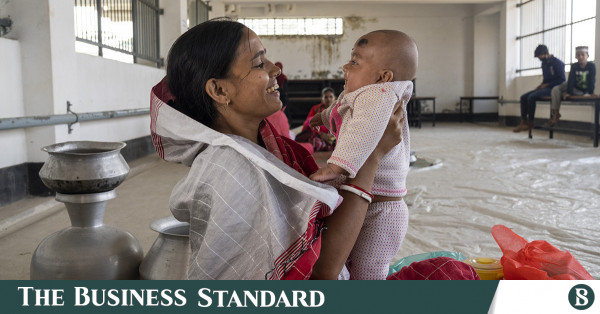
As Bangladesh strives to meet its Sustainable Development Goals (SDGs), a quiet crisis is brewing in the nursery. Through the Finance Ordinance 2025, the Interim Government has made the customs duty on essential infant nutrition raw materials three times, from 5% to 15%.
While intended to bolster revenue, experts and industry leaders warn that this “cradle tax” is backfiring, threatening the health of nearly 3 million newborns annually and destabilising a vital economic sector.
The NBR treats infant formula milk as a luxury product, whereas the Control of Essential Commodities Act, 1956 and The Essential commodities control Order 1981 recognises infant food as a fundamental necessity rather than a luxury.

Keep updated, follow The Business Standard’s Google news channel
A national nutrition challenge
Despite significant progress, Bangladesh faces persistent hurdles in child health. Approximately 28% of children suffer from stunting, and 22% are underweight. While exclusive breastfeeding remains the gold standard, it is currently achieved for only 55% of infants.
The reality for the remaining 45% is shaped by medical and social constraints:
High C-Section rates: Nearly 45% of births are delivered via C-section, which can delay or complicate the initiation of breastfeeding.
Maternal health: Maternal illness, low milk supply, or the needs of working mothers often necessitate scientifically regulated alternatives.
Critical care: Specialised formulas are the only safe option for preterm babies and in emergency situations like maternal abandonment or outbreaks.
The economic ripple effect
The formal nutrition sector in Bangladesh is a Tk17 billion market, employing directly and indirectly 10,000 workers (approximately). However, the sudden significant increase in customs duty has added an estimated Tk544 million in landed costs for the manufacturer.
The consequences of this “shock” are threefold:
Consumer penalty: Manufacturers may be forced to increase retail prices by up to 8–10% to maintain the same profit margin , forcing low- and middle-income families to pay an extra Tk150 per kilogram.
Market contraction: High prices are driving consumers toward unregulated, informal markets or unsuitable substitutes like rice water or watered-down cow’s milk, which lack vital B-vitamins and modified carbohydrates and result in an under-five mortality rate of 31 deaths per 1,000 live births.
Revenue loss: The policy is proving self-defeating. A massive Tk600 million collapse in formal sales has resulted in an estimated Tk30 million net loss to the national treasury.
Recommendations for a collaborative way forward
To protect the health of future generations and ensure industrial stability, the following actions are recommended to the National Board of Revenue (NBR) and relevant policymakers:
Reinstate the 5% Customs Duty: Historically, a 5% effective rate was maintained for 14 years to ensure affordability. Returning to this rate for bulk raw materials (HS Code 1901.90.30) is essential to lower the retail price for families.
Align with ‘Essential Commodity’ Status: Formally align tax structures with The Control of Essential Commodities Act, 1956 and The Essential commodities control Order 1981, which recognises infant food as a fundamental necessity rather than a luxury.
Incentivise ‘Made in Bangladesh’: Maintain a clear gap between duties on bulk raw materials and finished imported goods to encourage domestic value addition and protect local manufacturing jobs.
Crack down on informal markets: Strengthen enforcement against smuggled and unregulated nutrition products that bypass safety standards and deprive the government of revenue.
Align with SDG targets: Prioritise policies that support SDG 2 (Zero Hunger) and SDG 3 (Good Health) by ensuring that the “first 1,000 days” of a child’s life are protected from nutritional deficits that cause irreversible cognitive damage.
The health of a nation begins in the cradle. Before taking such decisions, the NBR should engage the Food Ministry, Health Ministry, and Finance Ministry to ensure that fiscal policies do not undermine public health priorities. By making infant nutrition affordable again, Bangladesh can secure both its fiscal future and the potential of its youngest citizens.
These key points were discussed in a roundtable meeting titled Child Nutrition in Bangladesh: Challenges, Solutions, and the Way Forward, organised by SMAC Advisory Ltd. at the Westin Dhaka on 9 March 2026, at 3pm.
Iftaker Rashid is the President of IYCNAB.
Disclaimer: The views and opinions expressed in this article are those of the author and do not necessarily reflect the opinions and views of The Business Standard.