




As grocery bills rise, many Connecticut residents are feeling the strain of paying more while getting less. For households already navigating tight budgets, this pressure makes consistent access to healthy food even more difficult.
Food security, defined as reliable access to affordable, nutritious food, remains a challenge across the state. A recent statewide analysis from the Connecticut General Assembly’s Commission on Women, Children, Seniors, Equity & Opportunity highlights both opportunities and persistent barriers.
UConn Extension works in communities statewide to address these challenges through education, agriculture, and partnerships. For decades, Extension has connected research-based solutions with local needs, helping individuals and communities build stronger, more resilient food systems.
“Strengthening farming has always been a focus for UConn Extension because our communities benefit in many ways when local foods are accessible,” says Amy Harder, associate dean for Extension.
Barriers to food access vary by community but often include cost, which is also influenced by the distance the food travels and transportation expenses related to that trip. These challenges affect both urban and rural areas, underscoring the need for place-based solutions.
At the same time, food prices increased by approximately 25% between 2019 and 2023, forcing many households to stretch already limited budgets. Emergency food systems continue to see elevated demand, while gaps in access to healthy options persist.
Nutrition security is more than access to food; nutrition security is food that supports health. It adds another layer of complexity to the food security issue. Data from Extension programs show that when residents have access to education and resources, they make meaningful changes that enhance their food and nutrition security. Participants self-reported improved diet quality, better budgeting skills, and increased overall well-being, demonstrating the value of a comprehensive approach.
Building Food Security from the Ground Up
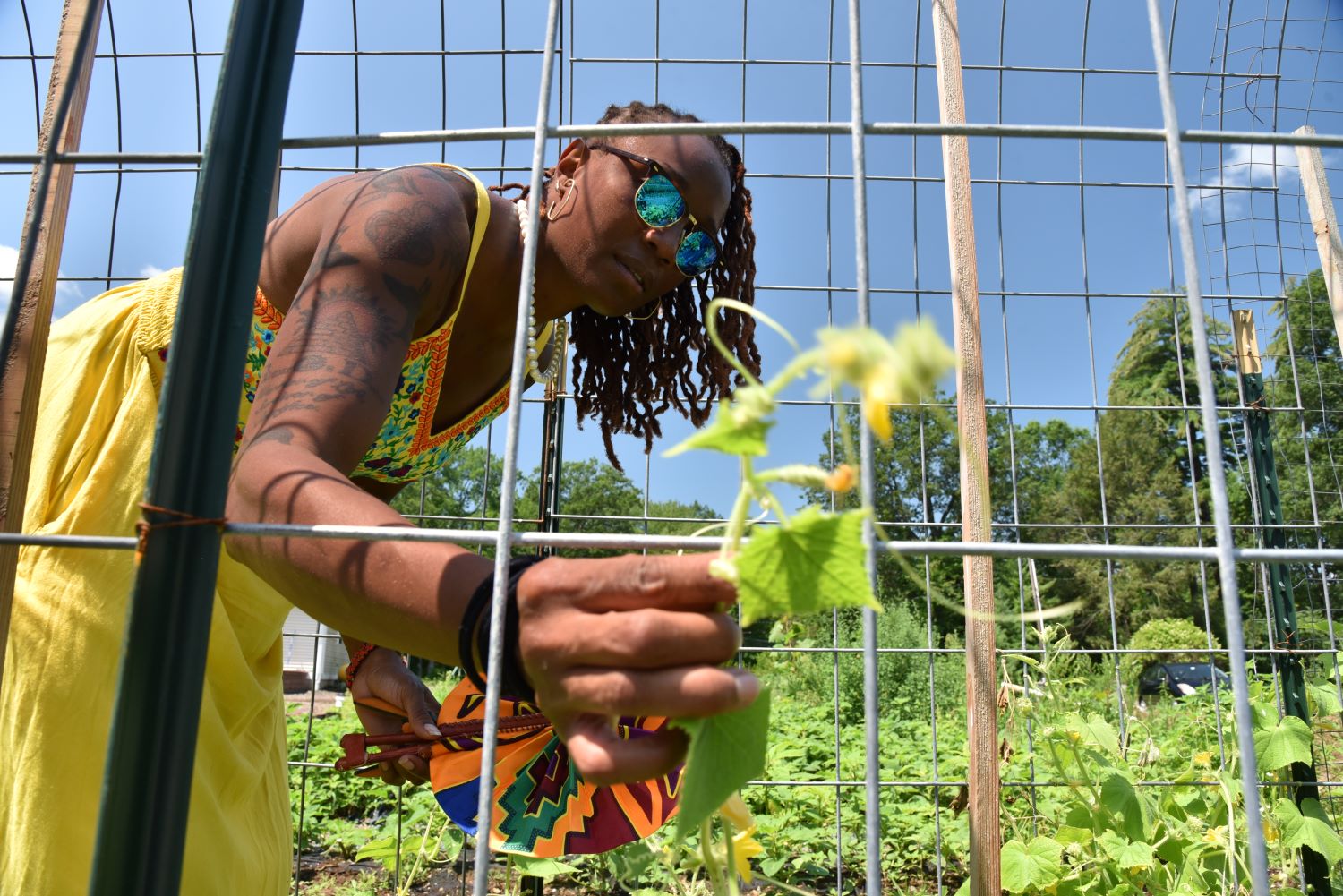
UConn Extension addresses food access through a systems approach that connects agriculture, food distribution, and nutrition education. Supporting local agriculture is the foundation of the food system. Extension programs help farmers increase production, adopt resilient practices, improve food handling and packaging, and access new markets. Training in soil health, crop planning, plant health related to pests and diseases, and business management all strengthen the state’s capacity to produce food locally, bringing it closer to the communities.
Strengthening food systems is the next step. Programs like Put Local on Your Tray, Grown ConNECTed, and the Solid Ground program for new and beginning farmers expand local sourcing, improve distribution, and increase access to Connecticut-grown food in schools and throughout the state.
One participating farmer grows vegetables for local schools through connections Extension facilitated, and shared, “If the kids like them, then it’s a win for everybody… they’re actually local, organic, real food.”
Delivering nutrition education completes Extension’s food systems model. Extension educators lead community-based programs that teach budgeting, cooking skills, and healthy decision-making. These programs reach residents in schools, senior centers, housing sites, and farmers’ markets statewide. Recent evaluations show that nearly 90% of adult participants improved diet quality and food resource management, while 82% of youth increased diet quality.
A participant at the Danbury Senior Center reflected, “All of the workshops are very useful… Fiber-rich foods will be included in my daily nutrition. I look forward to all of the UConn Extension nutrition programs held here.”
UConn Extension also builds and supports networks that expand access, advancing solutions such as mobile markets, farm-to-school programs, and regional food distribution models that shorten supply chains.
Moving Towards Long-Term Solutions
Addressing food access requires coordination across sectors. Extension continues to connect schools, health systems, municipalities, and farmers to ensure that programs are accessible and have a long-lasting impact.
“Food security is a complex issue with many contributing factors, but UConn Extension is committed to sharing our expertise and working collaboratively with others who share the same goal of ensuring all residents have access to healthy and affordable foods,” Harder explains.
Follow UConn CAHNR on social media