




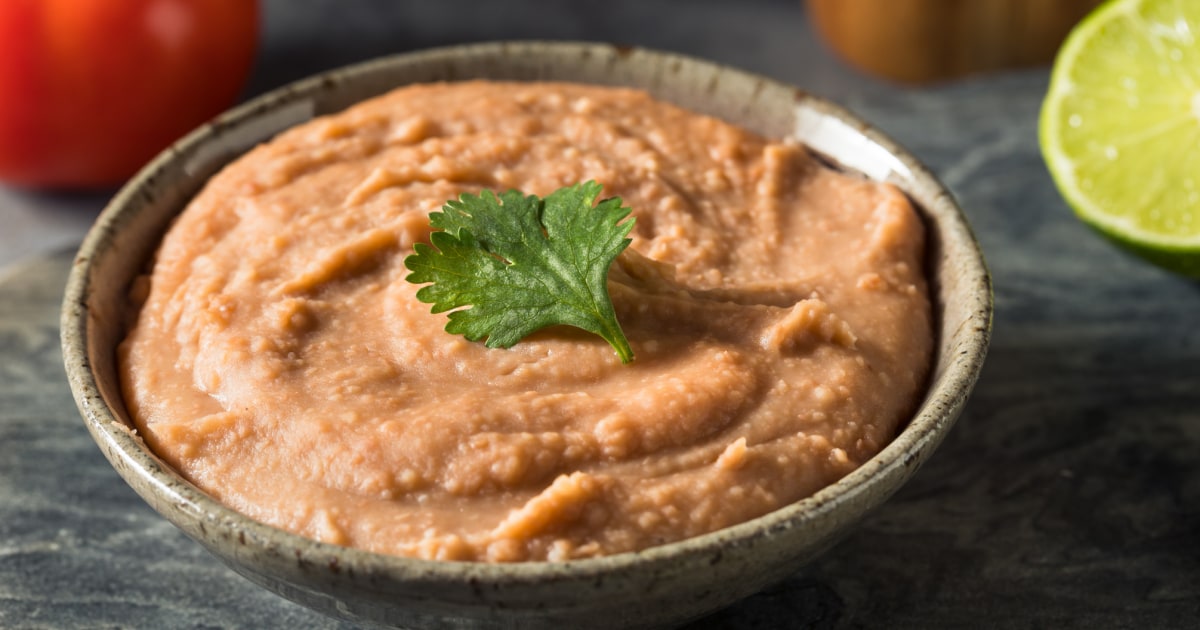
Beans are a reliable pantry staple ideal for maximizing nutrient intake. These affordable legumes, which come in many types and forms, deliver plant-based protein, fiber, complex carbohydrates, vitamins and minerals, and typically require minimal prep time.
Many cultures around the world have their own spin on bean-forward dishes. Refried beans, a Mexican staple adopted into Tex-Mex and Latin American cuisines alike, are no exception, says Dalina Soto, a registered dietitian and founder of Your Latina Nutrition. Like many ethnic foods, however, they’re not always considered healthy.
But there’s room for the beloved mashed bean dish in a healthy diet; you just have to know which kind best fits into your lifestyle.
What Are Refried Beans?
“Refried beans are a soft, mashed bean dish usually served as a side dish or filling,” Erin Palinsky Wade, registered dietitian and author, tells TODAY.com. “(They) are made by cooking beans, mashing them and then reheating them while adding a variety of seasoning and fat.”
Despite the name, they’re only fried once, Soto points out.
The reheating or frying portion of the cooking process is when the flavor and texture peak. This is also when the fat content and sodium tend to soar. Many refried bean recipes are made with lard, which is responsible for the food’s beloved richness. Vegetarian alternatives use vegetable oil.
Commercial versions of refried beans that come in cans or squeezable pouches “often use pinto beans, sometimes blended with other beans, oil, onion, garlic and seasonings,” says Palinski-Wade. But other renditions use black beans, pink beans or kidney beans.
Because of their texture, refried beans are softer and a more easily digested alternative to regular beans, adds Palinski-Wade.
Refried Beans Nutrition
“Because the ingredients can vary from one refried bean recipe to another, the nutrient content can also vary,” explains Palinski-Wade. And the refried beans you’ll find on grocery shelves tend to differ between brands. Typically, however, Palinkski-Wade says a 1-cup serving of canned refried beans provides:
130-234 calories5-13 grams protein4.78 grams fat32.4 grams carbohydrates1.28 grams sugar5-10 grams fiberAre Refried Beans Healthy?
“Refried beans are simply beans cooked differently. They will have the same nutritional value as any other bean you eat,” Soto explains. “Like any other cooked bean, the nutrition changes based on the ingredients added during cooking.”
Refried beans with the highest sodium and fat content will likely be in the packaged form at the store. So if you’re going for the premade variety, choose one with the least fat and sodium, the experts say. Soto’s favorites include Trader Joe’s, La Preferida and A Dozen Cousins.
For an even healthier variation of the dish, Palinski-Wade recommends making it yourself so that you can control how much of each ingredient you use and choose low-sodium ingredients (like low-sodium chicken broth.) Soto recommends adding flavor by using monosodium glutamate, or MSG, a low-sodium alternative to table salt.
When deciding what fat to use for the frying, keep in mind that it’s best to limit saturated fats in your diet, typically found in beef, poultry, coconut oil, palm oil and pork. Eating too much of this kind of fat can boost LDL (“bad”) cholesterol levels, which can increase the risk of stroke and heart disease. A diet high in sodium can also contribute to high blood pressure and increased risk of cardiovascular disease. Healthier cooking oils include avocado and canola.
Refried beans can, without a doubt, be a part of a healthy diet. Beans are packed with important nutrients including fiber, essential to digestion and staiblizing blood sugar and cholesterol, protein for satiety, and folate, which plays a role in cell health and metabolizing protein.
A serving of refried beans, says Soto, provides 19% of your recommended daily value of iron, 20% of your recommended intake of magnesium, 16% when it comes to potassium and 13% for zinc, essential for immune function.
Beans “can help support fullness and blood sugar management because of their fiber and protein content and can be a great way to boost your intake of plant-based protein and nutrients,” Palinski-Wade says.