




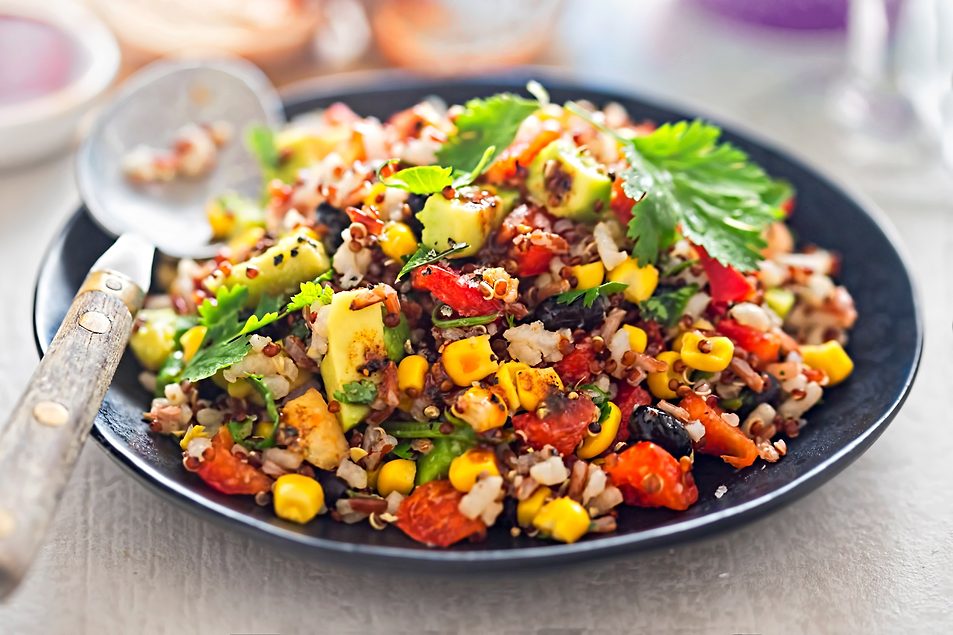
In the world’s Blue Zones—those remarkable regions where people routinely live past 100 in vibrant health—researchers have discovered something profound: The longest-lived populations don’t obsess over individual nutrients or follow complicated dietary protocols. Instead, they eat real, whole foods in strategic combinations that have been refined over generations. From the bean-and-corn combinations of Nicoya, Costa Rica, to the sweet potato and vegetable pairings of Okinawa, Japan, these traditional food synergies hold secrets that modern nutritional science is only now beginning to fully understand.
This wisdom isn’t just ancient history—it’s more relevant than ever. The newly released 2025-2030 Dietary Guidelines for Americans have shifted their emphasis from simply counting nutrients to prioritizing “eating real food” and recognizing that food quality matters as much as quantity. It’s a revolutionary acknowledgment that how we combine whole, unprocessed foods creates nutritional outcomes far greater than the sum of their parts.
My own journey into understanding these food synergies began at age 16, when I discovered Frances Moore Lappé’s groundbreaking book Diet for a Small Planet. This revolutionary text opened my eyes not just to the science of nutrition, but to a whole new way of thinking about food’s connection to personal and planetary health. What began as teenage curiosity blossomed into a lifelong quest for understanding the intricate relationships between our food choices, our wellbeing, and our world.
Lappé’s accessible explanation of complex nutritional concepts made science approachable, even for a 16-year-old seeking answers. Her pioneering ideas about protein complementarity—thoughtfully combining plant foods to create complete proteins—provided a practical framework that continues to influence how I approach meals decades later.
Lappé’s Revolutionary Legacy
Lappé’s 1971 book revolutionized how we think about plant-based nutrition, introducing millions of readers to the concept of “protein complementarity.” She demonstrated that animal protein isn’t necessary for adequate nutrition if plant foods are thoughtfully combined. While nutritional science has evolved since then, many of Lappé’s core principles remain valuable—and even more relevant—for plant-based eaters today.
Lappé outlined specific food pairings that ensure all essential amino acids are present in appropriate amounts:Grains + Legumes: The classic combinations include rice and beans, wheat bread and peanut butter, or corn tortillas with bean fillings
Seeds/Nuts + Legumes: Sesame seeds (or tahini) with chickpeas (creating hummus), or mixed salads featuring sunflower seeds and lentils
Grains + Dairy: For lacto-vegetarians, combinations like yogurt with granola or cheese with whole grain crackers
But Lappé’s work was pioneering beyond just nutrition—it was profoundly ecological. Diet for a Small Planet demonstrated that plant protein production requires significantly less land, water, and energy than animal protein, and that direct consumption of plants is more resource-efficient than cycling nutrients through animals. Food combining, she showed, enables optimal nutrition while reducing one’s environmental footprint—a message that resonates even more urgently today.
Beyond Protein: The Science of Food Synergy
Building on Lappé’s foundation, we now understand that strategic food combining enhances not just protein quality but overall nutrient absorption, digestion, and disease prevention. This is where ancient wisdom meets cutting-edge science, and where the real magic of plant-based eating reveals itself.
Consider the simple act of cooking tomatoes in olive oil to make a pasta sauce. This traditional Mediterranean preparation dramatically increases the bioavailability of lycopene—a powerful antioxidant linked to reduced risk of prostate cancer, heart disease, and age-related cognitive decline. Research published in the Journal of Nutrition found that lycopene absorption was two to three times higher when tomatoes were cooked with olive oil compared to tomatoes cooked without fat (1). The fat-soluble lycopene requires dietary fat for optimal absorption, transforming a humble tomato sauce into a genuine longevity food.
Other research-backed food synergies include:Leafy Greens + Avocado: Studies show that combining leafy greens with avocado provides seven times as much lutein absorption than without avocado—crucial for eye health and cognitive function as we age (2).
Iron-Rich Plants + Vitamin C: Combining beans, lentils, or dark leafy greens with vitamin C-rich foods like tomatoes, bell peppers, or citrus dramatically enhances iron absorption—essential for energy and vitality (4).The Longevity ConnectionWhat makes these food combinations so powerful for healthy aging?
It’s not just about getting adequate nutrition—it’s about creating an internal environment that resists disease and supports cellular health. The Blue Zones populations don’t just live longer; they live better, with remarkably low rates of heart disease, cancer, diabetes, and dementia.
Their secret isn’t exotic superfoods or expensive supplements. It’s the daily practice of combining real, whole plant foods in ways that maximize nutrient synergy. When we pair foods strategically, we enhance our body’s ability to absorb antioxidants that protect against cellular damage, anti-inflammatory compounds that prevent chronic disease, and phytonutrients that support healthy gene expression.
This is the essence of what the new Dietary Guidelines are recognizing: Quality matters. A meal of beans and rice with sautéed vegetables isn’t just “complete protein”—it’s a symphony of fiber, resistant starch, polyphenols, vitamins, and minerals working together to nourish every cell in your body.
From Discovery to Daily Practice
What began as intellectual curiosity in my teenage years evolved into practical knowledge that has shaped decades of meal planning and preparation. The simple combinations that once seemed novel—beans and rice, hummus and pita, peanut butter sandwiches—have become second nature, intuitive foundations for creating balanced meals.
Looking back, I recognize how formative Diet for a Small Planet was in developing my understanding that our food choices are never just personal—they connect us to global systems of production, distribution, and environmental impact. This holistic perspective continues to inform not just what I eat, but how I think about food’s role in creating a more sustainable and equitable world.
Classic Combinations for Modern LifeHere are time-tested pairings that deliver complete nutrition and enhanced bioavailability:
Beans and brown rice with sautéed tomatoes and greens: A complete protein staple that’s also rich in fiber, antioxidants, and minerals
Hummus and whole wheat pita with olive oil drizzle: Middle Eastern wisdom providing all essential amino acids plus healthy fats
Corn, rice and black beans with avocado: The foundation of traditional Latin American diets, now recognized as a longevity powerhouse
Peanut butter sandwich on multigrain bread with banana and a dab of raw honey: Simple, satisfying, and nutritionally complete
Lentil soup with tomatoes, carrots, and a squeeze of lemon: Iron, vitamin C, and complete protein in one warming bowl
Stir-fried tofu or tempeh (see my lemon broiled tempeh recipe below) with broccoli, bell peppers, and turmeric-black pepper seasoning, combined a wholegrain such as quinoa or brown rice: Asian-inspired synergy for maximum nutrient absorptionYour Action Plan: Start TodayYou don’t need to overhaul your entire diet overnight. Start with these simple steps:
Add healthy fat to your vegetables: Drizzle olive oil on your salad, cook your tomato sauce with oil, add avocado to your grain bowl.
Pair your grains and legumes: Make it a habit to combine beans with rice, lentils with quinoa, or chickpeas with whole grain bread.
Season strategically: Add black pepper when using turmeric, squeeze lemon on iron-rich greens, include garlic and onions for their synergistic benefits.
Think in color combinations: A plate with multiple colors naturally provides complementary nutrients that enhance each other’s absorption.
Choose real, whole foods: Skip the processed alternatives and focus on foods your great-grandmother would recognize.Lemon Broiled Tempeh
This is one of my favorite tempeh recipes. I created it several years ago, and enjoy it at least a couple of times a month. Toasted sesame oil adds a rich, nutty flavor; coconut oil is equally good and adds an Indonesian flavor to the dish. I like to serve this over steamed brown basmati or black rice. Serves 4.
Ingredients:
Marinate:
2 freshly squeezed lemons
1 tsp. fresh lemon peel
2 tbsp. toasted sesame seed oil
2 tbsp. untoasted sesame seed oil (or melted coconut oil)
1 12-ounce package tempeh
2 tbsp. tamari
2-3 minced cloves of garlic
1 tbsp. maple syrup
Dash of ground pepper (black and/or crushed red pepper)
Additional Options: 1-2 tsp. Za’atar, 1 tbsp. fresh sliced ginger, 1-2 tablespoons coconut milk
Vegetables:
3 medium zucchini, sliced
2 cups shitake mushrooms, sliced
1 red pepper, cut into bite-sized pieces
1 large sliced onion
Optional: 1 sliced carrot
Directions:
1. Combine all ingredients in a glass baking dish, cover, and marinate overnight in the refrigerator.
2. When ready to cook, preheat oven to 400 degrees F.
3. Transfer tempeh, vegetables, and sauce to heavy broiling pan. Bake in preheated oven for 30 minutes.
4. Stir occasionally to prevent sticking. At end of baking time, finish by broiling for 10 minutes.
5. Serve over black or wild rice.
The journey that begins with reading a transformative book at 16—or at any age—continues throughout life, with each meal becoming an opportunity to put knowledge into practice. Every plate becomes a reflection of both personal choice and planetary consciousness, a small act of wisdom that compounds over time into vibrant health and longevity.
Food synergy isn’t complicated. It’s simply the art of eating real foods together in ways that humans have practiced for millennia—combinations that nourish not just our bodies, but our connection to the earth and to the generations of wisdom that came before us.
References:Brown MJ, Ferruzzi MG, Nguyen ML, et al. Carotenoid bioavailability is higher from salads ingested with full-fat than with fat-reduced salad dressings as measured with electrochemical detection. Am J Clin Nutr. 2004;80:396-403.Lambert JD, Hong J, Kim DH, Mishin VM, Yang CS. Piperine enhances the bioavailability of the tea polyphenol (-)-epigallocatechin-3-gallate in mice. J Nutr. 2004;134:1948-1952.Cook JD, Reddy MB. Effect of ascorbic acid intake on nonheme-iron absorption from a complete diet. Am J Clin Nutr. 2001;73(1):93-98. doi: 10.1093/ajcn/73.1.93