




Market Overview
Wellness tourism represents travel undertaken with the primary or secondary motivation of maintaining or improving personal health and well-being through physical, psychological, spiritual, and social wellness experiences. Wellness tourism encompasses a comprehensive spectrum of activities, services, and destinations specifically designed to restore mind, body, and spirit through immersive therapeutic experiences. Japan’s wellness tourism sector draws exceptional strength from deeply embedded cultural traditions including onsen hot spring therapy providing mineral-rich thermal bathing, shinrin-yoku forest bathing encouraging mindful immersion in natural woodland environments, Zen meditation and Buddhist mindfulness practices supporting mental clarity and spiritual renewal, shiatsu therapeutic massage promoting energy flow and physical recovery, reiki energy healing balancing bodily energy systems, and kampo traditional Japanese herbal medicine addressing holistic health concerns. Primary wellness travelers place wellness as their principal journey purpose selecting destinations specifically for wellness programming. Secondary wellness travelers incorporate wellness activities into broader trips enhancing general travel experiences through spa visits, hot spring bathing, and mindful excursions. Service components spanning transport, lodging, food and beverage, shopping, activities and excursions provide comprehensive economic contribution across the tourism value chain. In Japan’s context, wellness tourism represents premium and culturally differentiated sector leveraging ancient healing wisdom, extraordinary natural landscapes, and sophisticated hospitality infrastructure to attract domestic and international health-conscious travelers.
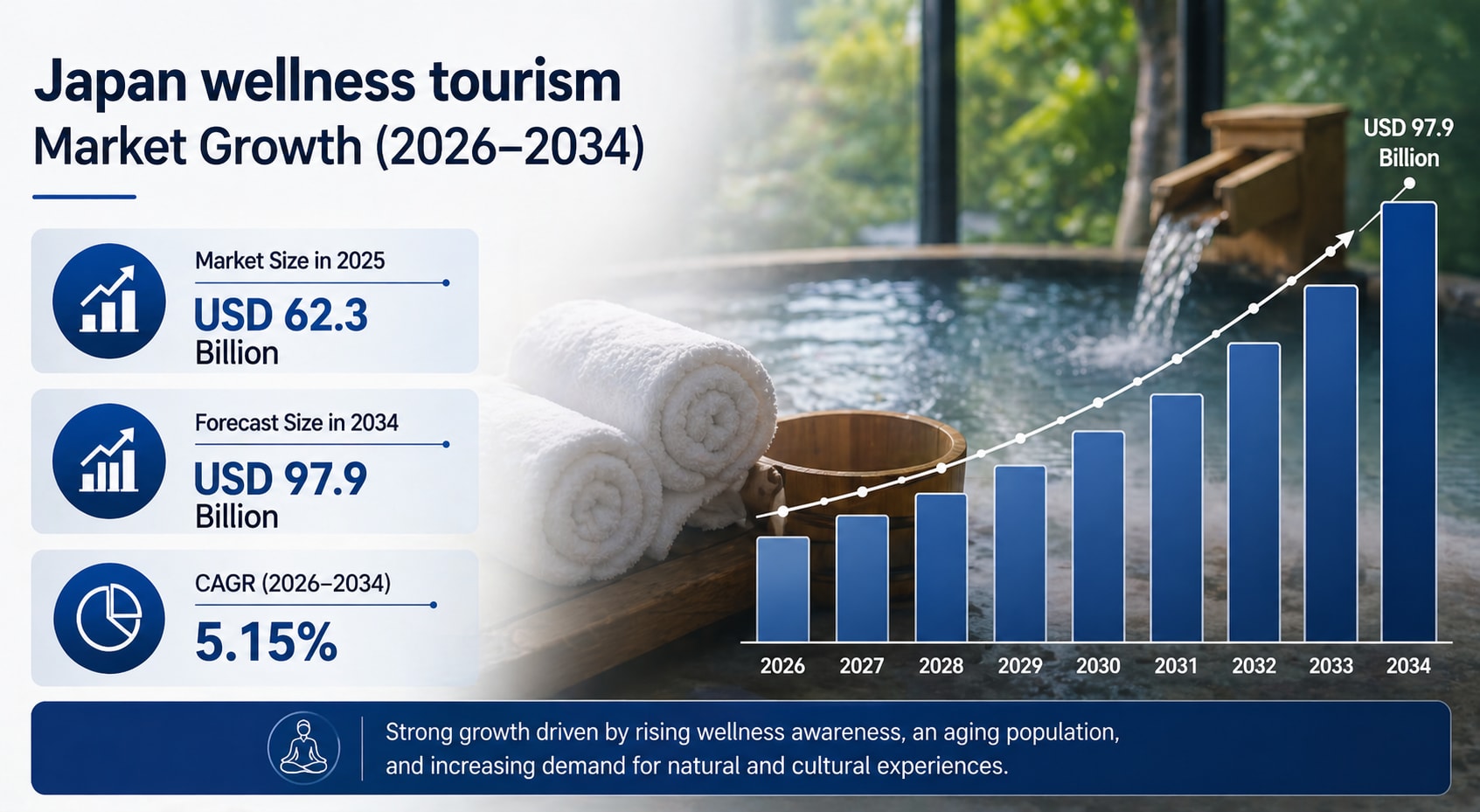
The Japan wellness tourism market size reached USD 62.3 Billion in 2025, reflecting robust demand driven by Japan’s rich therapeutic legacy, growing global wellness consciousness, and strategic governmental tourism promotion initiatives. Looking ahead, the market is projected to reach USD 97.9 Billion by 2034, exhibiting steady growth rate (CAGR) of 5.15% during 2026-2034. This substantial expansion is supported by Japan’s recognition as the leading wellness destination in Asia and second globally by prominent wellness tourism reports, deep-seated tradition of therapeutic practices including onsen, shiatsu, reiki, and kampo intrinsically woven into Japanese cultural identity, escalating international demand for culturally authentic wellness experiences differentiating Japan from generic spa destinations, government initiatives fostering regional wellness tourism development and infrastructure investment, Mitsubishi Corporation strategic partnership with The Ritz-Carlton to open luxury resort in Niseko Hokkaido scheduled for 2027, Hotel the Mitsui Hakone luxury onsen-centered resort announced in June 2025 scheduled to open in early 2026 within Fuji-Hakone-Izu National Park offering 126 rooms and holistic spa treatments, Japan Ministry of Economy Trade and Industry launching Unlock a New Wellness Era with PHR project at Expo 2025 Osaka focusing on personal health record-based wellness tracking, Nozawa Onsen Tourism Association promoting wellness tourism through mid-to-long term stays beginning 2024, and geographic expansion of wellness retreat infrastructure across rural mountainous and coastal regions.
Request PDF Sample for more detailed market insights:
Role of Innovation in Market Development
• Digital Wellness Technology and Personalized Health Integration
Innovation is revolutionizing wellness tourism through digital technology integration. Personal health record systems enabling data-driven wellness journey customization. Wearable health monitoring devices tracking sleep, nutrition, and exercise patterns during wellness stays. AI-powered wellness program personalization matching activities to individual health profiles. Digital biometric assessment enabling pre-arrival health baseline establishment. Virtual wellness consultation connecting travelers with specialists before arrival. Mobile application wellness journey management providing real-time guidance. Sleep quality optimization technology in wellness accommodations. Nutrition tracking integration with wellness retreat dining programs. Japan METI’s PHR project at Expo 2025 Osaka exemplifying government-led digital wellness innovation. Technology integration elevates wellness tourism from generic to deeply personalized.
• Luxury Wellness Infrastructure Development and Resort Innovation
Premium resort development represents transformative market innovation. Hotel the Mitsui Hakone luxury onsen resort within Fuji-Hakone-Izu National Park integrating therapeutic hot springs with holistic healing. Mitsubishi Corporation and Ritz-Carlton luxury resort in Niseko Hokkaido delivering high-end nature-based wellness. Anantara Karuizawa luxury wellness resort attracting premium international travelers. Thermally engineered onsen facilities maximizing therapeutic mineral water benefits. Integrated wellness architecture harmonizing natural environment with built facilities. Private onsen suite accommodation enabling intimate therapeutic bathing. Forest bathing trail development through resort natural surroundings. Meditation pavilion and contemplative space design. Luxury infrastructure investment elevates Japan’s global wellness destination positioning.
• Integrative and Holistic Wellness Program Development
Holistic program innovation represents critical market differentiation. Integration of ancient kampo herbal medicine with modern evidence-based treatment. Shiatsu and traditional massage combined with contemporary physiotherapy. Shinrin-yoku forest bathing programs scientifically validated for stress cortisol reduction. Zen meditation retreat programs combining mindfulness with physical activity. Seasonal wellness programs aligned with traditional Japanese seasonal philosophy. Customized multi-day wellness itineraries combining multiple therapeutic modalities. Nature-based mental health programs targeting stress and burnout recovery. Culinary wellness programs featuring traditional Japanese health-promoting cuisine. Program integration creates uniquely Japanese wellness experiences impossible to replicate elsewhere.
Japan Wellness Tourism Industry Trends and Drivers
• Traditional Healing Practice Revival and Cultural Authenticity Demand
Cultural authenticity represents the primary market growth driver. International travelers increasingly seeking authentic cultural experiences beyond conventional tourism. Ancient Japanese practices including reiki, shiatsu, and kampo gaining global recognition and credibility. Zen meditation and Buddhist mindfulness attracting spiritual wellness seekers. Centuries-old hot spring traditions forging distinctive Japanese wellness identity. Cultural authenticity significantly differentiating Japan in competitive global wellness markets. Traditional knowledge preservation while meeting modern wellness demands. Spiritual wellness increasingly complementing physical health in tourist motivations. Cultural differentiation ensures sustained competitive advantage for cross-border wellness travelers. Authenticity imperative drives sustained international market demand.
• Nature-Immersive Retreat Expansion Beyond Urban Centers
Geographic expansion drives regional market development. Rural mountainous and coastal areas actively developing wellness retreat infrastructure. Regions including Nagano, Okinawa, and Hokkaido promoting extensive nature-immersive wellness programs. Forest bathing shinrin-yoku programs expanding into new regional locations. Hiking cycling and eco-tourism activities complementing spa treatments. Coastal mindfulness walks specifically addressing mental health and stress reduction. Government promotion initiatives distributing tourism benefits across regions reducing urban concentration. Regional economic development through wellness tourism revenue. Geographic diversification reduces concentration risk and expands market reach. Nature immersion trend ensures rural region market development.
• Post-Pandemic Mental Health Awareness and Stress Recovery Demand
Mental wellness consciousness drives wellness travel motivation. Increasing recognition of stress and unhealthy lifestyle impact on overall well-being. Surge in demand for wellness-focused travel including yoga retreats, meditation programs, and detox getaways. Corporate wellness travel incentives supporting employee mental health recovery. Burnout recovery programs attracting overworked urban professionals. Digital detox retreats addressing technology fatigue. Nature therapy scientifically validated for mental health restoration. Mindfulness practice mainstream adoption increasing wellness travel interest. Mental health motivation ensures sustained and growing wellness tourism demand.
Key Growth Drivers of Japan Wellness Tourism Market
• Government Tourism Promotion and Infrastructure Investment
Government support provides critical market acceleration. METI Unlock a New Wellness Era with PHR project at Expo 2025 Osaka integrating digital health tracking with tourism. Government regional revitalization funding supporting wellness infrastructure development. Ministry of Agriculture Forestry and Fisheries supporting rural wellness destination development. Tourism promotion campaigns targeting international high-value wellness travelers. Infrastructure investment in transportation connecting wellness destinations. Subsidy programs supporting onsen facility renovation and expansion. Regulatory support for international medical wellness tourism. Government commitment ensures sustained infrastructure development and promotion.
• International Tourist Arrival Growth and Spending Increase
International tourism recovery and expansion drives market growth. Record international visitor arrivals to Japan following border reopening. High spending wellness travelers selecting premium accommodation and experiences. Asian regional wellness tourism expansion with Chinese Korean and Southeast Asian travelers. Western long-haul travelers specifically seeking Japanese cultural wellness experiences. Favorable currency exchange rates improving Japan’s price competitiveness. Luxury international hotel brand expansion in Japan wellness destinations. Direct flight route expansion improving accessibility. International tourist growth provides highest-spending market segment.
• Premium Lodging and Ryokan Hospitality Expansion
Premium accommodation drives high-value market growth. Traditional ryokan inns combining cultural hospitality with therapeutic amenities. Luxury onsen resort development attracting premium price point travelers. High-end spa facility investment across accommodation categories. Private villa and exclusive retreat development for ultra-premium segment. Ryokan digital modernization maintaining cultural authenticity with contemporary comfort. Sustainability certification of wellness accommodations. Farm-to-table culinary wellness experiences. Premium lodging investment drives revenue per visitor growth.
Opportunities of Japan Wellness Tourism Market
• Corporate Wellness Travel and MICE Integration
Substantial opportunities exist in corporate wellness travel segment. Executive wellness retreat programming addressing leadership burnout. Corporate team mindfulness and stress management retreats. Incentive travel incorporating wellness programming replacing conventional reward trips. MICE events incorporating wellness activities for delegate wellbeing. Corporate health ROI documentation supporting program justification. Preventive health corporate programs reducing healthcare costs. Long-stay corporate wellness programs for senior executives. Corporate segment provides high-value group travel opportunities.
• Medical Wellness and Preventive Health Tourism
Significant opportunities exist in medical wellness integration. Preventive health screening combined with wellness retreat experiences. Precision medicine integration with personalized wellness programs. Anti-aging medical treatment combined with spa and nature experiences. Advanced diagnostic health assessment during wellness stays. Kampo herbal medicine clinical consultation integration. Integrative oncology support retreat development. Post-surgical recovery wellness programming. Medical wellness integration enables premium pricing and international medical tourist attraction.
• Sustainable Wellness Tourism and Eco-Conscious Experiences
Emerging opportunities exist in sustainability-focused wellness. Carbon-neutral wellness retreat certification development. Regenerative tourism practices restoring natural environments. Farm-stay wellness experiences supporting local agriculture. Sustainable cuisine featuring locally sourced organic ingredients. Zero-waste wellness accommodation development. Biodiversity conservation combined with nature wellness programming. Environmental certification attracting eco-conscious premium travelers. Sustainability alignment strengthens market positioning among environmentally motivated international travelers.
Japan Wellness Tourism Market Segmentation
By Traveler Type
• Primary Wellness Travelers
o Dedicated Wellness Retreat Seekers
o Medical and Therapeutic Tourism Visitors
o Spiritual and Mindfulness Journey Travelers
o Fitness and Active Wellness Travelers
• Secondary Wellness Travelers
o General Tourists Incorporating Wellness Activities
o Business Travelers Adding Wellness Experiences
o Cultural Tourists Including Spa and Onsen Visits
o Adventure Travelers Combining Nature and Wellness
By Service Type
• Transport (Wellness Destination Access — Rail, Air, Private Transfer)
• Lodging
o Luxury Onsen Ryokan and Traditional Inns
o Premium Wellness Resorts and Spas
o Nature Retreat and Eco-Lodge Accommodation
o Urban Wellness Hotels
• Food and Beverage
o Traditional Japanese Health Cuisine
o Therapeutic Dietary Programs
o Culinary Wellness Experiences
• Shopping
o Wellness Product and Supplement Retail
o Traditional Japanese Health Product Purchasing
o Artisanal and Craft Wellness Souvenirs
• Activities and Excursions
o Onsen and Hot Spring Bathing
o Shinrin-yoku Forest Bathing Programs
o Zen Meditation and Mindfulness Retreats
o Yoga and Movement Classes
o Shiatsu and Traditional Massage
o Hiking Cycling and Nature Excursions
• Others (Wellness Education, Digital Health Programs, Cultural Experiences)
By Location
• Domestic Wellness Tourism
o Urban Wellness Escapes (Tokyo, Osaka Day Trips)
o Regional Onsen Destination Travel (Hakone, Beppu, Noboribetsu)
o Mountain and Nature Wellness (Nagano, Nikko, Japanese Alps)
o Coastal and Island Wellness (Okinawa, Setouchi)
• International Wellness Tourism
o Asian Regional Travelers (China, South Korea, Southeast Asia)
o Western Long-Haul Wellness Tourists (USA, Europe, Australia)
o Premium Luxury International Segment
o Medical and Specialized Treatment International Visitors
By Region
• Kanto Region (Tokyo, Hakone, Nikko — urban wellness hub, hot spring proximity)
• Kansai/Kinki Region (Kyoto, Osaka — Zen temple meditation, traditional wellness culture)
• Central/Chubu Region (Nagano, Japanese Alps — nature wellness, forest bathing, skiing wellness)
• Kyushu-Okinawa Region (Beppu, Okinawa — renowned onsen capital, tropical coastal wellness)
• Tohoku Region (Sendai, mountain onsen — traditional healing culture, nature immersion)
• Chugoku Region (Hiroshima, Tottori — regional onsen, peace and reflection wellness)
• Hokkaido Region (Niseko, Noboribetsu — luxury resort development, premium wellness expansion)
• Shikoku Region (88-temple pilgrimage route, spiritual wellness, authentic rural tradition)
This comprehensive segmentation reflects the diverse structure of Japan’s wellness tourism market, encompassing primary wellness-dedicated travelers and secondary wellness-incorporating tourists, comprehensive service categories from transport to specialized activities, domestic and international location distinctions capturing distinct traveler motivations, and geographic distribution across all major Japanese regions each offering unique and authentic wellness experiences.
Competitive Landscape
The Japan wellness tourism market includes prestigious traditional ryokan establishments maintaining centuries of therapeutic hospitality heritage, international luxury hotel brands including Ritz-Carlton, Hilton, and Anantara expanding Japan wellness resort portfolios, domestic hospitality companies including Mitsui Real Estate and Mitsubishi Corporation investing in premium wellness destinations, specialized wellness retreat operators offering curated health programs, government-affiliated regional tourism organizations promoting destination wellness offerings, and emerging wellness technology companies enhancing experience personalization. Competitive positioning is influenced by location authenticity and natural environment quality, therapeutic program depth and cultural credibility, accommodation luxury and facility quality, culinary wellness programming, sustainability credentials, digital personalization capability, and international marketing reach. Traditional ryokan leverage cultural authenticity. Luxury international brands offer global recognition. Domestic developers create flagship destination assets. Specialist operators differentiate through program depth. Successful competitors combine cultural authenticity with contemporary luxury and personalization. Strategic partnerships between hospitality brands and traditional healing practitioners create distinctive competitive advantages.
Market Outlook
The Japan wellness tourism market is expected to witness steady and sustained growth as global wellness consciousness intensifies, international tourist arrivals expand, and infrastructure investment continues. Luxury wellness resort development will accelerate particularly in Hokkaido and Okinawa. Digital wellness technology integration will deepen personalizing experiences. Corporate wellness travel will emerge as significant growth segment. Medical wellness integration will attract specialized international visitors. Sustainable wellness certification will become competitive differentiator. Regional wellness destination development will distribute economic benefits. International awareness of Japanese healing traditions will expand globally. Government digital wellness initiatives will position Japan as technology-integrated health destination. Specialty wellness programming will proliferate addressing diverse health motivations. Cultural authenticity preservation will maintain Japan’s unique competitive positioning. As Japan leverages extraordinary combination of ancient therapeutic traditions, pristine natural environments, and sophisticated hospitality culture, wellness tourism will transition from niche segment to mainstream tourism category. Market expansion from USD 62.3 Billion in 2025 to USD 97.9 Billion by 2034 reflects sustained demand across domestic and international wellness tourism segments. Japan’s wellness tourism will continue thriving as cultural authenticity, natural resources, and therapeutic traditions provide enduring market advantages supporting sustained growth and global wellness destination leadership.