




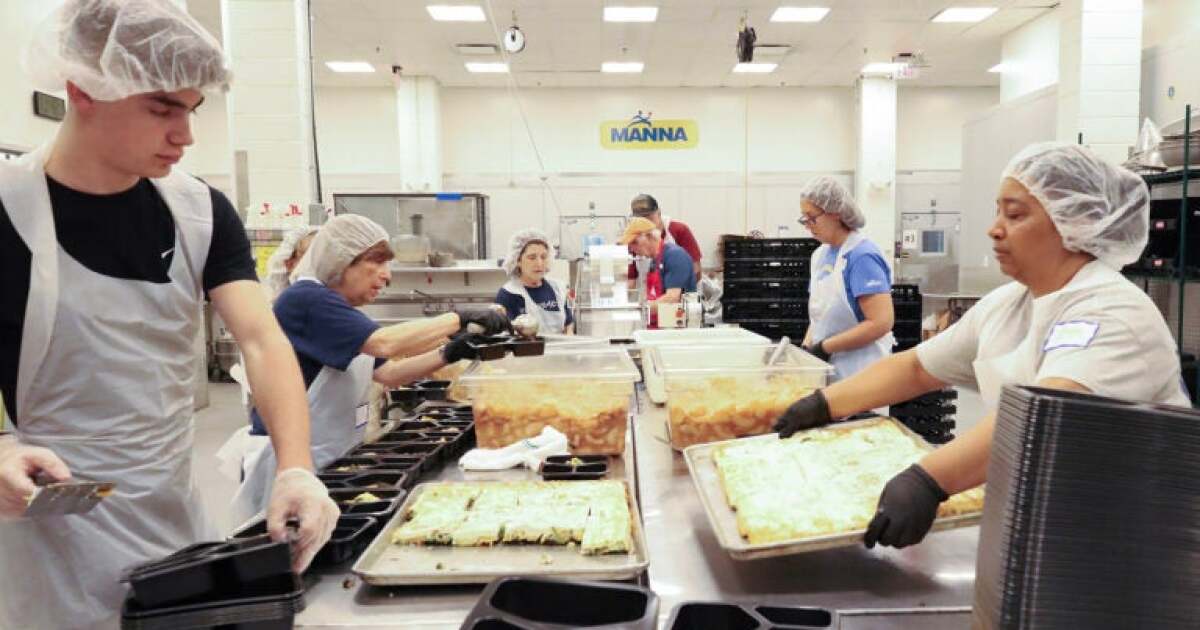
Chefs in white coats are grilling chicken, boiling vegetables and pureeing sauces in the kitchens at MANNA in Philadelphia on a recent Wednesday morning.
As ‘70s songs fill the space, other volunteers and staff form a production line. They take the food and fill hundreds of black trays, which will later be frozen and then delivered to residents all across the city who are eligible for food assistance.
Food distribution at MANNA is different from many other assistance programs across the region. Every ingredient, recipe and label is informed by a team of registered nutritionists and dietitians whose goal is to create meals that are specifically tailored to client’s health needs – whether that’s a cancer diagnosis, chronic Type 2 diabetes or HIV.
“We really see ourselves as the pharmacy for your prescription diet,” said MANNA CEO Sue Daugherty.
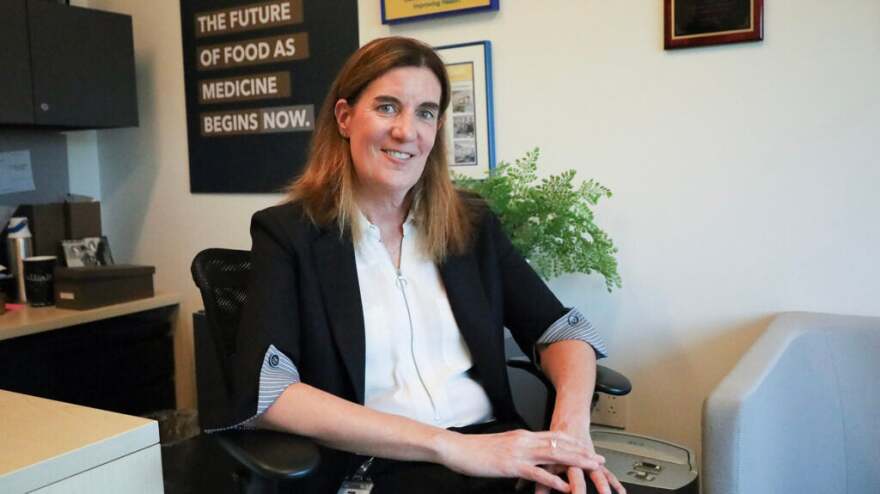
Sue Daugherty, CEO of MANNA in Philadelphia, oversees the nonprofit’s medically tailored meals program, which serves people managing a chronic illness or recovering from an illness or injury. Wed., April 15, 2026.
Research shows that medically tailored meals, which are designed to maximize nutrition and cater to specific dietary deficits, have improved recovery and helped people better manage chronic health issues. At times, they’ve also kept people out of the hospital.
But most programs remain small as these meals are not traditionally covered under health insurance.
Gov. Josh Shapiro’s administration is now pushing for the Pennsylvania state Legislature to pass $900,000 to provide meals like this for people with certain chronic health conditions who have Medicaid, a health insurance program for people with low incomes.
“If we get people home and nourished with the right nutrition and keep them out of the health care system, that is an immediate cost savings,” Daugherty said. “So, it’s definitely a win-win.”
Expanding access to nutritious meals
For organizations like MANNA, Daughtery said the additional funding could help them serve even more people. The nonprofit provides its meals at no cost to people and depends mostly on philanthropic donations and partnerships.
They are able to get reimbursed for meals through people’s health insurance for only about 10-15% of cases, and Daugherty said that could be a lot higher.
“Unfortunately right now, we have a wait list,” she said. “The referrals have increased dramatically and so we just don’t have the capacity to onboard people immediately. And so that would be a game changer for us.”
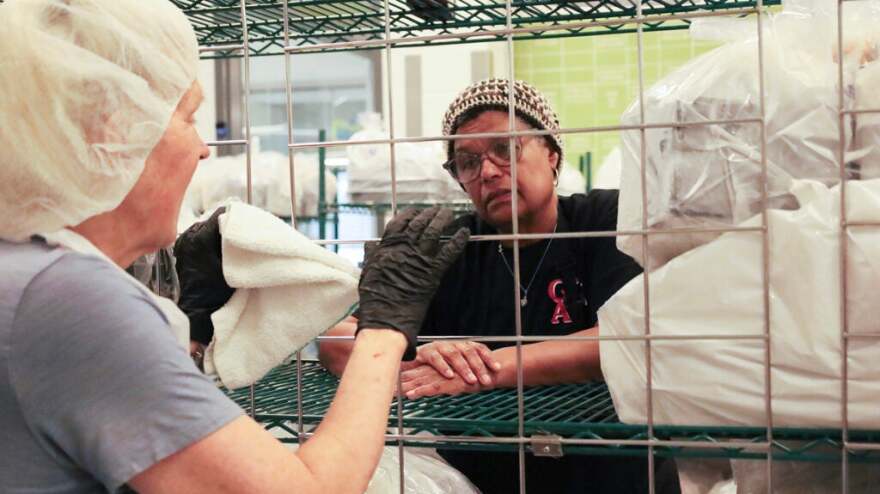
Staff and volunteers at MANNA in Philadelphia put together medically tailored meals for residents with specific nutrition and diet needs due to a chronic disease, illness or injury, Wed., April 15, 2026.
People who are eligible for meal services at MANNA meet with dietitians to determine what kinds of meals are best for their medical conditions or illnesses.
They can then elect to receive meals for breakfast, lunch and dinner, depending on their hunger needs and freezer space at home. Those meals are made at MANNA with fresh ingredients and then delivered directly to people’s homes once a week.
Program’s ‘a godsend’ for those with chronic conditions
One of their clients, Harry F. in Philadelphia, said the service has been “a godsend.” WHYY is only using his partial name for privacy reasons.
The 78-year-old currently manages Type 2 diabetes and suffers from degenerative lumbar condition and back issues, which has made it more difficult to get to the store and buy his own groceries.
“And even when I get things that I have to make in the house, if I had to stand up for an hour to make my dinner, it would just be very hard to do,” he said.
Through the medially tailored meals program, it’s been easier to not only access food, but get the right nutrients he needs to bring down his blood sugar levels and manage his weight.
“Not only was I getting meals so I didn’t have to go shlep heavy things from the store, but I was also getting food that was going to help me with my portions, when I ate and also that reflected low salt and low sugar, which would help me with my diabetes,” he said.
He’s looked at other meal options and programs to supplement what he gets from MANNA, but said other options can be costly, or have strict eligibility guidelines. The food quality doesn’t always meet his health needs either.
Mobility and budgetary concerns are often two big factors that dietitians like Emily Sadowy at MANNA said they need to take into account when figuring out how people can access the food they need to stay healthy.
“What’s the limitation of cooking utensils or even something like holding a pan? Do you have that grip strength or do you have that ability to stand for 20 minutes to make a meal?” she posed. “People are working through all types of barriers.”
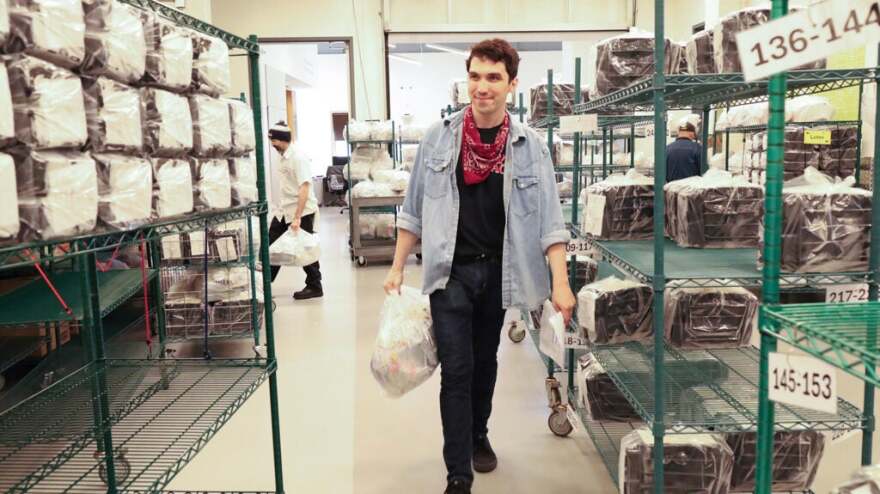
Jamie Pizziketti, volunteer logistics coordinator at MANNA, helps organize medically tailored meals that will be loaded onto trucks and delivered to residents throughout the city, Wed., April 15, 2026.
Shapiro’s budget proposal would support a pilot program that would bring medically tailored meals to more Medicaid patients.
“When we make strategic investments in proven prevention efforts like providing nutritious meals for Medicaid recipients with chronic health conditions, we are helping people be healthier, and we are creating real cost savings for the Commonwealth,” Human Services Secretary Val Arkoosh said in a statement.
Looking at food as medicine has always been a “no brainer” for Daugherty, who started her career as a dietitian.
“There’s a lot happening at the state level,” she said. “And Pennsylvania has the opportunity to really show the rest of the country how this can be done.”
Read more from our partners, WHYY.
