



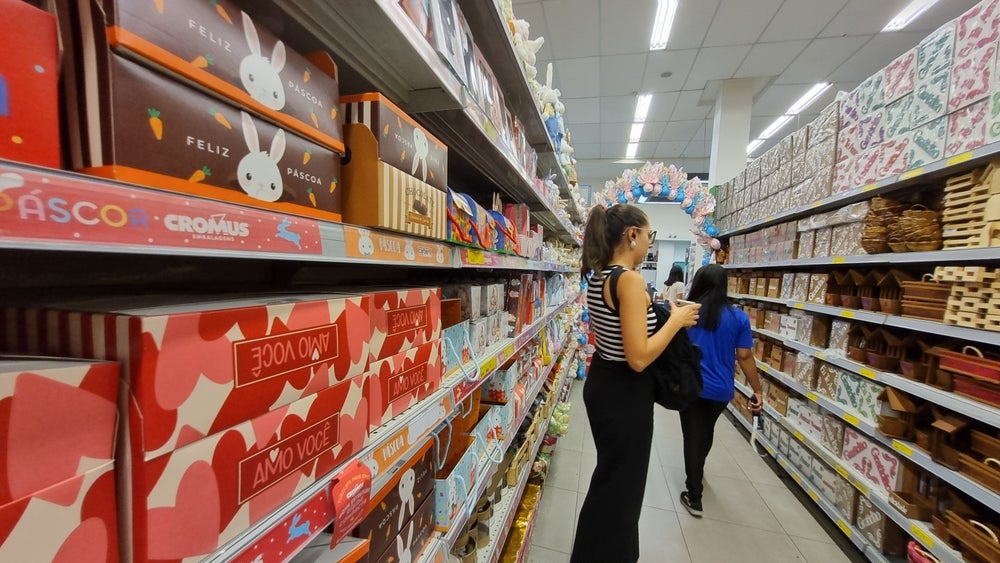
BRC data shows Easter timing boosted March trading as households brought forward grocery and personal care spending. / Credit: Iara Faga via Shutterstock
UK retail sales saw an uplift in the run-up to Easter, with food and beauty categories leading overall growth as seasonal demand supported household and discretionary spending, according to industry data from the British Retail Consortium (BRC).
The latest UK retail sales monitoring highlights how the timing of Easter helped lift March trading, particularly in food-led categories where households increased purchases for gatherings and holiday meals.
 Discover B2B Marketing That Performs
Combine business intelligence and editorial excellence to reach engaged professionals across 36 leading media platforms.
Beauty and personal care also recorded stronger demand, while non-food performance remained more mixed across the wider retail sector.
The data points to a seasonal boost rather than a broad-based recovery, with retailers benefiting unevenly depending on category exposure to Easter-related spending patterns.
Easter timing lifts demand
The shift in Easter timing played a key role in boosting Easter retail sales UK, bringing forward spending that would normally fall in April. Food retailers were the main beneficiaries as consumers prepared for extended weekends and family occasions.
Industry analysis indicates that grocery and fresh food demand strengthened across supermarkets, reflecting increased at-home consumption.
The BRC has previously noted that seasonal events such as Easter can create short-term volatility in monthly retail figures due to changes in shopping patterns.
While food sales rose, other essential categories saw more modest movement, suggesting that overall household budgets remained under pressure despite seasonal demand.
Food sales drive growth
Food remained the strongest performing segment in the latest figures, underlining its role as the main driver of UK food sales growth during the Easter period. Retailers reported higher volumes linked to traditional holiday purchasing, including chilled food, bakery products and confectionery.
According to the BRC’s assessment, “food sales were the key contributor to overall retail performance,” reflecting the impact of seasonal grocery demand.
However, analysts also note that food inflation continues to influence sales values, meaning part of the growth reflects higher prices rather than purely increased volumes.
Despite this, the Easter period remains one of the most important trading windows for UK grocers, with demand patterns closely tied to school holidays and family gatherings.
Beauty holds steady
Alongside food, the UK beauty retail sector recorded steady growth, supported by demand for personal care, cosmetics and gifting products.
Retailers benefited from increased consumer interest in seasonal self-care purchases and Easter-related gifting, although growth was more moderate compared with food. Industry observers suggest that beauty continues to show resilience even in periods of cautious consumer spending.
The BRC noted that “non-food categories showed a more varied performance,” with beauty standing out as one of the more stable segments within discretionary retail.
Other non-food areas, including general merchandise and home goods, showed less consistent momentum, reflecting ongoing pressure on household budgets and selective spending behaviour.
Overall, the data suggests that Easter provided a temporary lift to UK retail activity rather than signalling a sustained shift in consumer confidence.
Seasonal food demand and stable beauty sales were the main contributors to growth, while broader retail performance remained uneven across categories.

Sign up for our daily news round-up!
Give your business an edge with our leading industry insights.