


In the 70’s it was disco and jogging, in the 80’s women were doing aerobic cardio in bright blue spandex, in the 90’s they were just smoking cigarettes and in the 2000’s they were following Gwyneth Paltrow’s GOOP gospel. Health trends that women over 35 have followed are as varied as the decades themselves.
In the 2020’s women’s wellness health trends seem to be focused on anti-aging and biohacking – or optimizing your biology so that you live not only longer (life expectancy) but you age healthier (healthspan). And in 2026, women over 35 are leading this movement in a way no generation before them has – with data, and without any booze.
Here are what I predict will be some of this year’s strongest wellness trends for women over 35
Blood Tests
For decades, women were told their lab results were “normal” by their primary care physicians, and sent home — even if they felt that something was wrong, or they were bordering on unhealthy labs. The modern approach is different. Instead of checking a handful of markers once a year, women over 35 are getting comprehensive panels that go far beyond basic ranges, tracking things like ferritin, vitamin D, thyroid function, inflammatory markers, and hormonal levels across time – even cancer tests. The goal is to understand what’s optimal for your body specifically – meaning personalized.
Companies like Function Health, Lifeforce, and Joi Women’s Wellness offer at-home blood draws with detailed results interpreted by doctors who specialize in women’s health. Many women are doing this quarterly, not annually, watching trends over time rather than reacting to a single number. The shift is from reactive medicine to proactive self-knowledge, and for women in perimenopause especially, it’s changing what they know about their own bodies in real time.
I have tried Function Health, which gave me 2 sets of data, each 6 months apart. I was able to find out where my health was excellent – and what was trending in the wrong direction. I took that to my doctor and was able to figure out a health game plan for getting back on track. You’re rarely able to get this info in a regular hospital setting.
Not Drinking
This is a very unique type of “sober” than in previous decades, when sober people were thought to be former addicts. What’s happening among women over 35 in 2026 is now a simple recalculation of whether alcohol was ever actually serving them. Studies linking even moderate alcohol consumption to increased breast cancer risk, disrupted sleep, and accelerated hormonal decline landed differently for women already thinking about their healthspan. Many are cutting back, and some even completely abstain. In fact, consumption of alcohol in women dropped 11 percentage points since 2023 to 51%.
What this looks like in practice: the rise of the “sober curious” lifestyle. For example, Friday nights with a botanical mocktail, dinner parties where the host quietly offers both options without ceremony, and a booming industry of non-alcoholic spirits that actually taste like something. Brands like Ghia, Seedlip, and Kin Euphorics have built entire businesses on this moment – and they all taste great, and many like the real thing.
Where in my 20’s I reached for a glass of wine after work, these days in my 40s I reach for tea, and there are so many varieties now that figuring out what to drink each night has become a small, genuine pleasure. Another helpful routine is to find the most quaint and fascinating tea accessories: A tea kettle from MacKenzie-Childs, or an all glass one that is heat friendly, where you can add loose leaf tea and watch it blend.
But there was a time, when we all thought a wine of glass was “healthy”. Was it really?
We spoke with Dr. John E. Lewis, Associate Professor at the University of Miami Miller School of Medicine, about what decades of drinking actually does to the body. On the red wine myth specifically, he was blunt: “The wine industry’s message about drinking red wine for resveratrol’s health promoting benefits is totally bogus. You cannot drink enough red wine to get a benefit out of the primary health-promoting component of it.”
And the brain damage question is even more sobering. “Alcohol is a known neurotoxin; it has the capacity to kill neurons, having significant volumetric impacts on both the gray and white matter areas of the brain,” Dr. Lewis told us. “The bottom line is that drinking alcohol is neurotoxic.”
His advice for the woman still having one or two glasses every night? “She is not only repeatedly damaging various parts of her brain, she is also increasing her risk of breast cancer. I would get her to evaluate her priorities and try to find other habits or choices to replace her desire for that much wine every day.”
Syncing Workouts With Hormones
Women MD’s have been screaming this from the rooftops for years: women are not smaller men, and their hormones fluctuate significantly across a four-week cycle in ways that directly affect energy, strength, recovery, and mood. Training the same way every single day, the way most fitness advice was designed, largely based on studies of male subjects, ignores all of that. Cycle syncing means working with those fluctuations instead of against them.
What this looks like in practice: during the follicular phase, when estrogen is rising, energy is higher and the body responds well to strength training and higher intensity work. During the luteal phase, when progesterone rises and energy dips, the body does better with yoga, walking, and lower intensity movement. For women in perimenopause whose cycles are less predictable, practitioners are adapting the method to work with symptom tracking instead. That gives you more energy, and better recovery – and you’re never pushing yourself beyond your limits.
Glucose Monitors
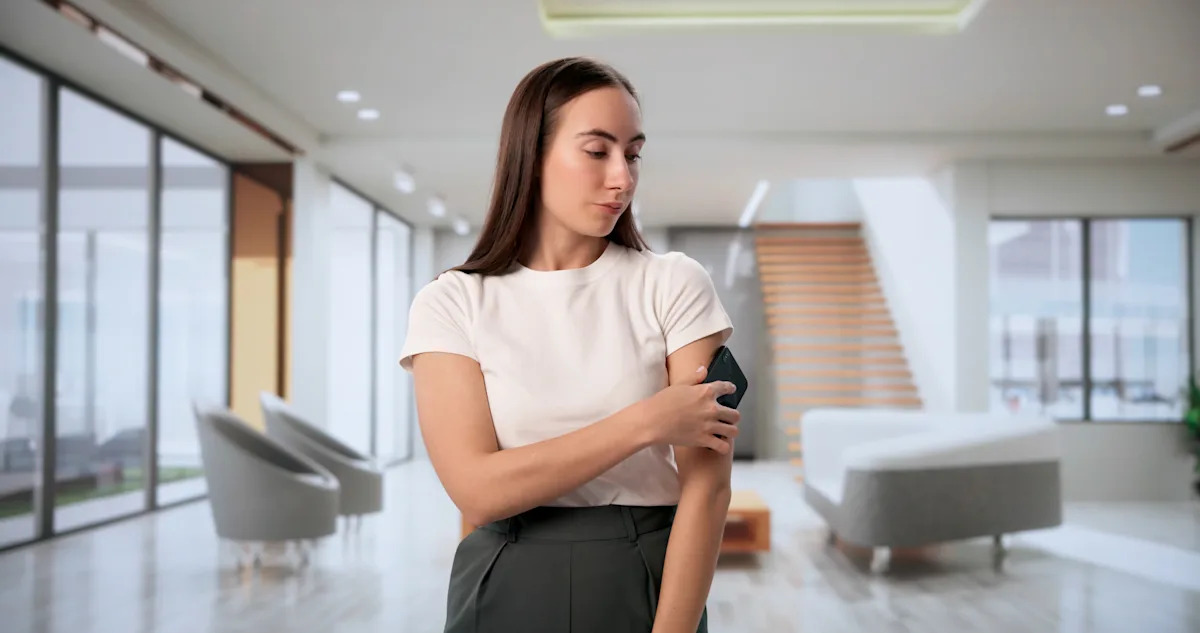
A continuous glucose monitor (or CGM) is a small sensor on the back of your arm that tracks your blood sugar in real time, all day long. Until recently these were only prescribed to diabetics, but now, women over 35 with no diagnosis are wearing them voluntarily, to learn everything they can about their health.
I wear one (it’s a Lingo, the least pricey option). -because my family has a history of diabetes, and I was bordering around “pre-pre-diabetes” for a bit – and it’s helped me figure out what spikes me and what doesn’t. Bagels and oatmeal spike my blood sugar higher than a triple decker hamburger could. Stress sent my glucose climbing with no food involved at all. None of this would have shown up until things start to go wrong later on in my life.
The reason this matters for women over 35 is that estrogen plays a direct role in insulin sensitivity, meaning as estrogen declines in perimenopause, blood sugar regulation gets harder. A CGM makes that invisible process visible. Brands like Levels Health and Stelo by Dexcom are now available without a prescription, and two weeks of data will tell you more about your metabolism than a decade of annual physicals.
Wellness Clubs
Wellness has always been a solo experience. You downloaded the app, bought the supplements, and optimized quietly and alone. In 2026 this is being replaced by clubs, some formal and some informal, that gather based on shared practices. The Global Wellness Summit called this one of the defining shifts of the year: the “festivalization of wellness,” where wellbeing becomes something you do together, not something you perform for an algorithm.
For example, running clubs, women-only strength training clubs meeting at local gyms before sunrise. Sober morning raves, where a DJ plays at 7am and everyone dances without a drop of alcohol. Before work. The common thread is that these experiences are judgment-free, phone-optional, and built around emotional release as much as physical health. For women who spent their 30s wellness-ing in isolation, the community aspect is a much needed remedy. After all, research is showing that if you want to age better, you must focus on your relationships as much as your physical health.
Digital HRT
Hormone replacement therapy has one of the most dramatic reputation arcs in modern medicine. In 2002, a large study suggested it significantly increased the risk of breast cancer and heart disease, and practically overnight, millions of women stopped their prescriptions and a generation of doctors stopped offering it. What followed were decades of women white-knuckling their way through perimenopause and menopause; the hot flashes, the brain fog, the sleeplessness, the joint pain, the mood shifts. But what was found in recent years is that risks were largely concentrated in older women who started HRT more than ten years after menopause began. For women who start within that window, the evidence now suggests that HRT protects against heart disease, bone loss, cognitive decline, and even possibly some cancers. Many women are taking matters into their own hands and trying out “digital HRT’s” at places like Midi Health, Alloy and Evernow, where you are matched with an online doctor, have an intake session, go get your labs done, and get prescribed hormones based on your results.
With estrogen patches, progesterone capsules, testosterone cream, the combinations are increasingly personalized, guided by the kind of comprehensive blood testing described above. The conversation has shifted from “should I consider this?” to “why did no one tell me sooner?”
The habits of women over 35 have always been the most cutting edge, usually signaling that major shifts in the general population would follow. It seems that this decade, they’re finally getting it right, and focusing less on looks, and fashion, and more on substance and biology.
This article is for informational purposes only. Always consult a qualified healthcare provider before making changes to your diet, exercise, or treatment plan.
Want to find more about what doctors told us about the wine lies they sold us in our youth? Head over to our blog.