




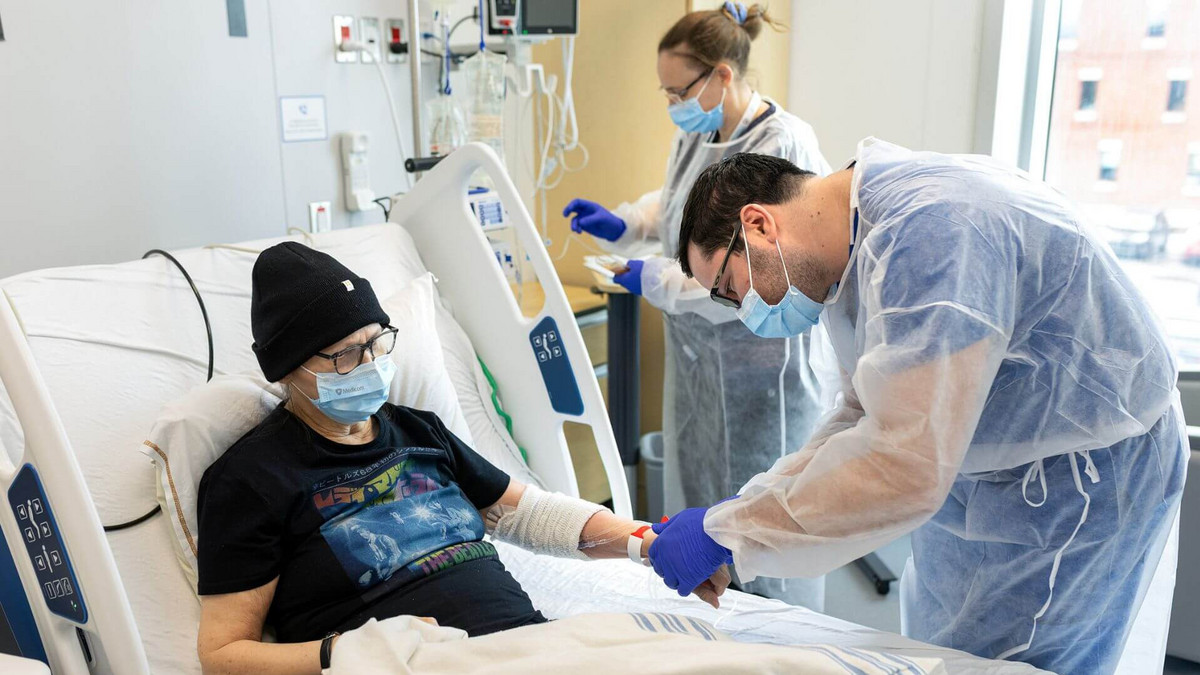
While allogeneic stem-cell transplantation is a complex procedure not suitable for all cancers, it has transformed cancer treatment by demonstrating that it is the immune cells from the donor that eventually eliminate cancer cells in the recipient, not the “preparatory” chemotherapy and radiation treatment.
“We are essentially transplanting an immune system, whose cells then attack the remaining cancer in the recipient,” explained Ahmad.
This breakthrough laid the foundation for the broader field of cell therapy, bridging the gap between complex stem-cell transplantation and modern, more accessible, targeted immunotherapies such as CAR-T. The concept is innovative, effectively creating a ‘living drug’: T cells are harvested from the patient, genetically modified in the lab and then re-injected into the patient. These reprogrammed cells directly target cancer cells with rapid effect.
According to Ahmad, cell therapy is fast becoming one of the “pillars of cancer treatment,” alongside surgery, chemotherapy and radiation. It is already being used successfully to treat certain leukemias, lymphomas and myelomas.
And this is just the beginning: preliminary results suggest it could also be effective against autoimmune diseases, including lupus, multiple sclerosis and rheumatoid arthritis. “Patients with very severe forms of these diseases have shown dramatic responses,” Ahmad noted.
Now, HMR is conducting clinical trials to evaluate an allogeneic form of CAR-T cell therapy—using cells from healthy donors rather than the patient—to treat severe, refractory autoimmune diseases. It is an ‘off-the-shelf’ approach that Ahmad believes will significantly accelerate access to treatment.
In a similar vein, research by IRIC researchers Guy Sauvageau and Anne Marinier led to the discovery of UM171, a molecule that enhances the efficacy of stem-cell transplantation for blood cancer patients.
Evaluated for use in humans for the first time at HMR, UM171 is now undergoing clinical trials led by Cohen. “The molecule has already been approved in Europe, which attests to its strong potential,” she said.
For Ahmad, these advances demonstrate the strength of the HMR model, which seamlessly integrates research and clinical practice.
“We’re witnessing national firsts right here at Maisonneuve-Rosemont Hospital,” he said. “HMR is truly a gem, driven by passionate teams in every specialty. Our +1 rating is a testament to the hard work of our entire staff—it’s a success that belongs to everyone.”