




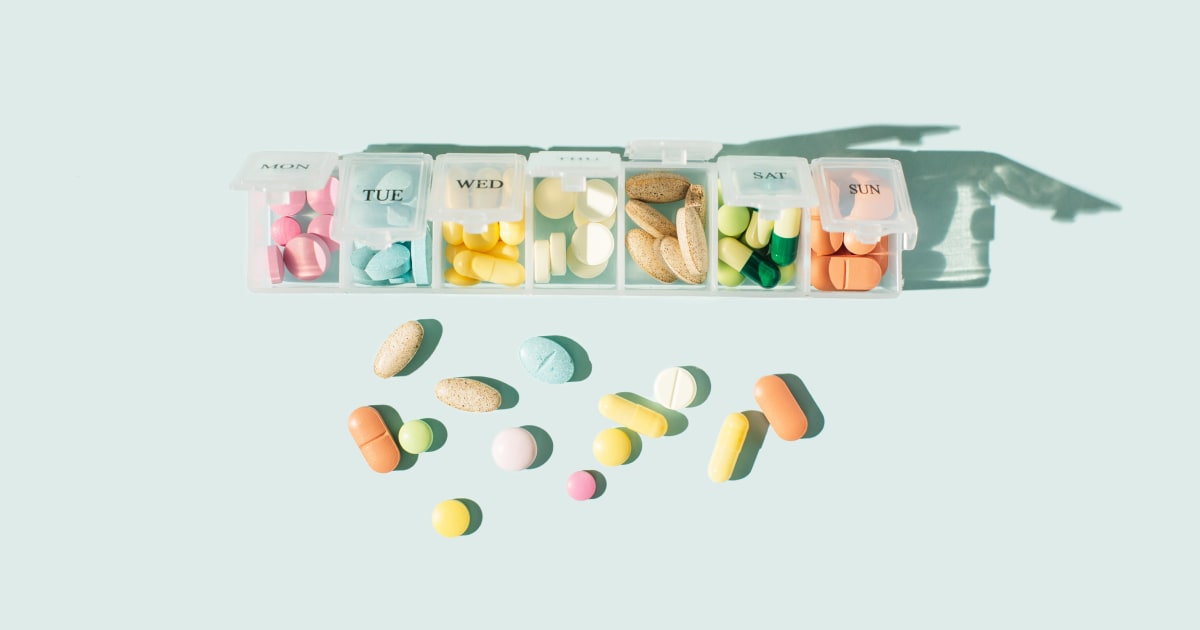
Dietary supplements are more popular than ever. Vitamins, minerals and herbs have become a cornerstone of the modern wellness movement. Popping a handful of supplements is a morning ritual for many.
About 75% of Americans take at least one supplement, per the U.S. Food and Drug Administration.
Despite a lack of evidence that supplementing with high doses vitamins and minerals benefits healthy people, the billion-dollar supplement industry is booming.
Dietary supplements are not intended to prevent, treat or cure diseases, per the National Institutes of Health. They’re meant to supplement the diet, fill gaps and address deficiencies.
Still, they’re often touted as a more “natural” way to boost health than medications. But “natural” doesn’t mean safe, and some popular supplements pose serious health risks.
“Supplements can have important impacts on the body, so they should be taken carefully and thoughtfully,” Dr. Pieter Cohen, an associate professor at Harvard Medical School, tells TODAY.com.
Many vitamins and minerals can interact with medications or each other, says Cohen, who leads the supplement research program at Cambridge Health Alliance. The FDA doesn’t regulate supplements as strictly as drugs, so safety and quality issues are common, he adds.
For this reason, many experts recommend a food-first strategy.
“I’m not a big fan of people blindly supplementing with lots of vitamins or minerals, without testing or a good reason,” Dr. Zachary Mulvihill, integrative medicine physician at Weill Cornell Medicine and NewYork-Presbyterian.
If you’re going to take supplements, it’s important consider how they interact.
Supplement Combinations To Avoid
It may seem convenient to take all of your supplements at the same time, but not all vitamins and minerals mix well, especially at the high doses found in individual supplements.
Taking certain nutrients together can affect their absorption or metabolism, which can reduce effectiveness.
“One supplement may bind to the other one you’re taking, making it impossible or difficult for the intestines to absorb it. Other times, they’ll compete for the same receptors,” says Cohen.
Effectively, they can cancel each other out — it’s a waste of nutrients and money.
These interactions aren’t uncommon. If you take a multivitamin plus mega-dose supplements for hair, immunity and bone health, for example, “you can end up taking excessive doses because of redundancies,” Mulvihill adds.
That’s why it’s important to use caution, make sure you’re taking the proper dosage and check for interactions.
Here ares seven popular supplement combinations to avoid:
Calcium and Iron
Calcium is an essential mineral that helps the body build and maintain strong bones and teeth. Healthy adults need 1000-1,200 milligrams daily, per the NIH.
“Calcium supplementation is reserved mainly for people who have osteopenia or osteoporosis,” says Mulvihill. These conditions can cause fragile bones that are prone to fractures.
However, calcium supplements are also marketed to support bone health for the general population and added to many multivitamins, especially those for women over 50.
Iron is a mineral that supports the formation of red blood cells and oxygen transport. We only need a small amount (8–18 milligrams daily) to stay healthy. However, deficiencies are still common in the U.S., and iron pills are prescribed frequently, says Mulvihill.
If you take calcium and iron together, they’ll compete for the same absorption pathways in the gut, Cohen notes.
“They both block each other, but iron is the loser here. Calcium can strongly decrease its absorption,” Mulvihill adds.
If you’re taking iron for a deficiency, “you definitely want to be absorbing it,” Mulvihill adds. But even if you aren’t deficient, it’s important to avoid this supplement combination.
“What’s the point of taking a supplement if it’s not going to be absorbed?” Cohen notes.
Instead, take iron and calcium at least two hours apart, but four is ideal, says Mulvihill. Iron should be taken on an empty stomach, so consider taking it before breakfast.
Calcium and Magnesium
Magnesium is an essential mineral we need to consume in large amounts to stay healthy, says Mulvihill. Adults should get about 300–420 milligrams per day.
Magnesium is involved in energy production, muscle function, nerve signaling and regulating blood pressure, TODAY.com reported previously.
Supplements containing magnesium are often promoted for sleep, muscle relaxation or anxiety, says Mulvihill. It’s also found in some bone health supplements, along with calcium — but these two minerals don’t mix well as individual supplements.
While both magnesium and calcium support bone and heart health, taking them simultaneously in high doses can interfere with absorption and reduce efficacy.
Aim to take these minerals at least a few hours apart. “Magnesium is recommended before bed because it can enhance sleep, so you can take it in the evening,” says Mulvihill.
Calcium and Zinc
Calcium doesn’t play nicely with another popular supplement, zinc, says Mulvihill. Zinc is a trace mineral that supports healthy immune function. The recommended daily intake for adults is 8–12 milligrams, per the NIH.
Taken together in high doses, calcium and zinc supplements can interfere, Cohen says. “They block each other’s absorption, so it’s counterproductive,” Mulvihill adds.
Although zinc deficiencies are rare, supplements are consumed widely in the U.S. You’ll find high doses in “immune support” pills or powders, and even energy drinks. “Especially since the pandemic, a lot of people supplement with zinc,” says Mulvihill.
If you’re taking zinc, try to take it on an empty stomach before meals, and at least a few hours apart from other minerals.
Zinc and Copper
Zinc also blocks your body’s ability to absorb copper, a trace mineral which plays a role in energy production, iron metabolism, and neurotransmitter synthesis, per the NIH. Adults need about 900 micrograms of copper per day.
Not only do zinc and copper compete when taken together, but high doses of zinc can also deplete the body’s existing copper stores over time, says Mulvihill.
“The only people that I’ve seen with a copper deficiency are folks who’ve been supplementing excessive amounts of zinc for long periods of time,” Mulvihill adds.
Always take zinc and copper at least two hours apart.
Zinc and Iron
When taken together, zinc can block the absorption of iron because they compete for the same pathways in the small intestines, says Mulvihill.
In order to get the maximum benefits, it’s important to take these at least four hours apart.
While getting enough zinc can support immune function, the experts caution against relying on high doses in the long term due to the possible interactions.
“In general, we should have a strong reason to take a bunch of any mineral,” says Mulvihill.
Vitamin C and Vitamin B12
Vitamin C acts as a potent antioxidant that protects cells from damage caused by free radicals. It’s known for its role in collagen production, wound healing and immune function, per the NIH.
Vitamin B12 helps keep our nervous system healthy, supports DNA synthesis and promotes cognitive health.
B12 supplementation is common among vegetarians, vegans and people with absorption disorders, says Mulvihill. Vitamin C pills are popular for immune support and skin.
Although they’re both water-soluble, high doses may interfere in the body.
“Vitamin C causes B12 to break down, theoretically,” says Mulvihill. Laboratory studies suggest that high doses of vitamin C destroys B12 before it can be absorbed in the gut. More research in humans is needed, but it’s a good idea to avoid this combination or take them a few hours apart, the experts note.
B vitamins can be taken at any time of day, with or without food, whereas vitamin C should be taken on an empty stomach.
Vitamin E and Vitamin K
Vitamin E is a fat-soluble vitamin that fights inflammation, supports immune function and protects healthy skin. Fat-soluble vitamins get stored in the body’s organs and tissues.
Vitamin K is also fat-soluble and supports normal blood clotting, protein synthesis and bone strength.
While we need to get enough vitamin E and K to stay healthy, these two nutrients may interact in mega-doses.
“The concern is that they can cancel each other out,” says Mulvihill. Excess vitamin E can act as a blood thinner, he explains, working directly against vitamin K and potentially increasing the risk of bleeding.
Vitamin E and vitamin K deficiencies are rare, so it’s unlikely that someone would need to take both of these supplements, let alone in high doses, says Mulvihill.
Use caution when taking fat-soluble vitamins (A, D, E or K), because they can build up to toxic levels in the body.
The Bottom Line: Be Careful
Always talk to your doctor before starting a new supplement, especially if you take any medications.
In addition to checking for interactions, a doctor can test for deficiencies and advise you on the proper dosage and regimen.
It’s also important to “do your homework” before buying supplements, says Cohen.
What you see on the label isn’t always what you get. It’s up to the manufacturers — not the FDA — to assure a supplement is safe and accurately labeled. But that doesn’t always happen, says Cohen.
As a result, supplements may contain a much higher or lower amount of active ingredients. “Consumers have to use a workaround, like relying on high-quality third party certification programs, such as the USP or NSF,” says Cohen.
Finally, supplements shouldn’t replace a healthy, balanced diet.