




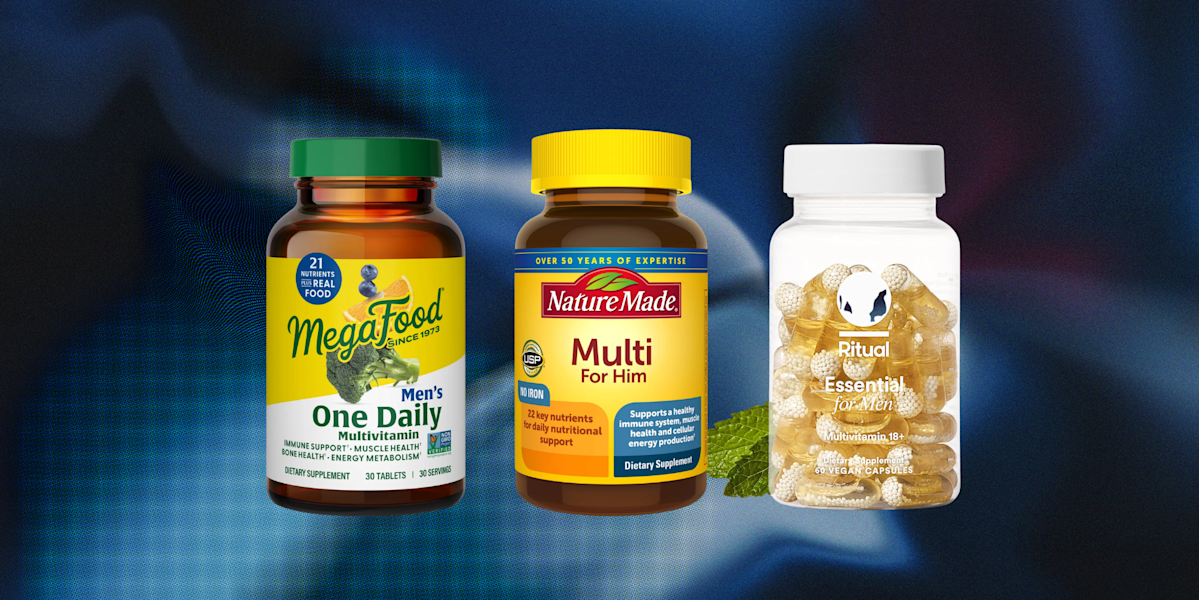
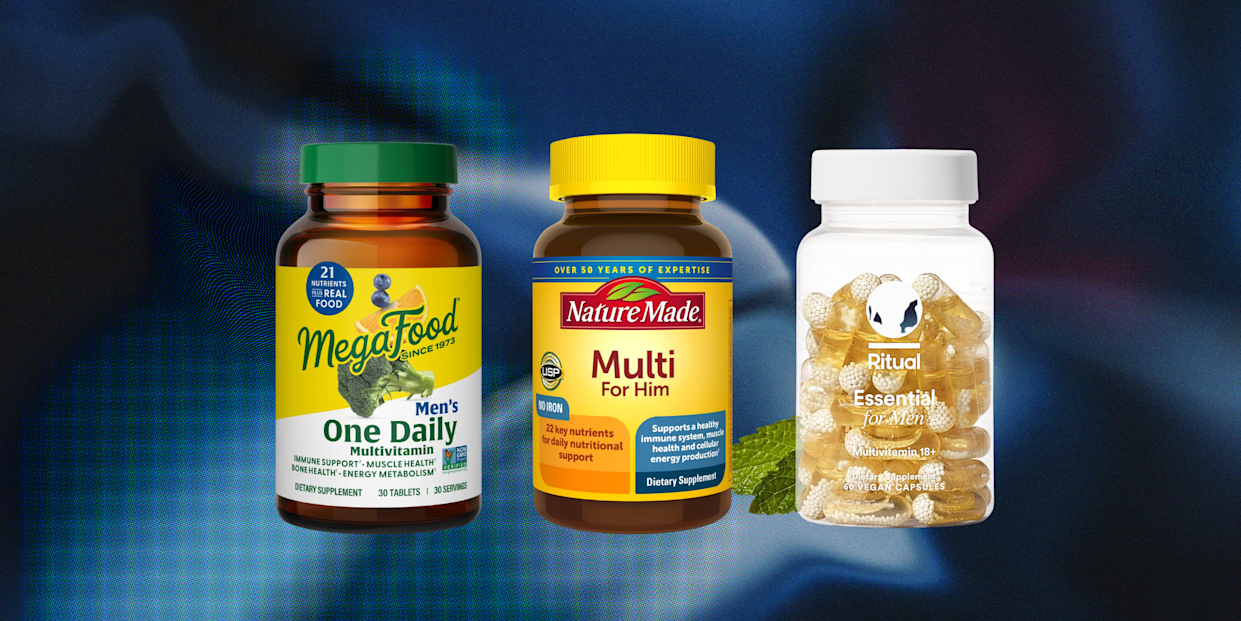
The Best Men’s Multivitamin Picks
“Hearst Magazines and AOL may earn commission or revenue on some items through these links.”
Standing in the supplement aisle can feel like information overload, with rows of bottles promising better energy, immunity, and overall health, but little clarity on which ones are actually worth it. A high-quality men’s multivitamin can serve as a practical backup plan: While a balanced diet should always come first, the right supplement may help fill in nutritional gaps and support your daily needs.
Our top picks:
That’s where we come in. Our registered dietitians in the Good Housekeeping Institute Nutrition Lab evaluated more than 35 men’s multivitamins to identify the best options for a variety of life stages and health goals. But we also stress that multivitamins aren’t a cure-all. “No multivitamin can substitute for real whole foods, and therefore any concern of nutritional gaps should be discussed with an individual’s healthcare provider and registered dietitian before beginning any form of supplementation,” says Lon Ben-Asher, M.S., R.D., LD/N, a registered dietitian nutritionist and educator at Pritikin Longevity Center.
If your healthcare provider recommends one, a well-formulated multivitamin can help fill specific nutrient gaps, and some research suggests it may also support memory and cognition in older adults. Since supplements are not reviewed by the U.S. Food and Drug Administration before they go to market, choosing a high-quality option is key.
Ahead, you’ll find our top picks, along with everything you need to know about how we evaluate multivitamins and what to look for in a men’s formula.
Our registered dietitians in the Good Housekeeping Institute Nutrition Lab review and evaluate every single supplement we recommend in accordance with our dietary supplement methodology. We then have a registered dietitian on our Medical Review Board review each article for scientific accuracy. A supplement should do just that: supplement the diet, not replace high-quality, nutritious food and important healthy lifestyle practices. Check with your healthcare provider before starting any dietary supplement regimen.
How we chose the best men’s multivitamins
Our registered dietitians and health experts in the Good Housekeeping Institute Nutrition Lab use their nutritional expertise to carefully review and vet supplements based on label information and transparency, ingredient quality, and available third-party testing data.
We reviewed over 35 men’s multivitamins, comparing factors like dosage, serving size, cost, ingredients, and whether they can be taken with food. We selected options to suit a range of preferences and budgets.
We prioritized supplements with credible third-party certifications for purity and potency (such as USP or NSF), along with strong ingredient transparency and manufacturing practices. Because dietary supplements aren’t reviewed by the U.S. Food and Drug Administration (FDA) for safety or effectiveness before they reach the market, it’s important to research each option carefully and speak with your healthcare provider before adding new supplements to your routine.

Philip Friedman
What to look for when shopping for a men’s multivitamin
Finding the right men’s multivitamin can feel overwhelming, especially with so many different forms, doses, and formulas on the market. It’s always a good idea to check in with your healthcare provider first. When you’re ready to shop, here are a few simple things to keep in mind:
✔️ Form and size: Think about what you’ll actually stick with. Would you rather take one larger pill, a few smaller ones, or skip pills altogether with gummies or liquid? The best choice is one you’ll take consistently.
✔️ Price: Costs can vary widely, and a higher price doesn’t always mean better quality. Serving sizes differ, too, so comparing cost per dose is the most accurate way to evaluate value. Many solid options fall in the $0.50 to $1 per serving range.
✔️ Percentages: In general, look for a formula that stays close to 100% of the Daily Value for most vitamins and minerals. Be especially mindful of fat-soluble vitamins, such as A, E, and K, as they can build up in the body. Water-soluble vitamins, such as C and the B vitamins, are typically less of a concern because excess amounts are excreted.
✔️ Age and lifestyle: Many men’s multis are tailored to different life stages, so it can make sense to choose one that matches your age and needs. If you’re active, you may also see formulas designed with energy or performance support in mind.
✔️ Quality and testing: Because supplements aren’t approved by the FDA before they hit shelves, third-party testing matters. Look for seals from organizations like USP and NSF International, which verify purity and potency. Clear labeling and transparent brands are also good signs you’re getting a reliable product. Shoppers can also turn to the FDA’s Good Manufacturing Practices to weigh their current multivitamin against these standards.

Philip Friedman
Which essential vitamins and minerals are important for men?
“While nutritional needs can vary from one man to the next and depend on factors such as age, activity levels, and individual health conditions, certain nutrients are considered essential for men’s health,” Ben-Asher says. He specifies these essential men’s nutrients below:
✔️ Vitamin D: Important for bone health, structure, support, and stability as well as healthy teeth, but also very important in testosterone production.
✔️ Vitamin C: Has antioxidant properties that help support immunity. Also has an important role in collagen synthesis for healthy skin.
✔️ Vitamin E: Helps protect against oxidative stress in the body.
✔️ Vitamin K: A very important nutrient for blood clotting and bone health. Also supports brain health.
✔️ Vitamin A: Supports immune function, ocular health, and healthy skin.
✔️ Vitamin B12: Plays an important role in DNA synthesis, as well as supports nerve function and red blood cell production.
✔️ Calcium: Supports healthy bones and teeth.
✔️ Magnesium: Aids in healthy sleep patterns. Also plays a major role in muscle and nerve function.
✔️ Omega-3 fatty acids: Anti-inflammatory nutrient that is vital to supporting cardiovascular and brain health.
✔️ Selenium: Potent antioxidant that plays a role in healthy prostate function, as well as supporting thyroid function, and protects cells from damage.
✔️ Zinc: Crucial for immune function, helps support wound healing, and plays a major role in testosterone production.
✔️ Potassium: Very important to blood pressure management, kidney function, and muscle function.

Hearst Owned
What differentiates a men’s multivitamin from other multis?
“Although men and women generally have very similar nutritional needs for most vitamins/minerals and other nutrients, there are some formulation differences in multivitamins between genders to address varying needs,” Ben-Asher says. He elaborates on the key differences below:
✔️ Iron: Women’s multivitamins usually contain more iron to account for losses during menstruation, while men’s formulas often include little to none.
✔️ Folic acid: Women’s formulas tend to provide higher amounts to support reproductive health and help prevent neural tube defects during pregnancy.
✔️ Vitamin D and calcium: These nutrients are often higher in women’s supplements due to a greater risk of osteoporosis, especially with age.
✔️ Selenium and lycopene: Men’s multivitamins may include more selenium and sometimes lycopene, both of which are linked to prostate health.
Hearst Owned
Should men take a multivitamin?
Ben-Asher emphasizes that men should focus on a well-balanced diet rich in vegetables, fruits, whole grains and unrefined carbohydrates, lean protein sources, beans, lentils, and healthy fats to ensure they receive a diverse array of essential vitamins and minerals. Consuming this balanced diet is likely to meet men’s nutritional needs and therefore does not need or require any additional supplementation or multivitamins.
He adds that the decision to take any supplements, including a multivitamin, should be based on individual needs, diet, and specific circumstances. It’s a good idea to speak with your healthcare provider before starting anything new, as they may recommend bloodwork or an evaluation to identify potential deficiencies or other concerns. “Under certain circumstances, it may be beneficial to help fill in potential nutritional gaps with more targeted supplementation versus multivitamins,” Ben-Asher explains.
In terms of potential downsides, it’s also important to run a multivitamin by your healthcare provider. Some formulas contain nutrients at levels that exceed recommended daily amounts, which can lead to unwanted side effects over time. Certain vitamins, minerals, and added ingredients may also interact with medications or existing health conditions, so getting personalized guidance is key.
Hearst Owned
How often and when should men take a multivitamin?
Although Ben-Asher notes that most multivitamins are formulated for once-daily use to promote consistency, he emphasizes that men should prioritize getting nutrients from whole foods, which better support metabolic, brain, cardiovascular, bone, skin, liver, and gut health. As for timing, the “best” time to take a multivitamin is simply whenever you’re most likely to be consistent—often alongside breakfast, which can help improve absorption and make it easier to build a daily habit.
Even though multivitamins may help fill certain nutritional gaps in specific situations, he explains that they lack dietary fiber, which is essential for promoting fullness, managing hunger, supporting stable blood sugar levels, and maintaining healthy cholesterol and weight.
Hearst Owned
Why trust Good Housekeeping?
As director of the Good Housekeeping Institute Nutrition Lab, Registered Dietitian Stefani Sassos, MS, RDN, CDN, handles all nutrition-related content, product testing, and evaluation. She stays up to date on the latest research to provide evidence-based reporting on all things diet and nutrition. Stefani oversees supplement analysis for Good Housekeeping and has evaluated categories including multivitamins, joint health supplements, and vitamin D.
Lon Ben-Asher, M.S., R.D., LD/N, is a registered dietitian at the Pritikin Longevity Center in Miami, Florida. He received his M.S. in Dietetics and Nutrition from Florida International University and a B.S. in Agricultural, Life, and Nutrition Sciences from the University of Florida. Ben-Asher is also a contributor to U.S. News & World Report and holds a Certificate of Training in Adult Weight Management.
Hearst Owned
You Might Also Like