




Photo-Illustration: by The Cut; Photos: Carol Lee, Retailer
My deep, dark truth is that I sleep with my hair wet most days. I love an evening shower, right before bed, which means that by the time I do my skin care, put on my body lotions and potions, and brush my teeth, there is no battery life left for the exhausting process of drying my hair. I also get the most compliments on the natural, slightly wavy texture of my hair on the days I sleep with it wet.
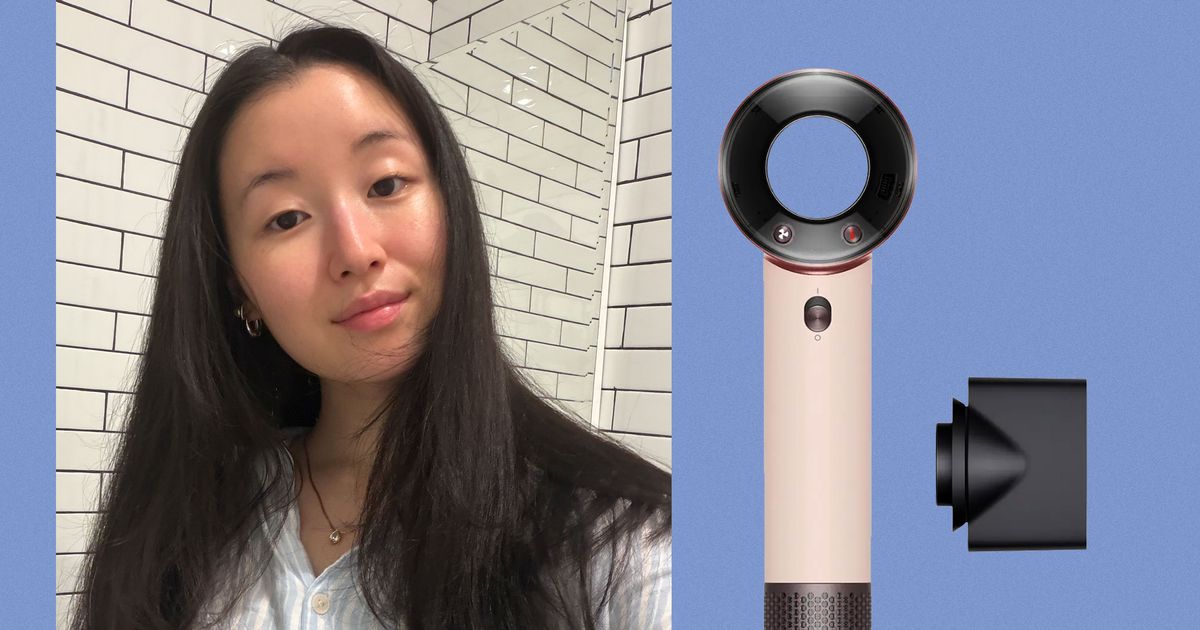
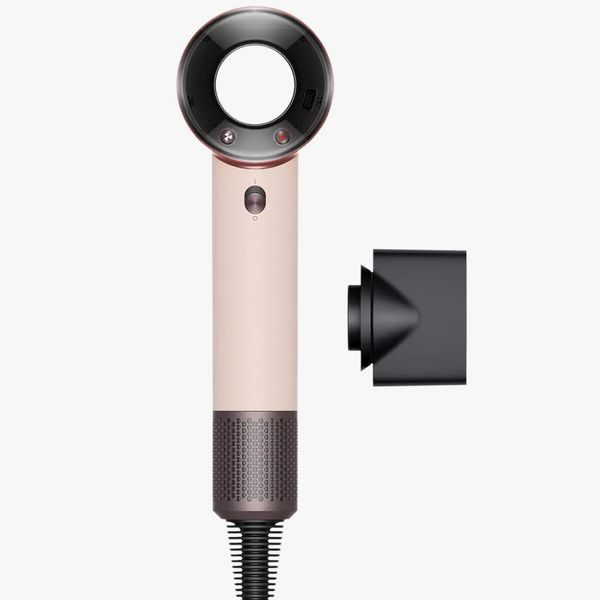
But I can see in my mind’s eye the horrified look on the faces of trichologists and hairstylists and scalp experts as they read this, which is why I’ve been trying to get back in the habit of actually using some sort of hair-drying device — and more often than not, it’s a Dyson. But is there really any difference between a regular-size dryer and a travel one? As a certified Dyson aficionado, I was thrilled to put the mini travel Supersonic dryer, which launched this month, to the test.
Want to be emailed about sales and other updates to your saved products?
Success! You’ll get an email when something you’ve saved goes on sale.
Yes
According to Dyson, the voltage automatically adapts as soon as you plug it in an outlet (using an outlet adaptor if needed).
The brand recommends detangling your hair first, then drying your hair using the styling concentrator that’s included. If you already own a Supersonic or Supersonic Nural hair dryer, you can use any of the attachments from those, too. However, if you have a Supersonic R, heads up: Those attachments aren’t compatible. (That’s my only gripe.)
I’m no blow-drying expert, and I don’t have any impressive round-brush skills. (I’m not sure I ever will — that’s what heated round brushes are for.) But my main objective when using a traditional blow-dryer is simply to get my hair dry as quickly as possible. I set it to high speed and medium heat and used the styling concentrator attachment, focusing on my roots first. Then I moved down to the mid-lengths, then the ends, flipping my hair this way and that to ensure that every strand got some air. I paused midway to brush my hair again to get any tangles out, then kept going, hitting any spots that still felt damp. By the end, I tried to aim the hair dryer down as much as possible, which I’ve found helps minimize frizz.
For context, I have fine, medium-length hair. It’s not super-dense, but it’s not thin, either — somewhere in the middle. I timed myself each time I used the travel dryer, and it always took about six minutes to take my hair from wet to bone dry. I’d say that’s pretty good for a device that’s so lightweight and small. The machine is technically less powerful than its predecessors but not noticeably so. For example, the R (which is $550) dries my hair in four minutes, and I love that sleek little thing, but is saving two minutes important enough to spend an extra $250? I’d happily recommend the Supersonic Travel to people who want a powerful, universal hair dryer for trips — but that’s a given.


From left: Carol Lee before using the Supersonic Travel hair dryerCarol Lee after using the Supersonic Travel hair dryer
From top: Carol Lee before using the Supersonic Travel hair dryerCarol Lee after using the Supersonic Travel hair dryer
My hot take is that if you’ve never had a piece of the Dyson pie because it’s too expensive but have had your eye on the hair dryer, I think you could totally save yourself a Ben Franklin and use this as your main one, and also pack it in your suitcase when you’re headed abroad.
Sign up for the Cut Shop newsletter.
A stylish weekly guide to help you make good choices about what to spend your money on.
Vox Media, LLC Terms and Privacy Notice