




 5 min read
Whether you’re tracking your calorie intake for weight loss or trying to limit your sugar consumption to keep your blood sugar in check, it’s easy to forget to count drinks. In fact, there are a handful of drinks to never drink if you want to improve your overall health. Why? Even some sips that seem like healthy options are actually high in sugar, said Stephani Johnson, D.C.N., R.D.N., an adjunct professor in the department of clinical and preventive nutrition sciences at Rutgers University School of Health Professions.
Consuming too much sugar—especially added sugars, or those that have been added to a drink as opposed to naturally occurring—can have damaging consequences for your health. And according to the American Heart Association (AHA), sugar-sweetened beverages are the biggest source of added sugar in Americans’ diets.
Meet the experts: Stephani Johnson, D.C.N., R.D.N., an adjunct professor in the department of clinical and preventive nutrition sciences at Rutgers University School of Health Professions; Jason Ewoldt, M.S., R.D.N., a wellness dietitian at the Mayo Clinic.
As a general rule, the AHA advises that men should consume no more than 36 grams (g) of added sugar per day and women should limit intake to 25 g per day. Meanwhile, the Dietary Guidelines for Americans recommends that no more than 10% of daily calories come from added sugars. That means, for someone consuming 2,000 calories per day, sugar should contribute no more than 200 calories. “Since foods and beverages high in sugar also tend to be high in calories, managing sugar intake is crucial for overall dietary balance,” said Johnson.
Read on to discover the drinks you should avoid (or sip only in moderation) if you’re trying to improve your health, plus the similar but better-for-you alternatives to choose instead.
Top drinks to avoid for better healthFruit Juice
Juice seems healthier than many beverages, but that’s not always the case. “Some juices contain water and high fructose corn syrup as primary ingredients, with fruit juice concentrates appearing further down the ingredients list,” said Johnson. Even 100 percent fruit juice should be consumed in moderation because an eight-ounce cup can contain up to 37 g of sugar and may lead to weight gain, according to research.
Drinking juice instead of eating the fruit it’s made from also means you’re missing out on other important dietary components. “Whole fruit, for example, contains less sugar and contains one key nutrient juices leave out: fiber,” said Jason Ewoldt, M.S., R.D.N., a wellness dietitian at the Mayo Clinic.
Alternatives:
Whole fruitsSeltzer with a splash of juiceJuice diluted with 50 percent waterSweetened Iced Tea
“As with any sugary beverages, sweetened tea means high sugar and high calories,” said Ewoldt. A standard 12-ounce serving of sweet tea can contain 27 to 35 g of added sugar, which is comparable to some sodas, added Johnson. Even the “less sugar” types often contain five to 17 g per serving.
Alternatives:
Unsweetened green, black or herbal teaTea with fresh lemonTea with a splash of lemonadeSugary Coffee Drinks
“Sweetened coffee drinks can have anywhere from 12 to 60 g of sugar,” said Ewoldt. Sugar sources can include a packet (or multiple) of sugar (4 g of sugar and 16 calories), a pump of flavored syrup (one pump = 5 g of sugar and 20 calories), or a sweetened creamer. Any of these are going to undermine the health benefits of coffee.
Alternatives:
Whole, 2%, or unsweetened plant-based milk instead of sweetened creamersPlant-based sweeteners such as stevia or monk fruitSoda
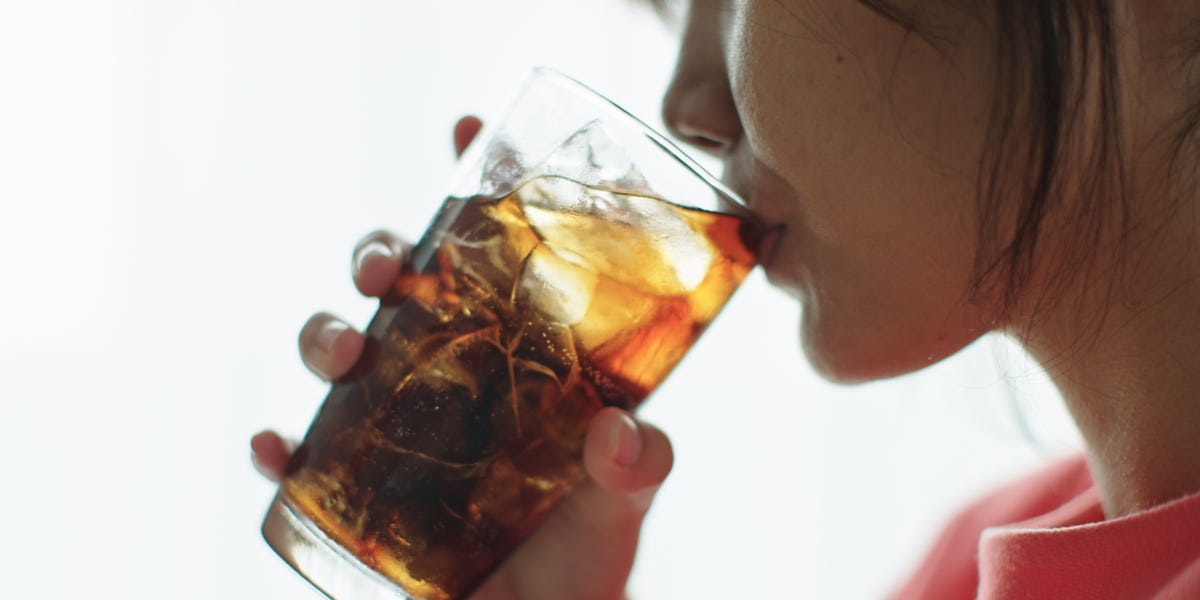
Just one can of soda contains more added sugar than what is recommended for the entire day, said Ewoldt. In super-sized servings, such as 50-ounce cups, soda could contain 100 to 160 g of sugar!
What’s more, soda is commonly sweetened with high fructose corn syrup, which has been linked to negative health effects, including fatty liver disease, said Johnson.
Alternatives:
Seltzer with a splash of juiceSodas sweetened with steviaSweetened Plant-Based Milk
“Sweetened nut milks tend to have very little fiber or protein, but what they do contain is a fairly moderate amount of sugar,” said Ewoldt. Some types have five to 17 g of sugar per serving.
The most common types available include almond, cashew, oat, rice, coconut, and soy. “Except for soy, most of these alternatives contain little to no protein compared to dairy milk, which provides 8 g of protein per eight-ounce serving,” said Johnson.
Alternatives:
Unsweetened plant-based milksUnsweetened soy milk, which contains no added sugar and protein levels comparable to dairy milkLactose-free dairy milk (if lactose intolerance is the reason for choosing plant-based milk)Pre-mixed Alcoholic Drinks
“Pre-mixed alcoholic drinks can be a calorie bomb due to the syrups and other sweeteners used to mask the alcohol and make them taste delicious,” said Ewoldt. Some of these drinks may contain 25 to 40 g of sugar per serving, which is more sugar than a can of soda, Johnson added.
Alternatives:
Sugar-free premixed alcoholic drinksUsing fresh fruit or herbs in place of syrupsUsing sparkling water in place of tonic water or sodasPre-made Smoothies
“Pre-made smoothies are a good example of taking something that could be nutritious and making it into something of the opposite,” said Ewoldt. Depending on what ingredients are used, such as fruit juices, syrups, and sugary yogurt, the result can be high in calories and sugar with little fiber or protein.
Although premade smoothies can be a better choice than a soda or other sugary drink, a single bottle can contain 300 calories and 40 g of sugar. “Even though this sugar is naturally occurring, the body still metabolizes it the same way as added sugar,” said Johnson.
Alternatives:
Whole fruitHomemade smoothie with less fruit and added protein powderHomemade smoothie with plain nonfat Greek yogurtPre-made Protein Drinks
These can be helpful for people who want to hit their protein target on the go, and many premade protein beverages actually tend to be lower in sugar because they use calorie-free sweeteners. But you can have more control over the ingredients by making your own protein shake from protein powder, fruit, and even a serving or two of vegetables, such as spinach, said Ewoldt.
Alternatives:
Energy Drinks
Many energy drinks contain 30 to 40 g or more of sugar, per Ewoldt. But that’s not all: They also can contain as much as 300 milligrams (mg) of caffeine, which is more than three times the amount in a cup of coffee. “There doesn’t seem to be much positive from a health standpoint in including these options in our daily routine,” Ewoldt said. If it’s coffee vs. energy drinks, black coffee is going to be your best bet every time.
Alternatives:
Coffee without added sugarEnergy drinks sweetened with plant-based sweetenersSports Drinks
A 20-ounce bottle typically contains an average of 270 mg of sodium and 30 to 40 g of sugar. “They are designed to help replace fluids and electrolytes lost through intense sweating,” said Johnson.
These products are made to give the body a quick and efficient source of energy, such as if you are competing in an athletic event or training at high intensities for more than 60 minutes. If you are doing moderate-intensity activities for a shorter duration, plain water is your best beverage, said Ewoldt.
Alternatives:
WaterElectrolyte packets without added sugarRELATED STORIES