



 PC: Congressman Ed Case
US Rep. Ed Case (HI-01) voted in his Appropriations Committee against his majority colleagues’ Fiscal Year 2027 Agriculture, Rural Development, Food and Drug Administration and Related Agencies funding measure.
The bill, which covers most of the federal government’s efforts for US agriculture and rural development through the US Department of Agriculture and related agencies for FY2027 beginning Oct. 1 of this year, totals some $204 billion, most of which is mandatory spending through national farm support and other programs.
The discretionary spending level subject to the annual appropriations process is set at $26.3 billion, a $1.1 billion decrease from the current year, for USDA’s non-forestry and rural development programs, the Farm Credit Administration, Commodity Futures Trading Commission and the Food and Drug Administration.
“I opposed this bill because it slashes funds for the SNAP program, which has already seen more than 6,700 people in Hawai‘i lose critical food assistance following enactment of the President’s budget reconciliation bill, which I opposed last year. The FY 2027 funding bill also decimates the Commodity Supplemental Food Program and fails to fund the McGovern-Dole international emergency food assistance program,” said Case, who is in his eighth year on Appropriations and previously served four years on the House Committee on Agriculture.
ARTICLE CONTINUES BELOW ADARTICLE CONTINUES BELOW AD
Case highlighted further deficiencies with the bill, including:
Eliminating $200 million from the fresh fruit and vegetable benefit from the Special Supplemental Nutrition Program for Women, Infants, and Children (WIC).
Reducing funding for the Emergency Food Assistance Program, which provides food to low-income or elderly individuals at no cost to them during times of disaster
Slashing Food for Peace by 25%, a program that supports American farmers while delivering critical assistance to people facing famine worldwide.
Eliminating the Geographically Disadvantaged Farmers and Ranchers Program, which provides reimbursements to producers for the high costs of transporting agricultural commodities or inputs.
Despite drastic reductions, Case successfully worked to protect Native Hawaiian programs that are under direct threat by the Trump administration. As one example: “The bill provides $5 million for Education Grants for Alaska Native and Native Hawaiian-Serving Institutions. This program addresses the educational needs of food and agricultural sciences-related disciplines and prepares low-income students for careers related to food, agricultural and natural resources.”
Through his assignment on the Committee, Case secured $1.9 million for the Honolulu Fire Department through two Member-designated Community Project Funding projects that specifically focus on local needs in Hawai‘i.
The first project, an aviation fuel tender, will significantly strengthen HFD’s ability to sustain aerial firefighting and rescue operations during extended emergencies. The tender will allow for reliable on-site fueling capability, ensuring firefighting aircraft can remain operational near the incident rather than losing valuable time traveling long distances to refuel.
The second project is for a helicopter hoist training simulator. The simulator will allow HFD’s personnel to improve their skills, rehearse emergency procedures and practice complex hoist maneuvers without placing additional strain on the aircraft. It will boost readiness and extend the life of essential equipment, enabling HFD crews to consistently provide fast, dependable aerial rescue services.
The House’s CPF rules require that each project must have demonstrated community support, must be fully disclosed by the requesting Member and must be subject to audit by the independent Government Accountability Office. Case’s disclosures are here.
Case further worked with his Democratic colleagues Representatives Veronica Escobar and Henry Cuellar of Texas to offer an amendment to fully restore proposed cuts to the Rural Water and Waste Facility Loans and Grants Program. These grants are designed to specifically assist American Indian, Alaska Native, Native Hawaiian and Colonia (any identifiable unincorporated community within 150 miles of the United States-Mexico border with a population less than 1 million residents) communities with their safe water and waste disposal need.
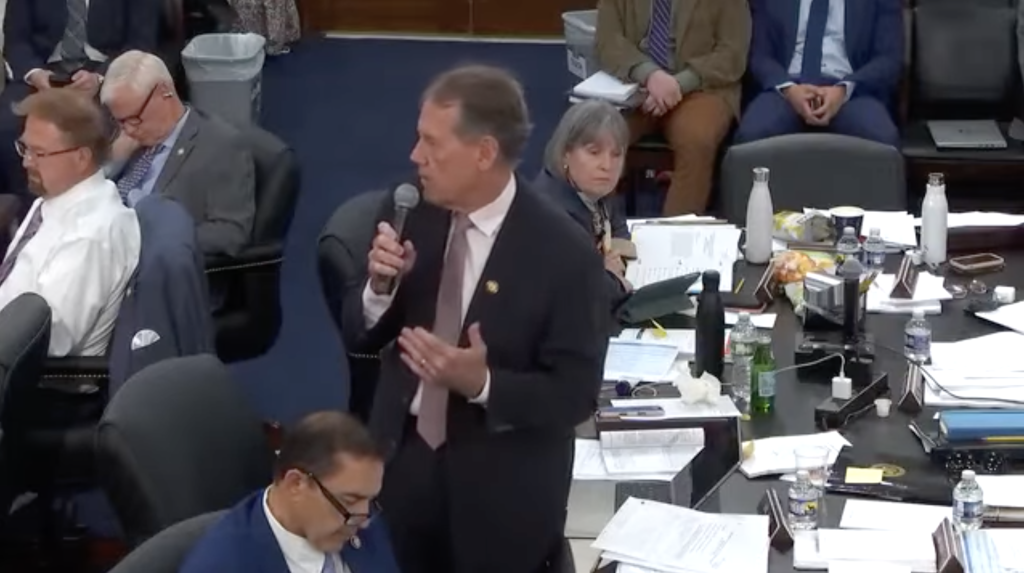
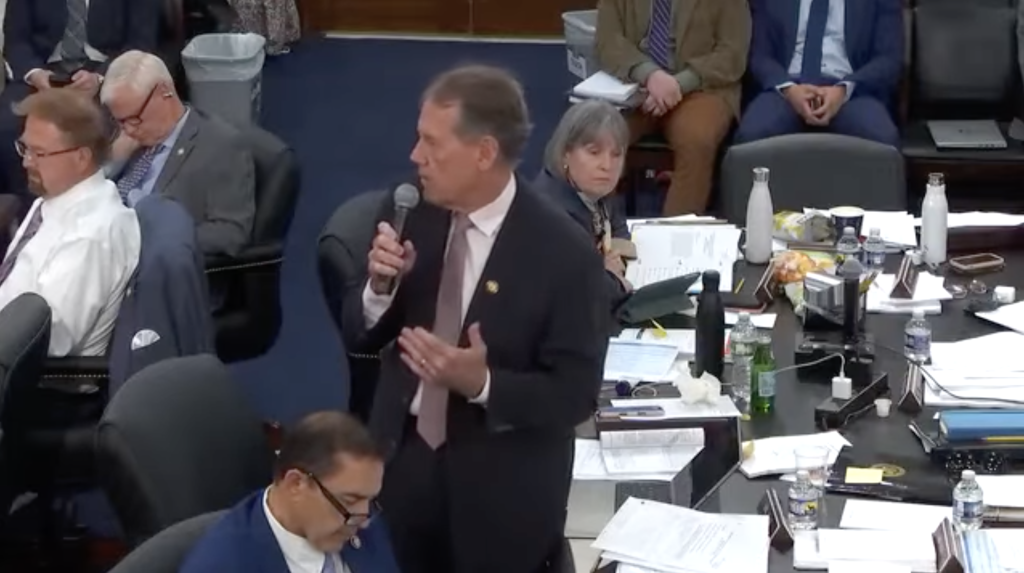
Case spoke in full Committee on their amendment to educate colleagues on the unique history and needs of the Hawaiian Home Lands with which this program assists.
ARTICLE CONTINUES BELOW AD
While Case and his colleagues earned bipartisan support for their amendment, it was not adopted on an unusual tie vote. Case did secure the undertaking of his colleagues to continue to work on the omission as the measure moves through the legislative process.
Other provisions in the bill of interest to Hawai‘i that Case worked to secure include:
$124 million for the USDA Wildlife Damage Management Program, which helps to prevent the spread of the Brown Tree Snake to Hawai‘i
$3 million for agricultural canine detection and surveillance for invasive species and diseases.
$1.6 billion for the Animal and Plant Health Inspection Service, including $209 million for combating specialty crop pests.
$365 million for agriculture quarantine inspections to prevent infestations of pests and diseases.
$15 million for the Minor Crop Pest Management Program to provide expert assistance to minor and specialty crop producers.
$8 million for the Grassroots Source Water Protection Program that is designed to prevent water source pollution.
$5 million for Aquaculture Centers and $2 million for related aquaculture research programs.
$2.5 million for the Tropical and Subtropical Agricultural Research Grants for Insular Areas Program.
$10 million for the Sustainable Agriculture Research and Education Account.
The measure also incorporated the following Case requests:
Provides just under $17 million for the Daniel K. Inouye US Pacific Basin Agricultural Research Center, allowing it to continue researching Rapid ‘Ōhi‘a Death, genetic improvements in coffee and cacao and additional plant disease cures.
Provides $1 million for the Food Donations Programs for Pacific Island Assistance.
Funds Hatch Act agricultural research to land-grant universities in all 50 states, insular areas and the District of Columbia to conduct research on all aspects of agriculture. The University of Hawai‘i College of Tropical Agriculture and Human Resilience receives roughly $1 million per year from this program.
$1.2 billion for the Food Safety and Inspection Service, which is $11 million above the FY 2026 enacted level, to fund our nation’s frontline meat and poultry inspectors.
$37.9 billion for Child Nutrition programs, which is $59 million above the FY 2026 enacted level
This measure is the fourth of the twelve bills to be taken up by the House Appropriations Committee that will collectively fund the federal government for FY 2027.
Despite Case’s opposition, the bill now moves on to the full House of Representatives for its consideration.
A summary of the Agriculture, Rural Development, FDA and Related Agencies Appropriation bill is available here.