




April Long answers all your beauty-related questions with practical advice and zero judgment.
Photo-Illustration: by The Cut; Photo: Getty Images
Over the course of my career as a beauty editor, I have submitted myself to pretty much every laser and skin-tightening treatment on the menu. I’ve tried Ulthera, Sofwave, Thermage, Morpheus8, Clear + Brilliant, Fraxel, EmSculpt, and probably several more I’ve forgotten about. Some have made my skin look noticeably brighter (I heartily endorse Clear + Brilliant), but none have really done much to enhance bounciness or contour. So, when I signed up to try a XERF session, I was prepared for another meh result. Instead, I got a wow.
XERF is a radio-frequency device developed by the South Korean company Cynosure Lutronic that arrived in American dermatologists’ offices last year. Personally, I had never heard of it until a couple of months ago when three different friends texted me in a single week asking me about it. Like so many things that go viral, we have a Kardashian to thank: Kim called XERF her “new fave” in an Instagram Story, and suddenly everyone wanted to know what it was and where to get it. There was some backlash to the buzz — New York City dermatologist Shereene Idriss, M.D., wrote a Substack suggesting that XERF’s surge in popularity might have more to do with the company’s enormous marketing budget than with efficacy, and dermatologist Paul Jarrod Frank, M.D., posted a video warning people eager to try the device that they shouldn’t expect a face-lift-like transformation — but doctors who have been using XERF regularly in their practices say they are impressed by the results.
I went in for a treatment with dermatologist Michelle Henry, M.D., who has been treating patients with XERF for almost a year. “I’ve used every single variation of radio-frequency devices, and XERF really stands out,” she says. “Patients love it so much that it’s become the most popular treatment in my practice.” Here’s everything you need to know about what it’s like to get XERF.
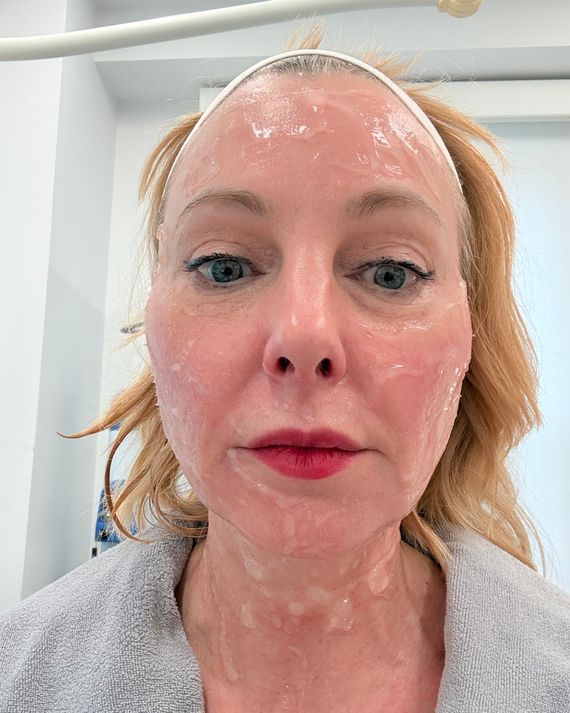
Photo: Courtesy of the subject
Radio-frequency devices use electromagnetic waves to create heat, which stimulates fibroblasts to increase collagen and elastin production. When you are prepped for XERF, a grounding pad is placed on your back, and the area of intended treatment will be coated with conductive gel. “There are many different types of radio frequency,” says Dr. Henry. “The Morpheus8, for example, is bipolar radio frequency delivered via microneedling. That means that the energy just goes from needle to needle. With XERF, which is monopolar, the energy is seeking that grounding pad, so it’s penetrating deeper into the skin.”
Radio frequency has been used since the early 2000s to tighten skin (Thermage is considered the OG), but XERF is much more advanced. “It’s the first RF device in the world to use dual frequencies (6.78MHz and 2MHz). All other RF-based lifting devices use only one frequency,” says dermatologist David Kim, M.D., who trialed the device in Seoul last year before deciding to introduce it in his New York practice. “I did half of my face to test it and saw a significant difference that lasted for months.”
The dual-frequency wavelengths enable XERF to target collagen and elastin in multiple layers of skin, so you get both deep-tissue lifting and superficial tightening on the skin’s surface. “Think of elastin like a rubber band,” says Sapna Palep, M.D., board-certified dermatologist and co-founder of the new Journelle Skin clinic that will open in New York next month. “You lose it naturally as you age, but if you can produce more of it, you get more of a ‘stretch back’ to the skin that helps tighten skin and improve appearance. And the boost in collagen production helps reduce dips and bumps, making skin look firmer overall.”
Ulthera and Sofwave use high-intensity focused ultrasound technology, not radio frequency, to enhance collagen production. Dermatologists like Ultherapy Prime (the newest version) because the machine’s ultrasound imaging enables them to visualize the depth of the skin’s subdermal layers and customize the treatment accordingly for every individual. It can provide a very noticeable lift, especially for patients with significant laxity in the neck and chin areas, but the downside is that it is extremely painful. (When I had it, I was given Percocet and a Valium and I still barely made it through the treatment). Sofwave is a shallower treatment than Ultherapy (the ultrasound goes only into the mid-dermis), making it considerably less painful — though the results may also be more subtle.
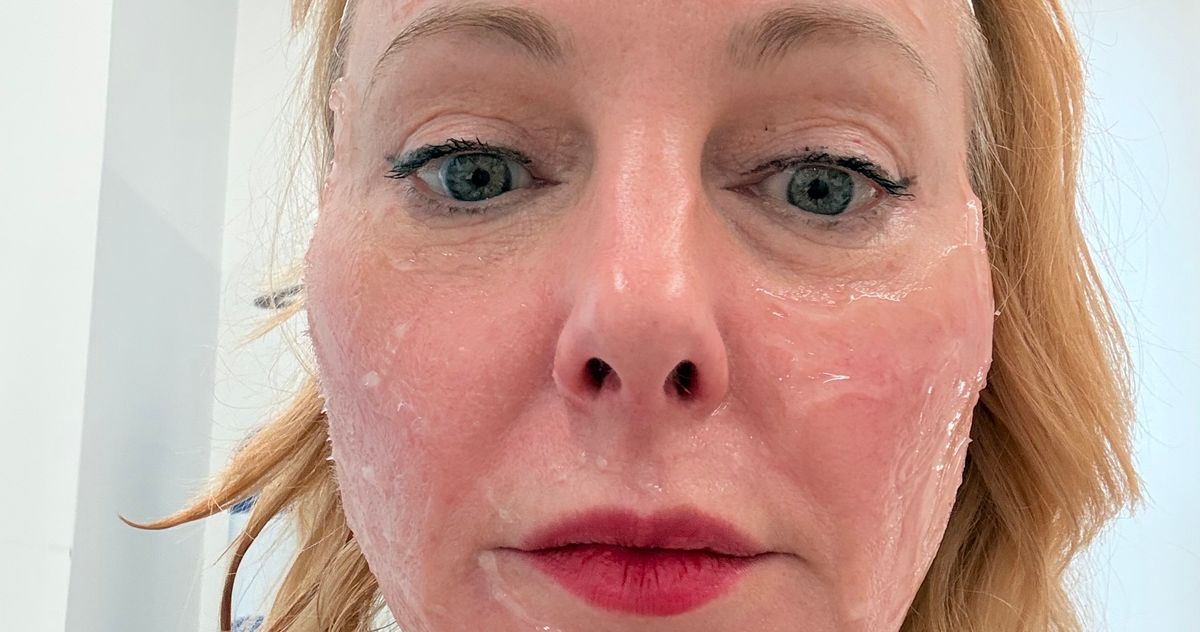
A hot-stone massage. The machine is equipped with cooling technology that keeps your skin from ever feeling like it’s getting scorched. As Dr. Henry moved the wand over my face, she warned me that it might feel “pinchy” as the level of heat built up, but I never found it even remotely uncomfortable — even on my thin-skinned forehead, which is the area that makes my eyes water in most treatments. The process of doing my full face and neck took about an hour, and I found it very relaxing. “The cooling tip makes the treatment extremely comfortable,” says Dr. Kim. And afterward? Zero downtime. “You can immediately resume normal activity like wearing makeup, working out, etc.,” says Dr. Palep. “Most people don’t even experience redness post-treatment, so you can fit it in right in the middle of your workday.”
Doctors say XERF is going to work best for people with mild to moderate skin laxity. “If you are starting to see early signs of skin sagging around the jawline or neck, or fine lines and collagen loss, XERF may be a great treatment option,” says Dr. Palep. “Anyone with more severe skin sagging, or deep fine lines or wrinkles may need a surgical approach.”
Collagen takes time to build, so full results from XERF can be seen about three months after treatment. But that’s not to say that you don’t get an immediate boost. After treating one side of my face, Dr. Henry brought me a mirror to show me how lifted my jawline looked, explaining that it was a short-term contraction that would probably last a few days. XERF also makes your skin look super-radiant. “I do it a lot for brides,” Dr. Henry says. “Even if they’re not going to get the full result in time for the wedding, they will still get a beautiful glow.”
Optimally, the recommendation is to get a second XERF treatment after three months, then once a year after that for maintenance. My skin truly did look lit from within for several days after my treatment, which was about three weeks ago. The glass-skin effect sadly wore off, but my jawline definitely looks tighter, especially where I had begun to develop a little soft jowly sag below the corners of my mouth, and my skin just appears fresher and bouncier overall. I can’t wait to see what it looks like after three months.
Stay in touch.
The latest in style, self, culture, and power in your inbox.
Vox Media, LLC Terms and Privacy Notice