




Some time ago my older brother became obsessed with Korean skincare, which he discovered on TikTok. In his early fifties, he spends nearly all of his spare time on this app, imbibing a steady stream of drag queens, Democrats and women washing their faces.
This formula had sufficiently influenced him to plan a trip to Seoul, where he wanted to get “skin treatments that are illegal in the US”. Would I like to come with him, he wondered?
If it isn’t clear by now, my brother is gay. So am I, but he’s better at it than I am: for one, he is married. He has also made choices in life that have netted him almost unrelenting comfort. I think he works in wealth management — I’ve asked a few times what he does for a living, but he says I won’t understand. Whatever it is, his car can give you a back massage. Obviously I was going to let him take me to South Korea.
(Though my brother is addicted to TikTok, he remains wary of Google, so I’ll refer to him here as Josh, lest any online searches reveal he has the social-media habits of a teenage girl.)
Our itinerary wasn’t really my thing. My usual skincare routine consists of washing my face in the shower when I remember to, and my favourite line of cosmetics is CVS Beauty. I am 41, but by not drinking and remaining underemployed, I look younger.
“You’re getting away with things — for now,” Josh tells me, ominously. “But you need to be proactive.”
And even in our middle age, my brother has tremendous sway over me. At the end of the day, I want what he has: one of the planet’s dozen or so happily monogamous gay marriages. True, I have been assured that the reason I am single is not my looks, but my personality, but one still has to maximise one’s chances. So when I was marched into Dr Chaelin Chung’s dermatology practice in Seoul, I kept an open mind.
“Repulsed, I left the room”
South Korea’s beauty industry, or “K-beauty,” generates about $12 billion domestically; its global export market is worth another $10 billion. Social media drives much of the industry’s recent growth, as Korean culture in general has become more popular among western audiences (see, for example, K-pop and K-drama).
A cheerful woman of British extraction, Dr Chung runs the SNV Clinic, which my brother chose because, according to our hotel concierge, “it’s where the Kardashians went”. I did not love the sound of this, as I am the kind of medical consumer whose first stop is Groupon, and I doubt Kris Jenner gets her face ironed out on the cheap.
It was a high-tech experience from the start. Our consultation began with placing our heads into a sort of three-dimensional photocopying machine that photographed our faces in unforgiving high-def before generating a report detailing our defects. Then Dr Chung took us to her office to discuss the findings.
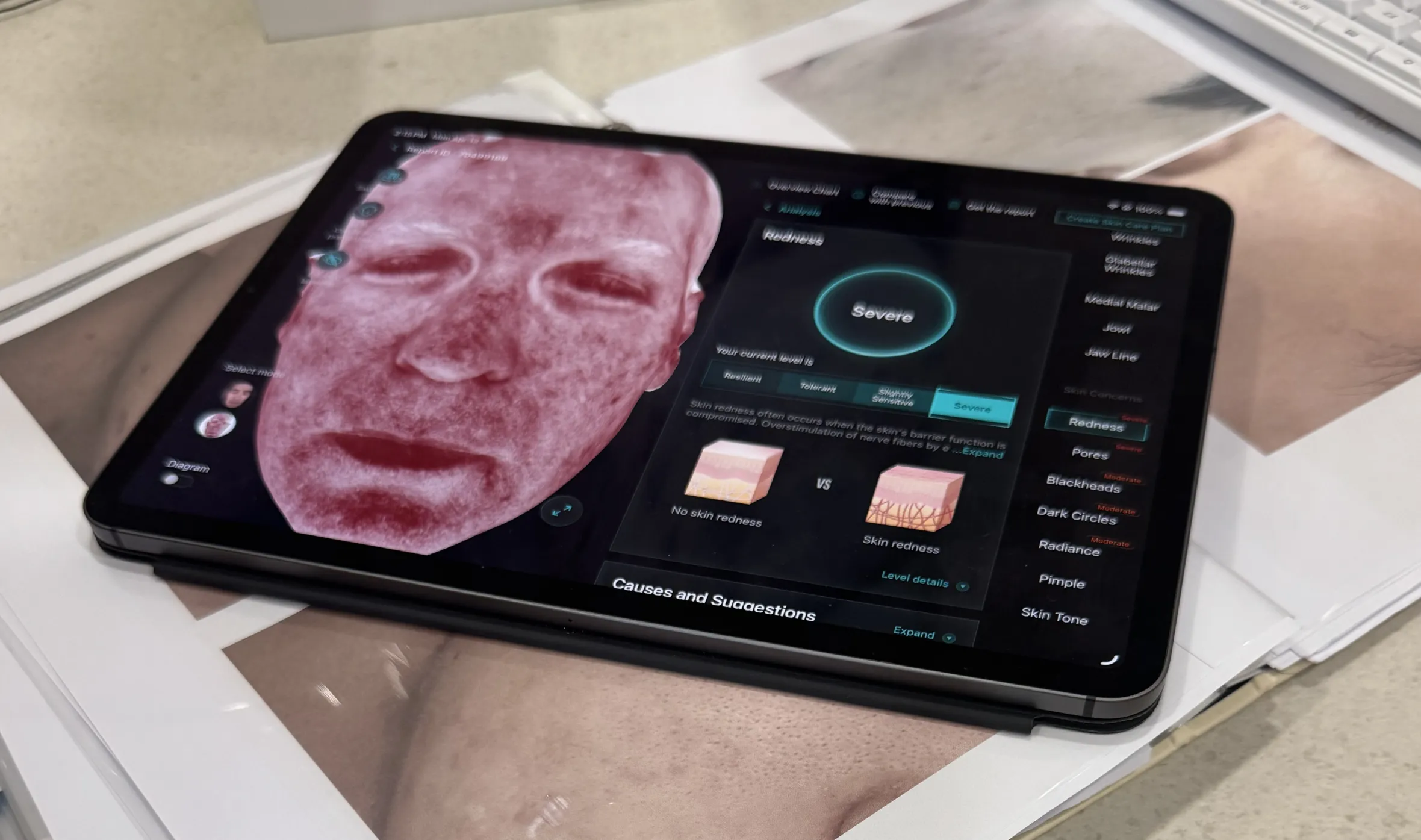
My brother, we learnt, had been walking around with a face whose redness level was “severe”. And despite his diligent hygiene, his level of “pore severity” was coarse — the worst level of pore severity. Repulsed, I left the room for some air. When I returned, he had agreed to having his face scrubbed, scraped and treated with something called Thermage, which is when they shoot radio waves into your skin. The piercing heat causes either the tightening of collagen or the growth of new collagen — possibly both. I think the general idea is they burn off your face and the one that grows back is nicer.
All of this, it turns out, can be done in America. But it’s far cheaper in South Korea. The cost of Thermage alone at a New York dermatologist’s office can run up to $5,000 per session — Josh’s entire treatment came to less than that. And if you’ve managed to avoid becoming accustomed to luxury, you can get yourself to Seoul and back for under two grand. For an entirely elective medical experience, you’d be a fool not to go!
“My crow’s feet were verging on severe. My 11 lines were deepening. My mid-face was elongating”
As for my scan results, Dr Chung informed me that the machine had noticed my prominent crow’s feet, thickly grooved, I supposed, from four decades of laughter and joie de vivre.
“As you can see,” the doctor said, zooming in on my face in profile, “it does need to be addressed right away.” She had, for emphasis, drawn thick red lines emanating from the corner of my eye. I pointed out that normally my skin looks better, when additional wrinkles are not scribbled onto my face.
But the point remained. My crow’s feet, Dr Chung told me, were at a “level-five severity” — “moderate” verging on “severe”. My face scan, a kind of infrared-looking negative photograph, revealed a vicious network of blotchy blue dots, each an enlarged blood vessel. My “11 lines,” the vertical creases between my eyebrows, were deepening. My pores were clogged. My mid-face, which I had no idea was a technical term, was elongating.
“Your overall contour doesn’t look that bad,” she mentioned, referring to how tightly my skin was managing to cling to my jaw. “Would you …want it to get a little bit more tightened?”
“Anything, doctor!” I pleaded. Though I’d walked in there with the cool distance of a journalist, it had taken Dr Chung only a few insults to turn me into Donatella Versace.
So it was that I agreed to a suite of interventions. First, my face would be gently sanded down using an exfoliation treatment called Geneo X. “It feels like a cat licking your face,” in Dr Chung’s description, a sensation for which I was happy to part with several hundred dollars. I would then be given something called Ultherapy, which meant that ultrasound waves would be shot into the fat and muscle on my face to stave off jowliness. Next I’d receive Potenza, another radio frequency treatment, this one via “microneedling,” that I was told would help “with overall skin texture and pores”.
“They started me off with the cat-licking”
The final procedure, the pièce de résistance, was something called Rejuran, which Dr Chung also referred to as “skin boosters.” This was the illegal-in-America treatment we’d schlepped across the globe for: a product derived from salmon DNA that would be administered to my face via syringe. The active ingredient here is something called polydeoxyribonucleotide. Basically, my cells would be tricked into producing collagen, elastin, and other rejuvenating proteins by injecting my face with fish semen.
The Rejuran would be the item with the biggest price tag — but it was also the thing I couldn’t get back home. Sure, I hadn’t heard of Rejuran until five minutes ago, but what was I supposed to do: go without it?
The clinic made me promise not to reveal their pricing, so I will just say that the cost of all of this came to under $5,000, though not by much.
They started me off with the cat-licking, which was fine. Next was the Ultherapy, a kind of face ultrasound that delivered occasional pinpricks of searing subcutaneous heat: tolerable, if not exactly relaxing.
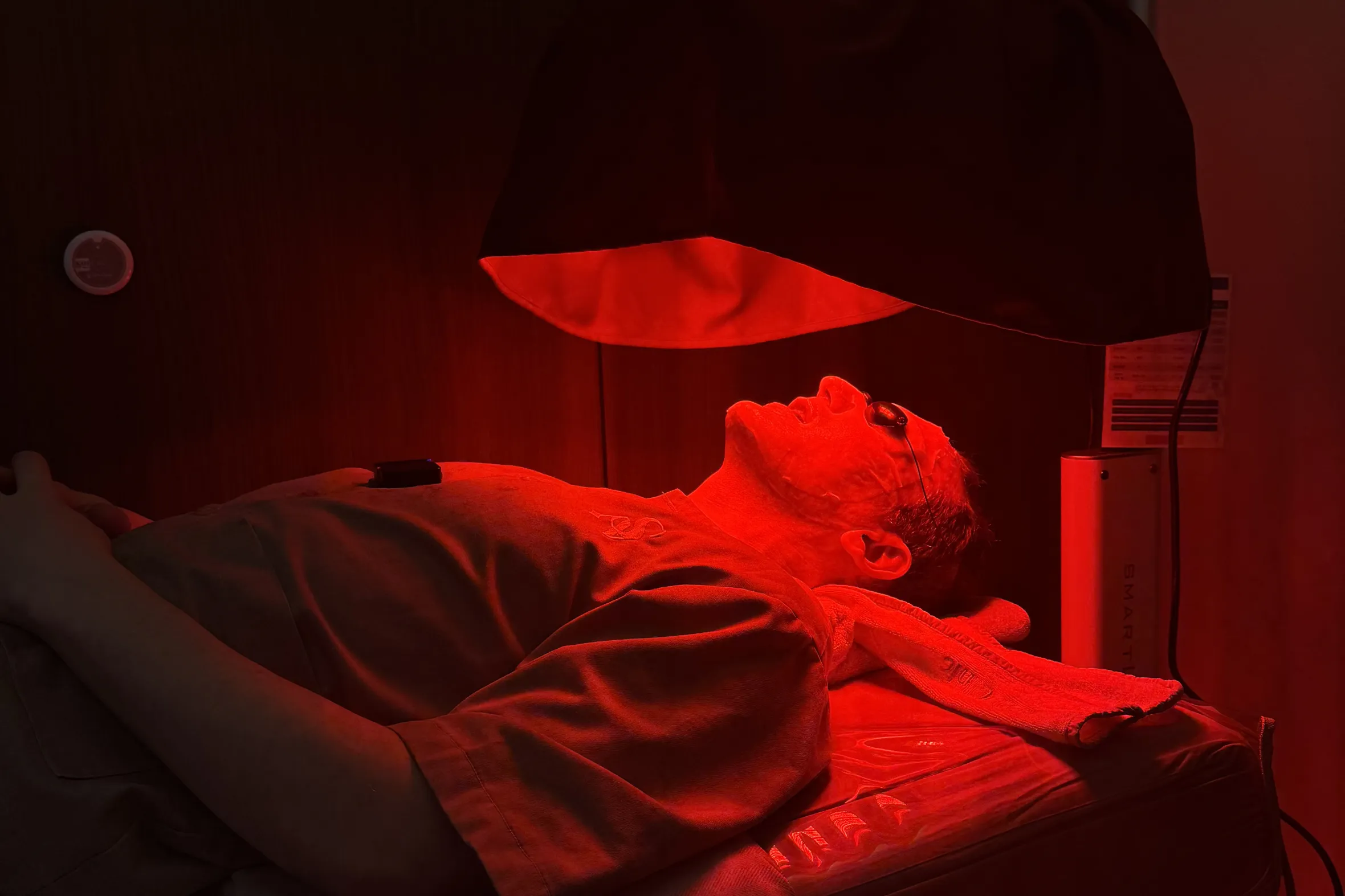
Then Dr Chung started running my face over with a stapler. This is the sensation of the radio-frequency-microneedling procedure, Potenza. Though not pleasant, it was a walk in the park compared to what came next.
The word “injection” does not properly conjure the agony of Rejuran. I had totally forgotten why it is that children cry when they get shots. It isn’t, like they say, just the anticipation of the pain: it’s the pain.
Imagine being stuck with a needle in the hard, boney space alongside your temple. Across your forehead. In the space between your nose and your eye. Imagine dozens and dozens of shots — about 150 in all — covering every centimetre of your face.
“These were easily the worst five minutes of my life”
I did not suffer in quiet dignity. I was immediately, profanely, loudly lamenting my decision to stray from America’s benevolent regulatory state, which surely exists to save people like me from asking a doctor to needlessly stab them in the face.
The Rejuran took only five minutes, but these were easily the worst five minutes of my life. I’d have given up my whole family to make the pain stop, had I only not already paid for it.
I asked, afterwards, why I’d been spared the lidocaine, which they’d given my brother as a numbing agent before his Thermage treatment.
“So you could see how painful it is!” Dr. Chung explained. “So you can be honest when you write your article!”
This was the least American thing I’d experienced in Korea thus far: a doctor inviting me to write an exposé on her entirely optional torment.
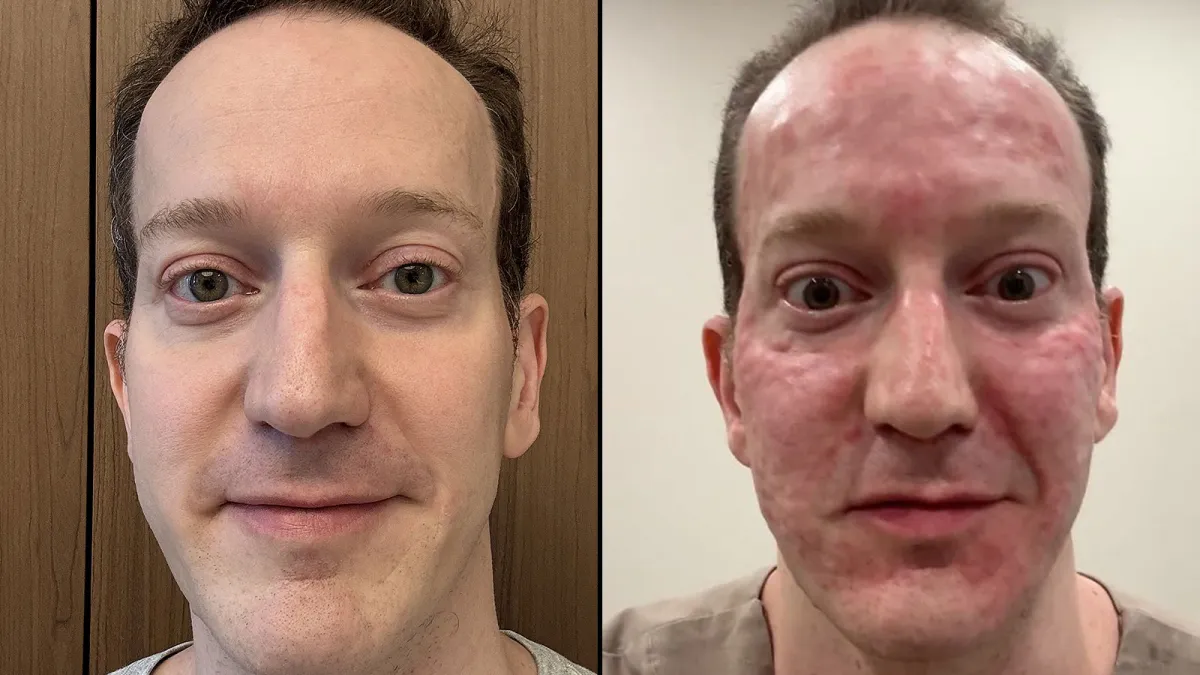
Immediately afterwards, my face looked like something by Guillermo del Toro. It was swollen, bruised, and red all over, covered in what looked like tiny welts, each I guess a minuscule deposit of fish material. I had come into this place with pretty good skin for a 41-year-old. Two hours later I couldn’t have bedded a leper.
“When I look in the mirror…”
After assaulting me, Dr Chung gently applied a cold, clay-like substance to my face, which triggered a disorienting sense of gratitude.
By the time Josh and I stumbled out of the place, night had fallen. Our faces were still fairly nightmarish to behold, but we were assured that within a week, we’d look normal again, and that in two or three more weeks, we’d be aglow with new collagen and fresh elasticity.
It has now been just over two weeks since I parted with several grand to be scrubbed, squeezed, lasered and injected. Oblivious as ever, when I look in the mirror I just see my face; the details still aren’t making an impression.
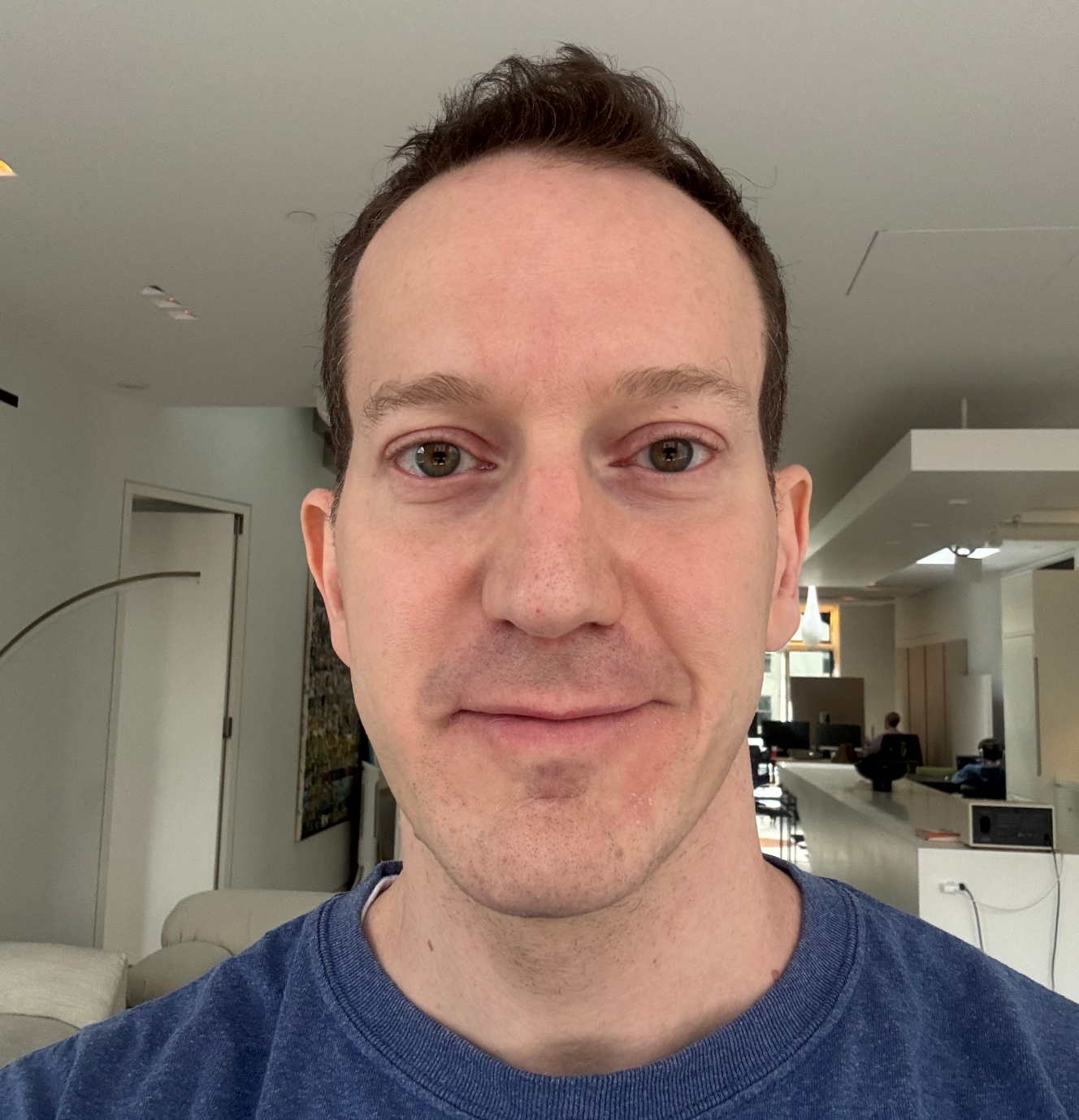
And really, I hope they never do. These people told me to repeat this routine in three months, and the last thing I need is to do any of this again.
Perhaps I will work on my personality.
Ben Kawaller is a journalist and essayist living in New York City