



Your support helps us to tell the story
From reproductive rights to climate change to Big Tech, The Independent is on the ground when the story is developing. Whether it’s investigating the financials of Elon Musk’s pro-Trump PAC or producing our latest documentary, ‘The A Word’, which shines a light on the American women fighting for reproductive rights, we know how important it is to parse out the facts from the messaging.
At such a critical moment in US history, we need reporters on the ground. Your donation allows us to keep sending journalists to speak to both sides of the story.
The Independent is trusted by Americans across the entire political spectrum. And unlike many other quality news outlets, we choose not to lock Americans out of our reporting and analysis with paywalls. We believe quality journalism should be available to everyone, paid for by those who can afford it.
Your support makes all the difference.Read more
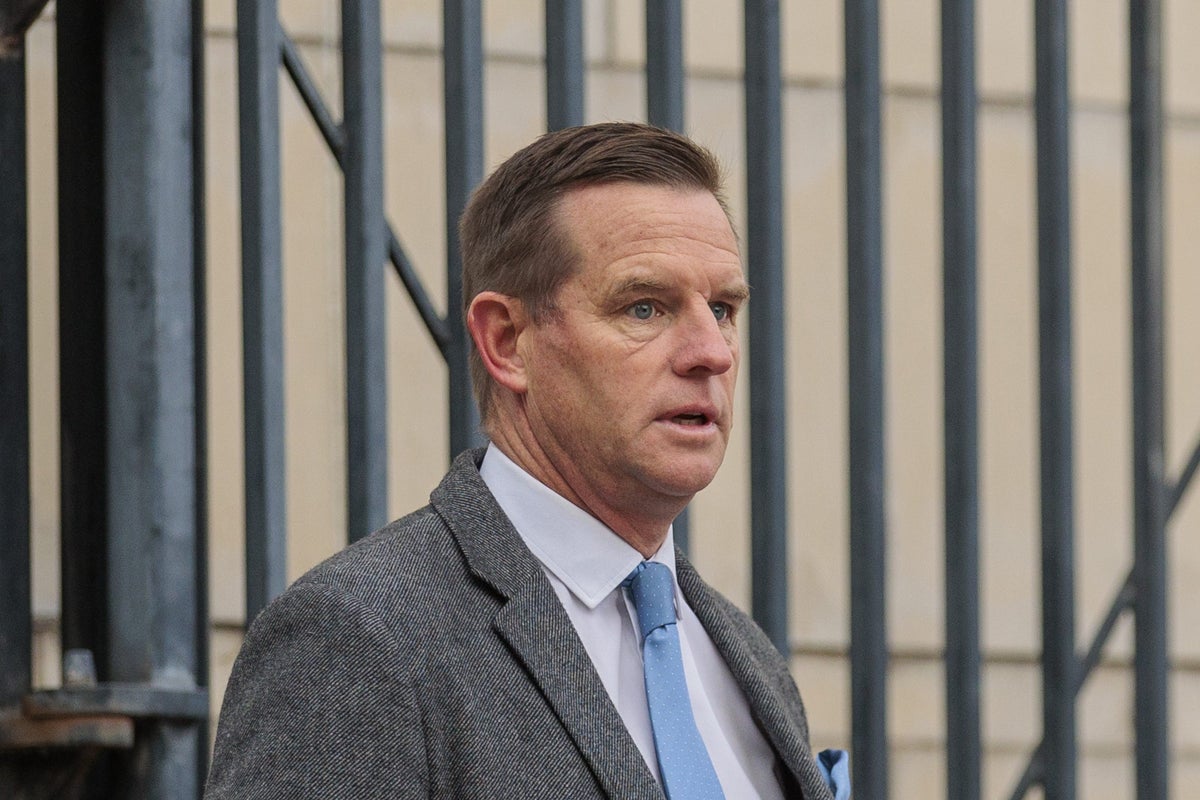
Armed Forces veterans are not looking for immunity, but a fair and balanced process to deal with the past, Northern Ireland’s veterans commissioner has said.
David Johnstone described dealing with the past as a difficult issue that was not dealt with in the 1998 Belfast/Good Friday Agreement.
He was speaking after a coroner found that soldiers had lost control and used unreasonable force in the shooting of five people in the Springhill area of west Belfast on July 9, 1972.
The shootings were attributed to soldiers A and E, however they have not been identified. Mr Justice Scoffield said there is little prospect of criminal convictions.
Families speaking outside court hailed legacy inquests as having been the best legal tool to deliver truth.
The Springhill inquest was the last to complete its evidence in 2024, hours before a deadline for the stopping for legacy court processes imposed by the previous government’s Legacy Act.
The current Government’s Troubles Bill, which is still going through the parliamentary process, is to replace that Act.
West Belfast MP Paul Maskey expressed concern that the British Government will include immunity from prosecution for military veterans in new legacy legislation.
Speaking on BBC Radio Ulster’s Good Morning Ulster programme, Mr Johnstone said: “The veterans that I represent are not looking for some type of immunity.
“What they do want is a fair and a balanced process that understands context and takes into account that the terrorists in Northern Ireland who waged such a savage sectarian war, in their words, from both sides of our community, who were given effective amnesty in 1998 had their evidence destroyed, and now we have British troops been analysed for split-second decisions – being poured over by a civilian judge who’s never been in that situation.
“That is the heart of the matter … unless you’ve been in a scenario where shots are coming at you, you’ve lost a colleague weeks earlier, I don’t believe any civilian judge can get in the mind of a soldier in that scenario and come to a decision of his decision making process. I don’t think that’s possible.”
In terms of the Springhill inquest, he said he wanted to acknowledge a significant and difficult day for the families.
However he questioned whether inquests are the best route for legacy cases.
“What veterans want, and what we’ve been lobbying for is a process that makes sure that there isn’t vexatious prosecutions, that our legal system is not used simply to bring forward cases where there’s no new evidence, and where the threshold of evidence has to reach a bar of the unreasonable doubt,” he said.
“That’s what we want, fairness and balance.”
Mr Maskey said the Springhill families “fought very hard for their loved ones for the truth to be told”.
Speaking on the same programme, the Sinn Fein representative said it is very important that victims’ families “get their day”, adding “it’s very important for the truth to come out”.
On the Troubles Bill, Mr Maskey said he wants to see an Act that has the confidence of victims and their families, is human rights compliant and can deliver truth and justice as envisaged in the 2014 Stormont House Agreement.
“There can’t be any amnesty for British soldiers because I don’t think families will ever accept that,” he said.
“I have concerns, I think many political parties have concerns, and more importantly victims’ families have concerns that that is what the British Government is going to try and bring forward.”