




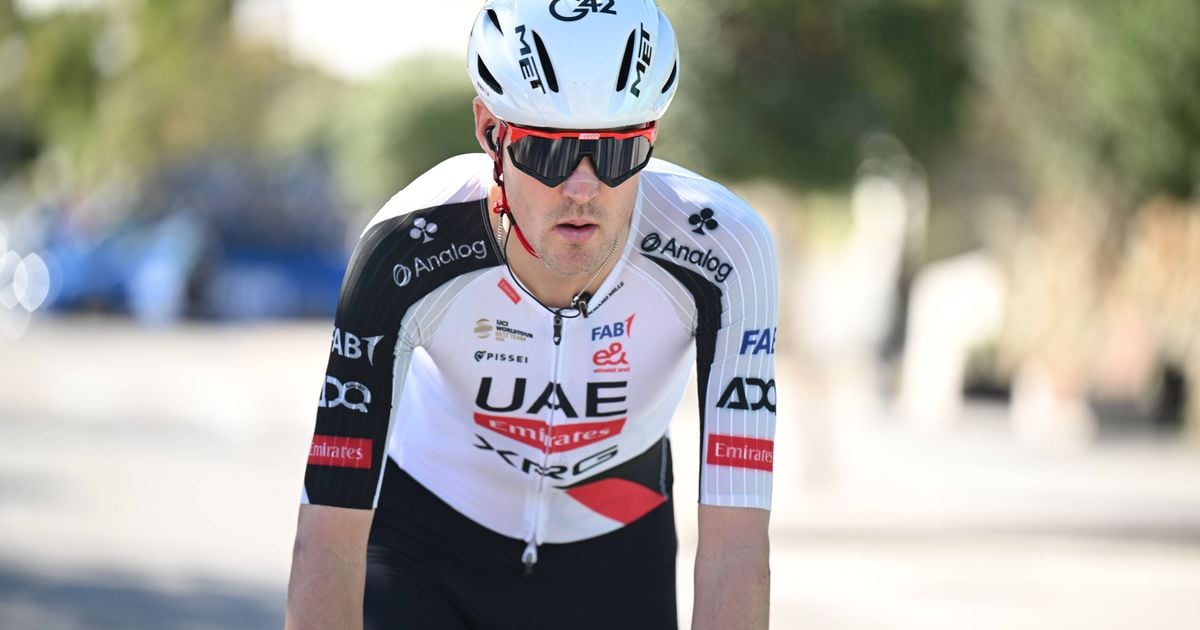
“I started my professional career in 2018, not so long ago, but from then to today the way we fuel has completely changed,” Sivakov explained in an interview to bici.pro. “There was a time when we raced with low carbohydrate content, but now it is completely over. Of course, you don’t fuel with carbs every day, but the perception has changed a lot. The shift started with Covid and now it’s all a bit crazy.”
Consuming such massive amounts of sugar while exercising at the limit is a challenge in itself, but Sivakov admits he doesn’t mind the eating part. “Personally, it never was [difficult]. I love food, I like to eat… I think it is more difficult to adapt the gut to sustain this level of feeding for many hours. You can’t say it was difficult, but it is certainly an aspect to train.”
To illustrate just how extreme modern fueling has become, Sivakov broke down his exact nutritional intake for a 250-kilometer race like Liège-Bastogne-Liège. The protocol is relentless, relying heavily on easily digestible liquids and gels rather than solid food.
“Starting with breakfast, I don’t know exactly how many carbohydrates I ate, but certainly around 250 grams. Then a small snack, like a rice cake, before the race. And before starting, another snack with 20-40 grams of carbs. During the race, I tried to take in about 150 grams of carbohydrates per hour.”
To ensure he never misses a beat, technology steps in. “I always have a small notification on my Wahoo to remind me to replenish energy every half hour, so I don’t forget and I always pull a gel out of my pocket.”

Pavel Sivakov and Isaac del Toro on Giro del Veneto 2025 podium
Sodium tracking and flavor fatigue
UAE Team Emirates nutritionist Gorka Prieto also places a massive emphasis on sodium intake, tailoring the amounts to each individual rider’s sweat rate. While Sivakov isn’t overly sensitive to sodium loss, he aims for a baseline of about 600 milligrams per hour during races, noting that taking too much can leave a rider feeling bloated the next day.
When it comes to the actual taste of the endless stream of gels, the Frenchman has clear preferences. “I really like the mango one, because it tastes good and mango is actually one of my favorite foods. Instead, the gel with caffeine, the cola-flavored one, is not my favorite in terms of taste. But at the end of a race you always need a boost, a bit of caffeine, so yes, it’s always good to have one with you.”
The fueling doesn’t stop when the finish line approaches. Sivakov forces himself to keep consuming carbohydrates until just 30 minutes before the end of the race. He notes that the body’s metabolism is working so intensely during the effort that it absorbs the carbohydrates incredibly efficiently, giving him a head start on his recovery for the next day.
Once back on the team bus, the recovery protocol begins immediately with an Enervit carbohydrate and protein shake, accompanied by a recent trend in the peloton: tart cherry juice. “I would say these cherry juices became common use when I arrived at UAE Emirates. It’s not so much for the juice itself or something you feel in the moment, but I feel it helps me recover well.”
After the scientific shakes and juices on the bus, the team strictly switches back to standard meals at the hotel. As Sivakov points out, after six hours of processing engineered sports nutrition, “returning to normal foods is also good for the gut.”