




A routine question during an eye exam, “Do you smoke, or did you ever?”, now carries far more weight than most patients realize. The answer helps determine whether a widely prescribed vitamin formula will protect what remains of their eyesight or quietly raise their cancer risk.
That tension sits at the center of the Age-Related Eye Disease Studies, the federally funded clinical trials that changed how ophthalmologists treat age-related macular degeneration, the leading cause of irreversible vision loss among older Americans. The research produced a specific high-dose nutrient combination that slows AMD’s progression by roughly 25 percent. It also uncovered a hazard that forced investigators to rewrite the formula.
More Than Just Another Vitamin Bottle
When ophthalmologists talk about ocular supplementation, they are not referring to off-the-shelf multivitamins or wellness blends. They mean a precise, high-dose formula tested in thousands of patients over more than a decade. The concept gained traction after the original AREDS trial demonstrated that certain nutrients, taken at levels impossible to obtain from food alone, could delay the march toward blindness.
“The high levels of vitamins and minerals are difficult to achieve from diet alone,” the National Eye Institute states in its AREDS/AREDS2 frequently asked questions. These are pharmacological doses, not dietary ones. Nearly all trial participants also took a standard daily multivitamin, and the AREDS formula still delivered clear additional benefit.
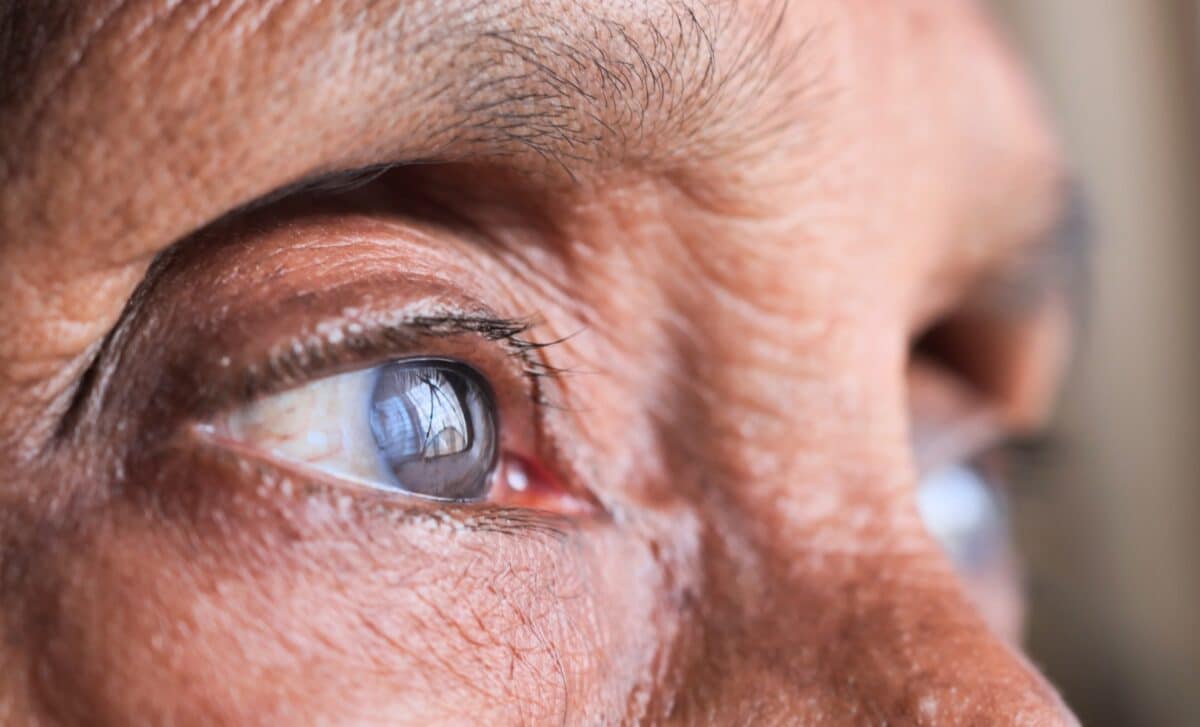
 These are not grocery-store multivitamins. They are high-dose, trial-tested nutrients no diet alone can provide. Image credit: Shutterstock
Dr. Marcela Fruttero, an ophthalmologist, described the approach to El Litoral in an article published April 29. “Ocular supplementation is a topic that currently has categorical relevance in ophthalmology,” she said. She pointed to the studies that gave clinicians a foundation for recommending specific nutrients rather than leaving patients to guess.
The Ingredient They Had to Remove
The original AREDS supplement contained beta-carotene. Two large cancer prevention trials had already linked that nutrient to elevated lung cancer risk among smokers. When the National Eye Institute launched the follow-up AREDS2 trial in 2006, lead investigator Dr. Emily Chew and her colleagues barred current smokers from receiving it. But former smokers were not spared. Lung cancers appeared in 2 percent of participants who took the beta-carotene version of the formula, compared with 0.9 percent of those who did not. Among those who developed cancer, 91 percent had quit smoking before the study began.
The signal was clear. Beta-carotene was removed.
Researchers replaced it with lutein and zeaxanthin, two carotenoids that are not merely safer but biologically active in the eye. Beta-carotene gets converted to vitamin A in the body and never reaches the retina. Lutein and zeaxanthin, by contrast, concentrate in the macula, the tiny central zone that handles reading, face recognition, and any task demanding sharp sight.
 Two macular pigments, lutein and zeaxanthin, replaced the risky ingredient and now anchor the standard AREDS2 formula. Image credit: Shutterstock
“We have carotenoids like lutein and zeaxanthin that act directly in the mácula,” Fruttero told the Argentine publication. That localization matters because macular cells live under constant oxidative stress. They burn through oxygen and energy at high rates, producing free radicals that chip away at light-sensing tissue across decades.
What Is Actually Inside the Pill
The supplement now considered the clinical standard is detailed on ClinicalTrials.gov. It delivers 10 mg of lutein and 2 mg of zeaxanthin alongside 500 mg of vitamin C, 400 IU of vitamin E, 80 mg of zinc, and 2 mg of copper. Trial data showed that participants receiving this beta-carotene-free combination had an 18 percent lower risk of advancing to late-stage AMD compared with those on the original formula.
Fruttero noted that other compounds also play supporting roles in retinal health. “We have facilitating cofactors like zinc, copper, selenium,” she said. “There are things that increase mitochondrial energy, and polyphenols and omega-3 also intervene.” These additional elements are not part of the core AREDS2 formula but reflect the broader nutritional approach some specialists consider when tailoring recommendations to individual patients.
Diet matters alongside supplementation. Patients who entered the study with the lowest intake of lutein and zeaxanthin, those eating few leafy greens, gained the most from the pills. In that group, adding the two carotenoids cut the risk of advanced AMD by 26 percent.
One Size Fits Nobody
The trials drew a tight boundary around eligibility. The formula is not a general-purpose eye vitamin.
“There was no benefit for people with early AMD or for people who do not have AMD,” the NEI states. The evidence supports use only for those with intermediate AMD in one or both eyes, or advanced AMD in a single eye. Outside those categories, the supplements offer nothing beyond what a multivitamin provides.
This narrow window clashes with how the products are often sold over the counter. Both the NEI and the American Academy of Ophthalmology stress that the decision to start supplementation belongs in a doctor’s hands.
Fruttero made the same point. “It’s not the same for everyone. It has to be given in the right doses, it’s like a tailored suit for each case,” she said. Someone with intermediate AMD may need the full AREDS2 formula. A patient with dry eye might benefit more from omega-3 fatty acids. Another dealing with heavy screen exposure could require carotenoids like lutein and zeaxanthin to combat fatigue.
“Sleep, diet, our habits plus supplementation make certain genes wake up or become silenced,” Fruttero said, pointing to the interplay between lifestyle and genetic predisposition. That concept, epigenetics, helps explain why daily behavior can tip the scales even when inherited risk is present.
What Your DNA Cannot Decide
As direct-to-consumer genetic tests have spread, some patients have asked whether their DNA can predict if AREDS2 supplements will work for them. The NEI’s answer is direct: it cannot.
AMD involves many genes and environmental variables, unlike single-gene diseases such as Stargardt disease. “Genetic status fails to reliably predict risk,” the institute notes. Some people with high-risk genetic profiles never develop AMD. Others with reassuring scores progress to advanced disease.
The NEI cautions that genetic testing could create a false sense of security and discourage the regular dilated exams that remain the only reliable method for tracking disease. The academy endorses that same view.
High doses also bring practical cautions. Vitamin E at 400 IU, though safe in the trials, can interact with blood thinners. The zinc dose requires copper to ward off deficiency anemia. A full medication review should occur before the first capsule is taken.