




 4 min read
Maybe you think about it. Maybe you don’t. But the word “longevity” is everywhere, appearing on your skin care bottles, at your gym, and even on the labels for your dog’s food. Welcome to The Long Game, a series exploring longevity today and what it means to live better.
I knew I was in a different sort of hotel when my bed informed me that I’d been snoring. It had been for only a few minutes (and “cutely,” my husband assured me), but was nevertheless detected by the Eight Sleep smart mattress cover in my “restorative wellness room” at the Santa Monica Proper Hotel in Los Angeles. Overnight, it tracked everything from my sleep cycle to my vital signs, then greeted me in the morning with a sleep score.
It was my first experience being graded on vacation, but only a hint of the biofeedback one can discover at the stylish, Kelly Wearstler-designed, wellness-focused property. Thanks to a new partnership with the longevity platform Hundred Health, guests can have blood drawn before or upon arrival to measure more than 160 biomarkers, from heart health to biological age, and use the results to shape a customized three-day retreat or a more casual wellness-minded stay.
In the world of luxury travel, blood draws are the new welcome drinks. “The idea of wellness used to sit on the edge of hospitality,” says Brian De Lowe, president and co-founder of Proper Hospitality. “Now longevity is literally how people choose where they stay. Our guests still want great design and amazing food and social energy, but in addition to that, they also care about sleep quality, recovery, and metabolic health and performance. Travel used to be about taking a break from that and indulging. Now that’s definitely not the case.” The property’s latest offerings include IV drips, mineral soaks, and a full-body red-light bed. Proper Hospitality co-founder and CEO Brad Korzen says the goal is to introduce guests to cutting-edge recovery tools without requiring an expensive, far-flung clinic stay.
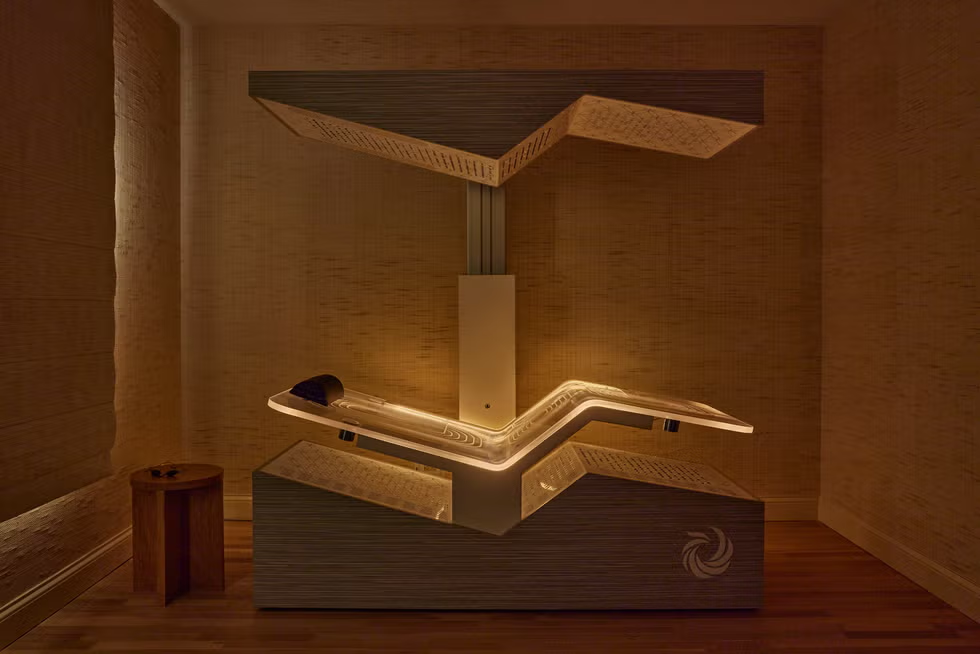 Yoshihiro Makino
The Ammortal Chamber in Santa Monica Proper Hotel’s Recovery Suite mixes electromagnetic fields, red light, sound, and hydrogen therapies.
Which is not to say the category’s crown jewels—sites like Lanserhof in Austria and Germany, SHA Wellness Clinic in Spain and Mexico, and Clinique La Prairie in Montreux, Switzerland—aren’t thriving, too. The longevity clinic tourism market is valued at roughly $18 billion, according to Growth Market Reports, and could be worth $48.2 billion by 2033. “We’ve seen a big shift to a much younger audience, in their late thirties or forties, who come to Clinique La Prairie to take care of their health in a preventive way,” says Olga Donica, director of longevity innovation at the resort.
Guests travel from all over the world to experience the highly personalized weeklong longevity programs at Clinique La Prairie, which employs more than 50 specialized doctors (medical oversight is key to any program, since increased screening could lead to overtreatment in inexpert hands).
The pharmacogenetic testing visitors undergo can determine, for example, which antidepressant or statin will work best for you. Or genetic testing may reveal you have variants that affect your ability to handle oxidative stress when you exercise. Donica says the goal is to combine aging science, longevity medicine, and luxury hospitality so that people are “not feeling like they’re in a hospital, but rather in a place where they are given the possibility to discover themselves at the DNA level.”
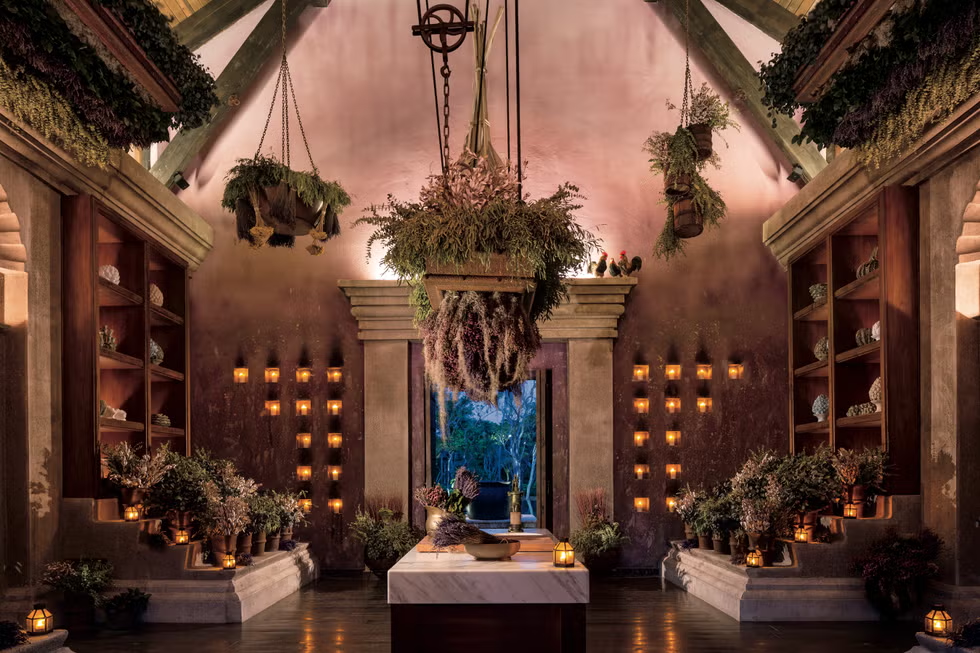 Don Riddle
Spa Botánico at Dorado Beach, a Ritz-Carlton Reserve, offers longevity treatments based on Taíno rituals.
But not all visions of long life start in a lab. Dorado Beach, a Ritz-Carlton Reserve in Dorado, Puerto Rico, is betting on something less measurable, positioning itself as a foil to the medicalization trend. The 1,400-acre eco-resort offers longevity programming based on healing rituals of the indigenous Taíno people, who connected physical well-being to being in harmony with nature. “We don’t use technology or gadgets,” says Viorica Coman, director of the on-site Spa Botánico. “We use the science of herbs and plants and nature to put ourselves in balance and to have long life.”
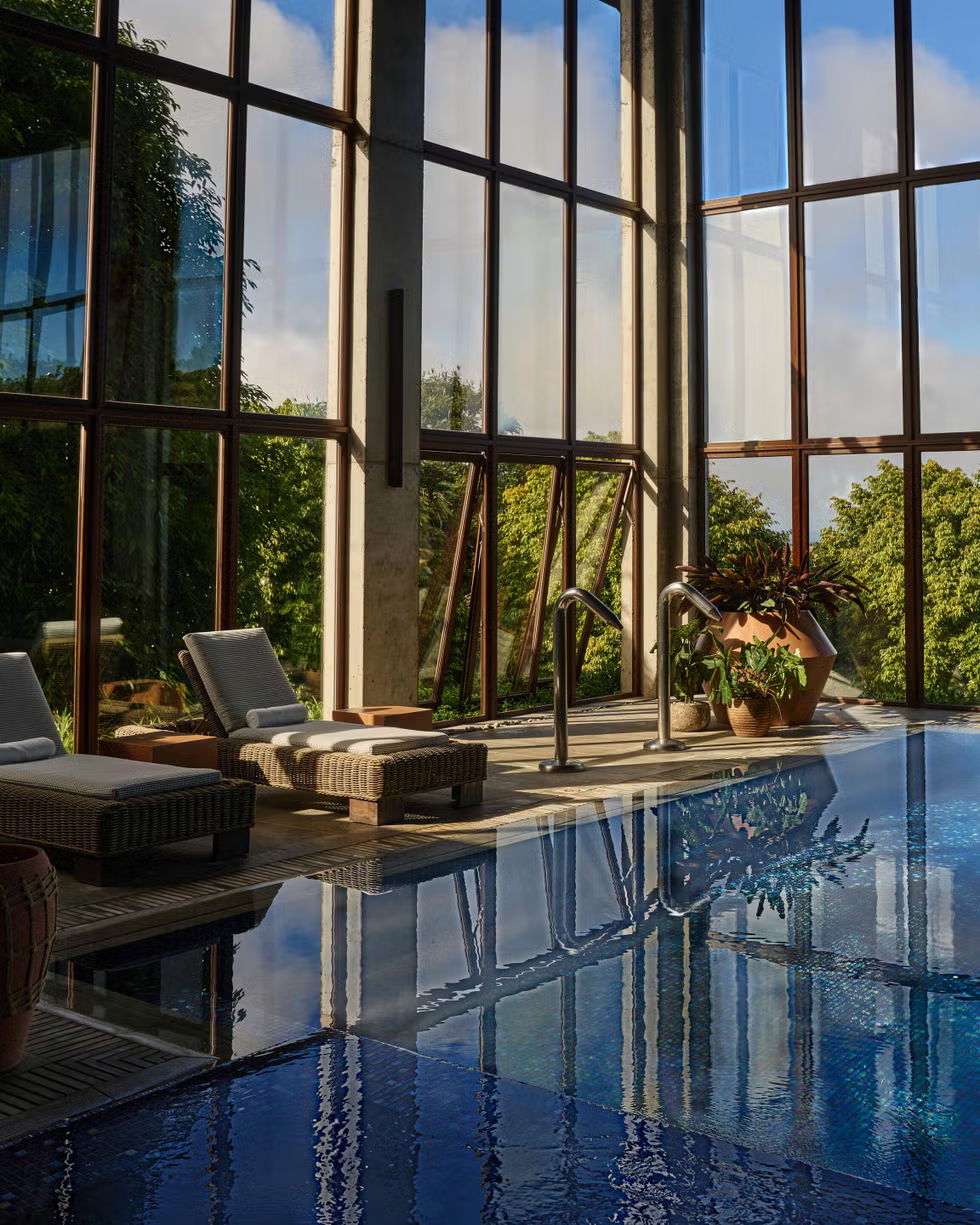 Will Nielsen
Casa de Agua at Hacienda AltaGracia, Auberge Collection in Costa Rica.
I went looking for the softer side of longevity at Hacienda AltaGracia, Auberge Collection, in the mountains of Costa Rica’s Pérez Zeledón Valley. Days here take their cues from the country’s Blue Zone on the Pacific coast—one of five areas where people reach age 100 at rates 10 times greater than in the United States. I made fast friends with strangers on an early-morning hike, horseback riding in the hills, and astrology readings. Treatments at the Estée Lauder Skin Longevity Institute focused on inside-out beauty rather than aesthetic interventions. At a communal dinner under the stars, our group didn’t realize until dessert that the menu had been entirely vegetarian.
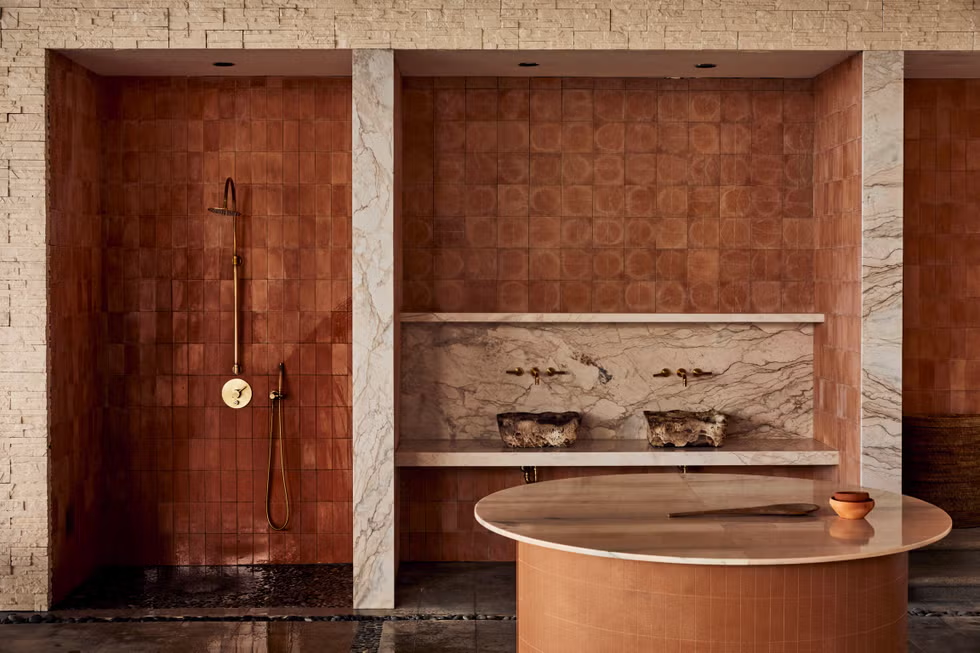 Will Nielsen
The spa at Hacienda AltaGracia, Auberge Collection, houses the Estée Lauder Skin Longevity Institute.
Vivianne Garcia-Tunon, vice president of well-being at Auberge Collection, has sensed a certain drudgery in modern wellness, and designed programs to refocus on joy. “We’ve managed to robotize ourselves, and that’s not how we live a great, vibrant life,” she says. “If you talk to any of the centenarians in the Blue Zone, they’re just joyful people who practice foundational elements on a daily basis, because our bodies don’t care about trends.” Garcia-Tunon cites research that people who experience joy live an average of 10 years longer, and preaches “joyspotting”—thinking of a recent moment, not involving family or children, that sparked happiness. “It’s about stopping for one second and letting joy bathe your brain,” she says.
I realized I had done this in Costa Rica without prompting. Each morning on my terrace, I watched a hummingbird—nature’s hard-driving optimizer—flitting in and out of an etlingera plant, its red blooms as big as a head of cauliflower. I didn’t need to run biomarker tests to feel my blood pressure lowering and serotonin kicking in. Who knows whether I’d added to my years on Earth, but I had at least found a way to make time slow down.
A version of this story appears in the May 2026 issue of ELLE.