




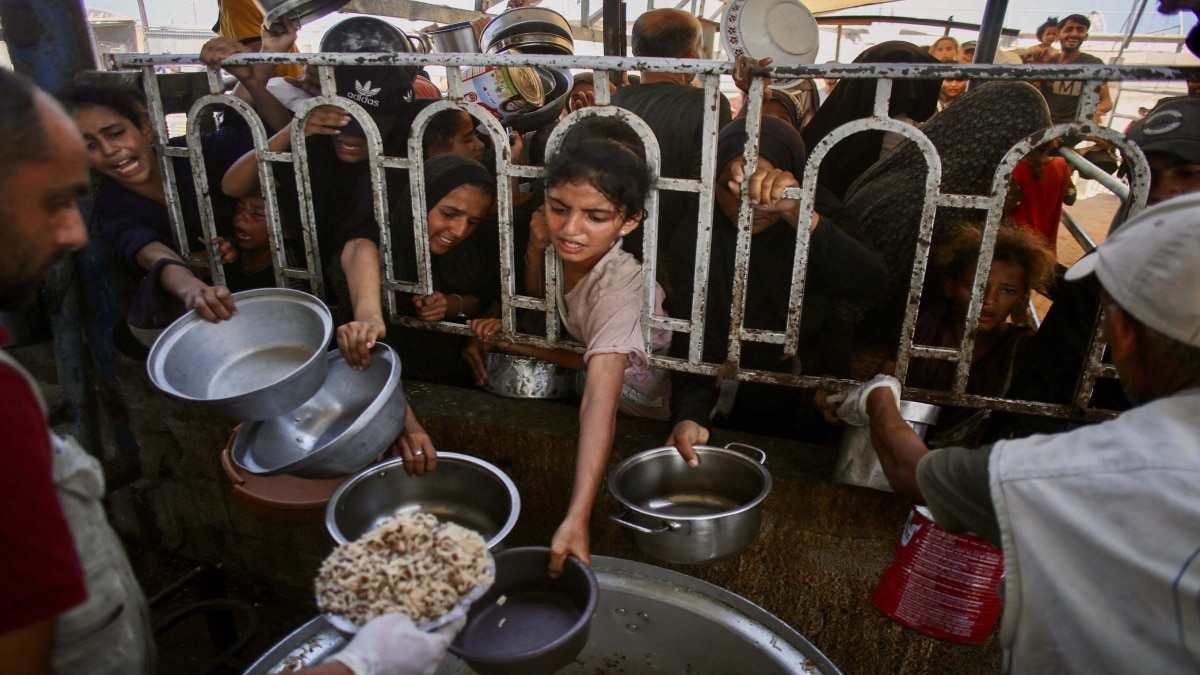
 In 2025, around 266 million people experienced acute food insecurity, the 2026 Global Report on Food Crises (GRFC) has revealed.
GRFC is a joint annual publication by organisations like the United Nations Food and Agriculture Organization, World Food Programme, Global Nutrition Cluster, and more. The research is funded by the European Union.
Acute food insecurity is a condition when food availability, access, utilisation, or stability is disrupted, in parts or entirety. The GRFC defines food crisis as a situation where urgent action is needed to tackle acute food insecurity in order to protect and save lives.
There are a few criteria that countries need to meet to be included in the GRFC 2026, including requiring external assistance for food and requesting and receiving emergency assistance in 2025. India was not among the countries analysed in 2025 because it did not require external assistance. High-income countries are usually excluded, since they are believed to be capable of coping with shocks.
The report analysed populations across 47 countries and regions worldwide. In two parts of the world, the Gaza Strip (Palestine) and Sudan, famine was confirmed in 2025 based on the Integrated Food Security Phase Classification (IPC phase 5).
WHAT HAPPENS WHEN HUNGER HITS?
When the human body is deprived of food, it turns to the glycogen reserves for energy and to keep blood sugar stable. This short-term fix is called glycogenolysis.
Once the body runs out of glycogen, it moves to producing glucose from non-carbohydrate sources like muscles and fat. This keeps vital organs functioning by supplying them with energy, but causes muscle loss. Over time, the body switches to deriving energy from fat, then from muscle and protein.
This eventually weakens the immune system, impairs cognitive function, and makes the body more vulnerable to infection.
Hunger and starvation affect children and adults differently.
MALNUTRITION IN CHILDREN
According to GRFC, around 35.5 million children were acutely malnourished in the 23 countries/territories that were experiencing a nutrition crisis.
The report also noted that about 9.2 million pregnant and breastfeeding women were acutely malnourished. According to Dr Vivek Jain, Paediatrics head at Fortis Hospital, Shalimar Bagh, Delhi, brain development is highly sensitive to malnutrition. “The body takes care of survival above all else when the child does not get enough food; brain development becomes secondary to survival,” he said. Dr Jain also added that neural development processes, like neurogenesis and myelination, become compromised within days to weeks after malnutrition sets in.
From conception until a child turns two years old, the first 1,000 days are critical for brain development. “Poor maternal nutrition during pregnancy can have more profound and irreversible effects because it affects the brain at its earliest stage of formation,” Dr Jain said.
And even though catch-up growth with respect to height and weight is possible if proper nutrition is provided, Dr Jain said that cognitive recovery is trickier because even though early intervention can show positive outcomes, disabilities related to learning and executive function may remain even after early malnutrition in children.
Undernourishment also does not always mean “skinny”. It can manifest as irritation, fatigue, and lack of focus, even before weight loss shows up. “Food insecurity is not only physical but psychological and motivational as well,” Dr Jain said.
THRIFTY PHENOTYPE HYPOTHESIS
The thrifty phenotype relates undernutrition in foetal or early stages of life to permanent metabolic and endocrine changes.
When the body remains hungry for a long time, it adjusts energy expenditure to manage metabolic slowdown. According to Dr Astha Sharma, chief dietitian at Yatharth Super Speciality Hospital in Faridabad, this changes the hormonal profile of the body, causing a decreased production of leptin (satiety hormone) and an increased production of ghrelin (hunger hormone), leading to increased desire to eat.
This is why when food becomes available again after a period of undernutrition, the body will adapt to store fat. “As a result, while recovering from undernutrition may lead your body back towards a normal weight, it is also likely your body will pass through an area classified as overweight or obese if you were to consume energy-dense foods instead of nutrients throughout the recovery phase,” Dr Sharma said.
Even when adequate nutrition is restored, the way the body distributes fat is guided by the undernutrition phase. “A history of inadequate nutrient intake may also cause disruptions in the body’s insulin sensitivity, leading the body to preferentially store fat instead of using it as energy,” Dr Sharma said. “The pattern of central or abdominal obesity is of particular concern because it is associated with a significant risk of developing metabolic and long-term health problems,” she added.
UNDERNUTRITION IN ADULTS
Dr Sharma pointed out that a lack of nutrition in adulthood can lead to an increased risk of non-communicable diseases (NCDs) like type 2 diabetes, hypertension, and cardiovascular diseases. This occurs in two parts: first, sustained lack of nutrients causes decreased metabolic function and hormonal imbalance. When nutrition is restored or surpassed, it can cause unhealthy fat gain and insulin resistance. “This double burden of malnutrition adds to the chance of developing metabolic syndrome and chronic sickness,” Dr Sharma said.
NUTRITION AND IMMUNITY
A healthy immune system needs macronutrients (proteins, fats, carbohydrates) and micronutrients (vitamins, minerals) for proper functioning. According to Dr Sumit Lavania, Internal Medicine HOD at Yatharth Hospital, Agra, protein deficiency impairs an individual’s ability to fight infections, while vitamins A, C, D, and mineral zinc help to produce immune responses and without these, the body may not be able to fight infections.
Loss of subcutaneous fat, weakness, and dehydration are among the early signs of malnutrition.
In conflict zones marred by war, hunger, and diseases, hunger also decreases immune response, making infections difficult to treat. “The combined effect of malnutrition and infectious disease produces a vicious cycle in which both malnutrition and disease negatively affect one another at an accelerated rate,” Dr Lavania said.
Speaking about immunisation, Dr Lavania also added that vaccines can be less effective in people with undernourished immune systems due to their impaired ability to generate antibodies/memory cells effectively.
2026 OUTLOOK
The report noted that until March 2026, 34 countries and territories with food crises had acute food insecurity. High levels of acute food insecurity could persist in South Asian countries like Afghanistan and Pakistan, on account of weather extremes, conflict and insecurity, and economic fragility.
– Ends
Published By:
Priyali Prakash
Published On:
Apr 30, 2026 18:54 IST