



“Hearst Magazines and Yahoo may earn commission or revenue on some items through these links.”
Creatine is one of the most talked-about supplements right now, showing up on TikTok and in gyms, but it’s far from a passing trend, with decades of research behind it. Naturally found in the brain and muscles, and in small amounts in foods like meat and fish, creatine helps support quick bursts of energy during high-intensity exercise.
Our top picks:
Gianna Masi, RDN, CISSN, CPT, a board-certified sports dietitian, notes that women tend to have lower creatine stores due to lower intake, less muscle mass, and hormonal factors—making them strong candidates for supplementation. Beyond performance, research is also exploring creatine’s potential for muscle maintenance with aging and hormonal changes, as well as cognitive support, though these areas are still evolving.
As the category has grown, the supplement aisle has gotten pretty crowded with all kinds of forms and blends. “Creatine monohydrate powder remains the most evidence-based, cost-effective, and reliably dosed form, and the benefits are most robust when combined with resistance training,” adds Masi. Simply put, “monohydrate” refers to creatine combined with a single water molecule—the basic form used in most supplements.
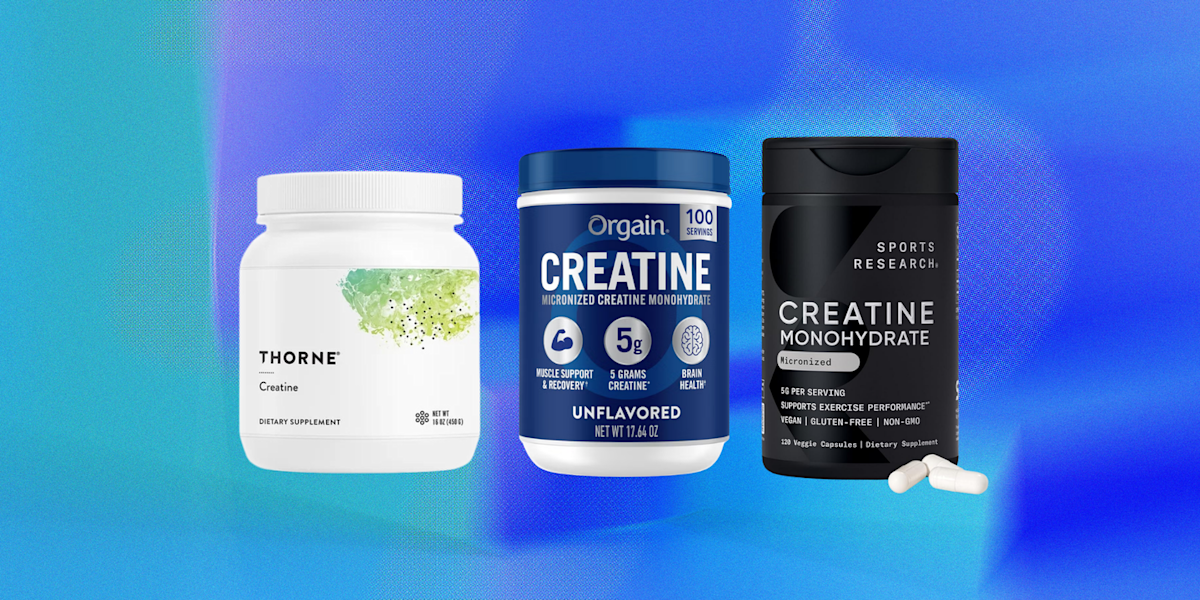
Since supplements are not approved by the U.S. Food and Drug Administration (FDA) before going to market, choosing a high-quality option can be challenging. That’s why our team of registered dietitians in the Good Housekeeping Institute Nutrition Lab reviewed dozens to find the best creatine supplements that support strength, energy, and overall wellness. We prioritized products that have been third-party tested for quality, purity, and label accuracy. Here are the top picks, according to experts.
Our registered dietitians in the Good Housekeeping Institute Nutrition Lab review and evaluate every single supplement we recommend in accordance with our dietary supplement methodology. We then have a registered dietitian on our Medical Review Board review each article for scientific accuracy. A supplement should do just that: supplement the diet, not replace high-quality, nutritious food and important healthy lifestyle practices. Check with your healthcare provider before starting any dietary supplement regimen.
Thorne Research CreatineOrgain Monohydrate Micronized PowderSports Research Creatine Monohydrate CapsulesPuori Creatine Powder with added TaurineKlean Athlete Creatine Powder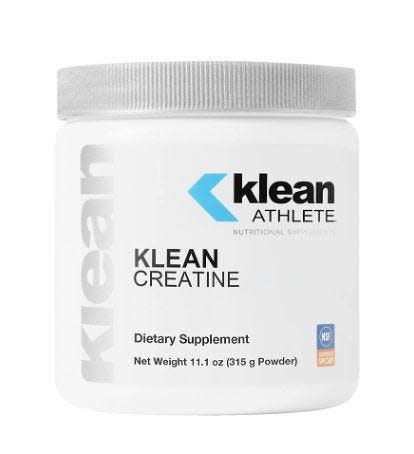
Klean Athlete
A straightforward creatine option delivering 5 grams of creatine monohydrate per serving, this formula aligns with what’s typically used to support strength, power, and high-intensity performance. It is NSF Certified for Sport, meaning it has been independently tested for banned substances and label accuracy, something the experts in the Nutrition Lab consistently emphasize for athletes and active individuals.
Klean Athlete was developed with performance in mind, working alongside medical advisors and sports dietitians, and formulated without artificial flavors, sweeteners, colors, gluten, or GMOs. While many creatine powders on the market are similar in function, this product stands out more for its certification and formulation standards than for any added ingredients. In terms of day-to-day use, reviewers often point to how seamless it is to incorporate.
We like that it’s easy to add to water or other beverages without much thought. The experts in the Nutrition Lab also point out that, despite its ease of use, it’s still a single-ingredient creatine powder, so like others in this category, some settling can occur if not mixed thoroughly.
ProsNSF Certified for SportNon-GMO with no artificial flavors or ingredientsEasy to mix and incorporate into daily routineConsCan settle if not mixed thoroughlyCreatine HMB Creatine PowderGnarly Unflavored CreatineOptimum Nutrition Micronized Creatine PowderMomentous Creatine Monohydrate PowderHow we chose the best creatine supplements
Our registered dietitians and health experts in the Good Housekeeping Institute Nutrition Lab carefully evaluate and analyze supplements based on their nutritional expertise, label accuracy, ingredient quality, and available third-party testing data.
To select the best creatine supplements, our experts reviewed more than 25 products, considering dosage, form, serving size, price, servings per container, ingredients, taste, and how well they dissolved. We included options at a range of price points, with different nutrients and compounds, to meet a variety of needs.
These picks reflect expert analysis rather than in-lab testing. We prioritize supplements that have been independently tested for purity, potency, and safety by credible third-party organizations and those that meet our internal standards for ingredient transparency and manufacturing quality. Because dietary supplements aren’t reviewed by the U.S. Food and Drug Administration (FDA) for safety or effectiveness before they reach the market, it’s important to research each option carefully and speak with your healthcare provider before adding new supplements to your routine.

Hearst Owned
What to look for in a creatine supplement
Here are a few things to keep in mind when shopping for creatine, including checking the type of creatine used, the quality of testing or certifications, and whether the product provides a dose aligned with what’s typically studied for benefits:
✔️ Type: Creatine monohydrate is the most widely studied and well-supported form of creatine and is considered the gold standard based on extensive research showing benefits for strength, power, and muscle performance, along with a strong safety profile and affordability. It is also the form most commonly used in clinical research and real-world supplementation. Variations, such as micronized creatine monohydrate, refer to improved particle size for better mixability but remain the same form. Other forms, such as creatine hydrochloride (HCl), creatine ethyl ester, and buffered creatine, are available but are less studied, and there is no strong evidence that they offer added benefits compared to monohydrate.
✔️ Form and size: There are a variety of creatine supplement forms available, including powders, capsules, tablets, and gummies. Powder is the most commonly used form because it mixes easily into water, smoothies, or other beverages for daily use. Capsules and tablets offer a convenient option for travel or on-the-go use when mixing is not practical. Gummies are also available, but they typically contain lower amounts of creatine per serving, which may require multiple servings to reach commonly studied daily amounts and may not be the most efficient option for consistent intake.
✔️ Price: Creatine supplements can vary in price, but a higher cost does not necessarily indicate better quality or effectiveness, especially since creatine monohydrate is a single-ingredient, well-researched supplement. When comparing options, it can be helpful to look at the cost per serving rather than the total container price, since serving sizes and total servings can vary by product. Single-ingredient creatine products are generally more cost-effective than blends that include additional ingredients.

Hearst Owned
What are the benefits of taking creatine?
According to Kelly Jones, MS, RD, CSSD, board certified sports dietitian and founder of Student Athlete Nutrition, it has become well accepted that supplementation may directly benefit muscle mass and strength for athletes in power sports, or indirectly support strength for other athletes. “Creatine research is showing it can also benefit athletes and active individuals by increasing aerobic threshold, enhancing the storage of carbs as energy in the muscles, and improving recovery from exercise,” she explains.
Jones adds that creatine supplementation may also help preserve muscle during periods of inactivity and with aging. It is being researched as beneficial to those with illnesses such as Parkinson’s disease, ALS, and muscular dystrophy. Masi also explains that there are some bone health benefits. “When paired with resistance training, creatine helps prevent bone mineral density loss and preserves bone bending strength.”
Hearst Owned
How long until I see results?
According to Masi, you may notice performance improvements within two to three days, with more measurable strength gains typically showing up in about two weeks when combined with resistance training. She emphasizes that consistency is key, as daily use helps fully saturate and elevate muscle creatine stores. At a dose of 5 grams per day, it takes roughly 28 days to achieve about a 20% increase in muscle creatine levels, after which a maintenance dose of 3 to 5 grams per day is recommended. Without continued use, muscle creatine levels gradually return to baseline within four to six weeks.
Some people may notice early improvements in strength, power, or workout performance once creatine stores are elevated, although timing and response can vary. Initial weight changes are typically due to increased water in the muscles, not fat gain. Over time, creatine may support better training performance and contribute to gradual muscle gains.

Hearst Owned
Who should take creatine?
Creatine is generally considered safe for healthy individuals to take for up to five years, and while it was once mainly recommended for athletes, its use is expanding beyond that group.
Recent studies have suggested a correlation between creatine supplementation and improved short-term memory, which may be beneficial for elderly or stressed individuals, according to the study, although more research is needed.
“I recommend creatine to nearly all adults. I find it most helpful to athletes of all levels, including those who are recreationally active, anyone struggling with mental health, and the aging population, particularly those at risk of cognitive decline or who deal with Parkinson’s or other neuromuscular disorders,” says Jones.
Take note, it is always best to consult your healthcare provider before adding any new supplements to your regimen.
Hearst Owned
What is the recommended dose of creatine?
Research shows that creatine is well tolerated when taken at the recommended dose of 3 to 5 grams per day. According to Jones, “I almost always recommend a daily 3 to 5 gram dose, but note that it isn’t a big deal if you miss a few days. Unless you’re a competitive athlete in season, you don’t have to worry about bringing it on vacation either.”
“For those who have experienced traumatic brain injury, such as concussions, or who haven’t been taking creatine and are coming out of a surgery that damages muscles, a loading phase is recommended, where you would take 0.3 g/kg of your weight in three to four doses for five to seven days and then drop to the 3 to 5 grams daily.”
The efficacy of taking creatine for cognitive improvement is still under research. These are broad recommendations and not individualized.
Hearst Owned
Will you gain weight taking creatine?
Weight gain from creatine is a concern for some and a goal for others. In most healthy individuals, it is common to experience small daily weight fluctuations, regardless of supplementation use. “Even without creatine, the scale can shift by 5 pounds or more in a single day, or even a single long training session, so getting hung up on whether a couple of pounds came from creatine supplementation isn’t worth it,” Jones points out.
She adds, “We might see increases in weight in the short term that are related to body water retention. This is most notable if you engage in a creatine-loading phase.”
Athletes we spoke with reported weight gain during their loading phase, which they said might be beneficial, facilitating lifting heavier weights and building overall strength.
Overall, studies show that creatine “does not always lead to weight gain from water retention” and, more importantly, it “does not increase fat mass.”
Hearst Owned
Are creatine gummies or powder better?
Masi explains that most commercially available creatine gummies contain only about 1 to 1.5 grams per serving, meaning a person would need to consume 3 to 5 gummies daily to reach the minimum effective dose.
She adds that many people stick to the labeled serving, often around two gummies, which may fall short of the intake needed to meaningfully increase muscle creatine stores and support performance benefits. She also notes that “if the goal is evidence-based creatine supplementation, creatine monohydrate powder at 3 to 5 grams per day remains the most studied, most bioavailable, most cost-effective, and most reliably dosed option.”
While gummies can be more convenient, they often require multiple servings to meet daily needs, which can increase cost and make dosing less consistent.
Hearst Owned
Is creatine safe, and are there any side effects?
Creatine has been studied in infants, adolescents, and older people, and even at high doses, studies have not reported negative side effects in healthy individuals when taken at recommended doses. “There are a lot of myths about creatine that aren’t based on science, with some of the most common being that it causes kidney problems and muscle cramping,” adds Jones. There is concern that it could be related to hair loss in men. These myths have been disputed according to research.
Some of the athletes we spoke with reported gastrointestinal distress upon initiation of supplementing with creatine that quickly subsided. According to studies, this could be a side effect of higher doses.
Hearst Owned
Why trust Good Housekeeping?
Valerie Agyeman is a registered dietitian specializing in women’s health with over 10 years of experience in clinical nutrition, corporate wellness, and nutrition communications. She contributes to food and supplement testing at the Good Housekeeping Institute Nutrition & Fitness Lab and has covered topics including gut health, vitamin D, and skin health.
Stefani Sassos is the director of the Good Housekeeping Institute Nutrition Lab, where she oversees all nutrition-related content, product testing, and evaluation. She runs and oversees supplement testing and analysis for Good Housekeeping and has previously covered other supplements, including multivitamins and joint supplements.
For this piece, we consulted health and nutrition experts to provide trusted, practical guidance:
Kelly Jones is a board-certified specialist in sports dietetics and the owner of KJN and Student Athlete Nutrition. She is a nationally recognized nutrition expert, former associate professor of nutrition and exercise physiology, and a media contributor featured in outlets such as U.S. News & World Report, Runner’s World, Men’s Health, and Women’s Health. Kelly consults with sports organizations and global brands, including Major League Baseball and Google, and develops evidence-based nutrition programs for athletes, professionals, and active families.
Gianna Masi, RDN, CISSN, CPT, is a registered dietitian nutritionist specializing in sports nutrition with experience working in collegiate and professional sports settings, where she has supported high-performance athletes across training and recovery. She is also a certified personal trainer, allowing her to integrate nutrition and performance education in a practical, applied way. In addition, she is a trauma-informed provider. She is completing advanced training in Somatic Experiencing to become a Somatic Experiencing Practitioner (SEP), bringing a comprehensive, whole-person approach to health, performance, and education.
Hearst Owned
You Might Also Like