




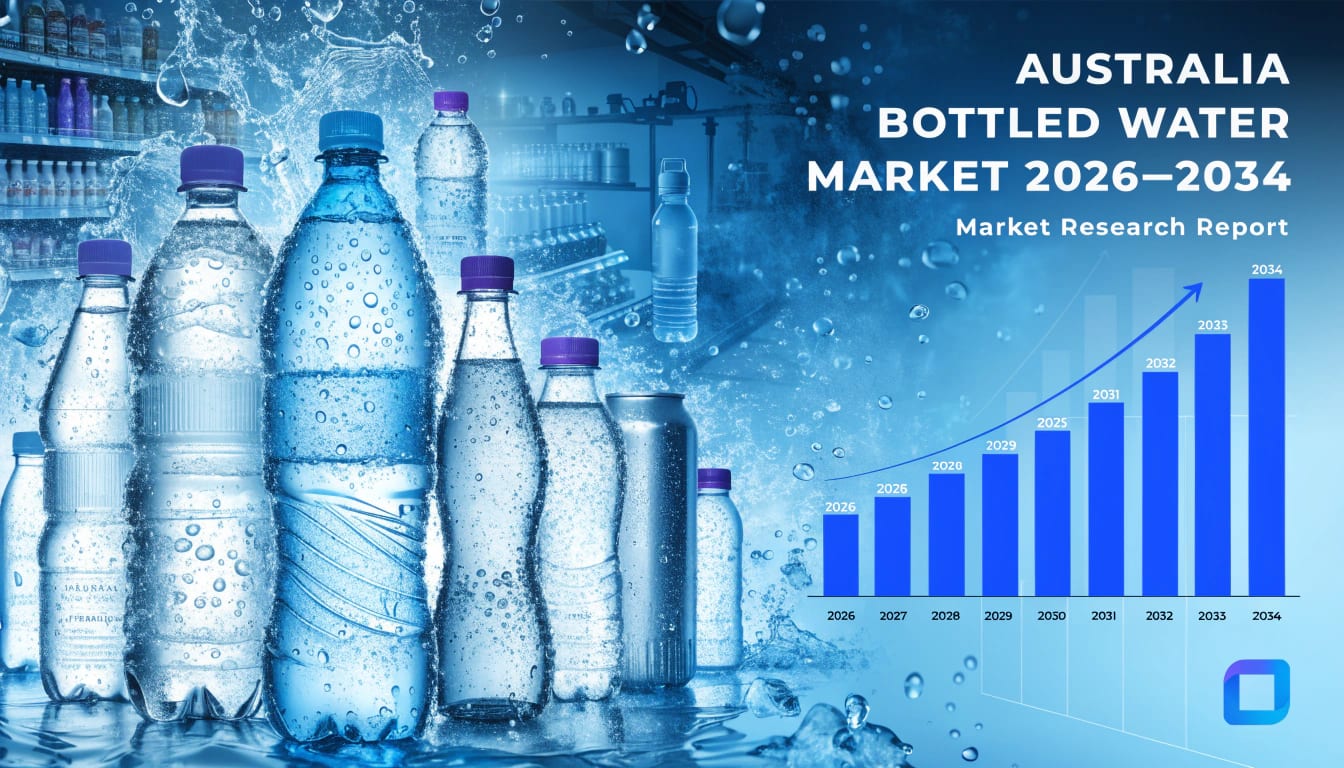
The Australia bottled water market is undergoing a significant transformation, driven by changing consumer preferences and a growing emphasis on health and sustainability. According to IMARC Group, the market reached USD 5,781.6 Million in 2025 and is projected to grow to USD 9,708.3 Million by 2034, expanding at a CAGR of 5.75% during 2026–2034.
This growth reflects a deeper shift in how Australians perceive hydration. Bottled water is no longer just a convenience product—it is increasingly positioned as a lifestyle choice aligned with wellness, purity, and environmental responsibility. From premium spring water sourced in pristine regions to functional beverages enriched with electrolytes and vitamins, the category is evolving rapidly to meet modern consumer expectations.
At the same time, the industry is balancing growth with rising scrutiny over environmental impact, making innovation in packaging and sustainability a central theme for future expansion.
Market Segmentation
• Product Type: Still; Carbonated; Flavored; Mineral
• Distribution Channel: Supermarkets and Hypermarkets; Convenience Stores; Direct Sales; On-Trade; Others
• Region: Australia Capital Territory & New South Wales; Victoria & Tasmania; Queensland; Northern Territory & Southern Australia; Western Australia
Request a Business Sample Report for Procurement & Investment Evaluation:
Why the Market Is Growing So Rapidly
A major driver of growth is the increasing focus on health and wellness. Australians are actively reducing their consumption of sugary beverages and turning to bottled water as a cleaner, calorie-free alternative. This shift is particularly strong among younger demographics who associate hydration with fitness, mental well-being, and overall lifestyle improvement. As a result, bottled water is becoming a daily essential rather than an occasional purchase.
Urbanization and fast-paced lifestyles are also contributing significantly to market expansion. With more people living in cities and leading mobile, on-the-go lives, the demand for convenient hydration solutions has surged. Bottled water fits seamlessly into this lifestyle, offering portability and accessibility across workplaces, gyms, and travel environments. The rise of takeaway culture and food delivery services further reinforces this demand.
Another critical factor is product innovation and premiumization. The market is no longer limited to plain water—brands are introducing functional and enhanced variants, including alkaline water, electrolyte-infused drinks, and vitamin-enriched options. These products cater to consumers seeking additional health benefits beyond hydration, allowing companies to command premium pricing and differentiate their offerings.
Sustainability is emerging as both a challenge and a growth driver. Environmental concerns around plastic waste have pushed companies to adopt eco-friendly packaging solutions such as recycled PET, aluminum cans, and plant-based cartons. Regulatory initiatives, including recycling targets and container deposit schemes, are further accelerating this transition. Consumers increasingly prefer brands that demonstrate clear environmental responsibility, making sustainability a competitive advantage.
Finally, Australia’s reputation for clean, natural resources is enhancing the appeal of locally sourced bottled water. Brands that highlight their origins—such as Tasmanian springs or alpine catchments—are gaining traction among consumers seeking purity and authenticity. This “source storytelling” is becoming a powerful marketing tool, especially in premium segments.
What the Opportunities Are
The Australia bottled water market offers a diverse range of strategic opportunities:
1. Functional and Enhanced Water Products
Expanding into electrolyte, vitamin, and antioxidant-infused water can capture health-conscious consumers seeking added value.
2. Sustainable Packaging Innovation
Investment in biodegradable, recyclable, and refillable packaging can differentiate brands and align with regulatory trends.
3. Premium Branding and Source Differentiation
Leveraging Australia’s pristine natural environment can support premium pricing and global positioning.
4. Export Market Expansion
Growing demand in Asia-Pacific and the Middle East creates strong opportunities for Australian bottled water exports.
5. E-Commerce and Direct-to-Consumer Channels
Online sales platforms enable brands to reach customers directly and build stronger brand relationships.
6. Hospitality and Tourism Integration
Hotels, restaurants, and tourism hubs offer high-margin opportunities for premium bottled water products.
7. Regional Market Penetration
Expanding distribution in remote and underserved areas can unlock new demand where access to clean tap water may be limited.
Recent News & Developments in Australia Bottled Water Market
• May 2025: A leading beverage company launched a new range of functional bottled water products in Australia, featuring electrolyte-enhanced and vitamin-infused variants. The launch targets fitness enthusiasts and health-conscious consumers seeking more than basic hydration. Early market response indicated strong demand in urban centers and gym networks. This reflects the growing importance of product differentiation in driving market growth.
• August 2025: Market data showed a steady increase in bottled water consumption across retail and foodservice channels. Supermarkets reported rising sales of premium and flavored water categories, while convenience stores saw higher demand for single-serve formats. The data also highlighted growing consumer preference for sustainable packaging. This trend reinforces the market’s long-term growth trajectory and evolving consumer expectations.
Why Should You Know About Australia Bottled Water Market?
The Australia bottled water market is more than a traditional beverage segment—it is a reflection of broader societal shifts toward health, sustainability, and convenience. As consumers prioritize wellness and environmental responsibility, bottled water is evolving into a premium, value-driven category with strong growth potential.
For businesses, this market offers opportunities to innovate through product differentiation, sustainable practices, and digital distribution. For investors, it represents a stable yet expanding sector supported by consistent demand and premiumization trends. For policymakers, it highlights the importance of balancing economic growth with environmental stewardship.
In an era where consumers are increasingly conscious of what they consume and how it impacts the planet, bottled water in Australia is not just about hydration—it’s about aligning with a smarter, healthier, and more sustainable future.