




At this year’s American College of Obstetricians and Gynecologists (ACOG) Annual Clinical and Scientific Meeting, one thing was unmistakably clear: Healthcare professionals are hungry — eager, even — for credible, science-based information about nutrition and dietary supplements, particularly when it comes to supporting healthy pregnancies.
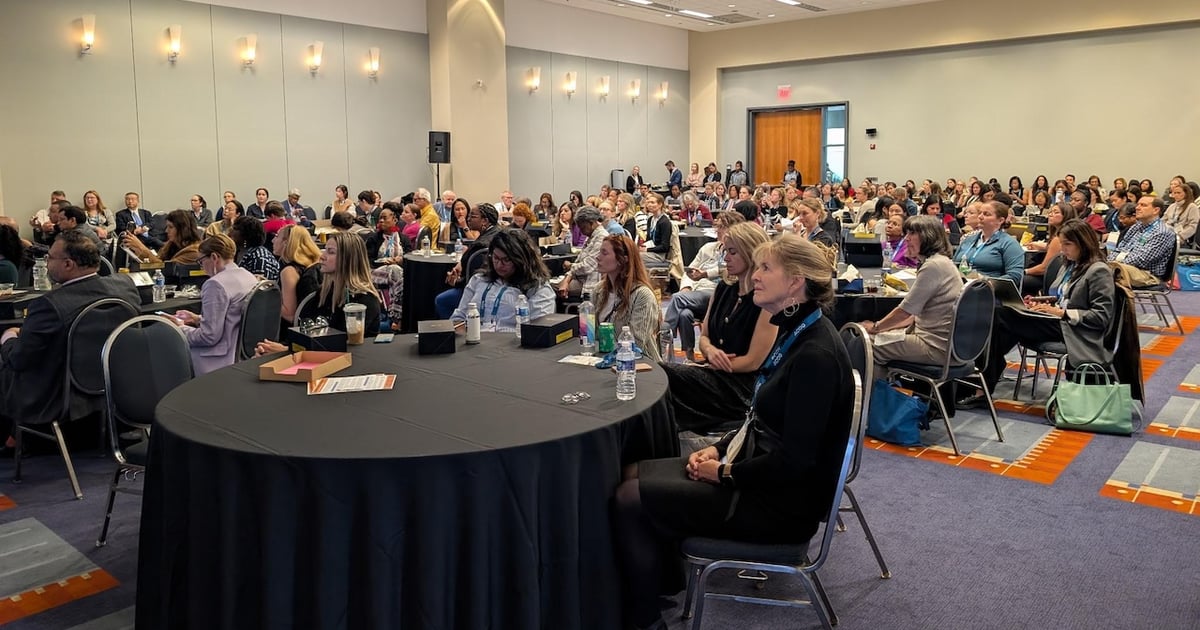
The CRN (Council for Responsible Nutrition) Foundation’s Prenatal Nutrition Center, now in its third year at ACOG, exceeded expectations on every front. From the moment the exhibit hall opened, our booth became a hub of activity, drawing a steady stream of OB/GYNs, midwives, nurse practitioners and other clinicians looking for practical, evidence-informed guidance they could bring back to their patients. By the second day, the energy had only intensified — culminating in a standing-room-only crowd at our educational workshop, a powerful signal that interest in prenatal nutrition is not only growing, but accelerating.
This kind of engagement doesn’t happen in a vacuum. It reflects a coordinated effort by CRN member companies and partners who share a common goal: advancing maternal and infant health through better nutrition. I’m proud that this year’s Prenatal Nutrition Center was made possible with the support of leading organizations including Balchem, dsm-firmenich, Kemin Industries, OmniActive Health Technologies, Pharmavite, Needed, Perelel, and Unilever Wellbeing Collective brands OLLY and SmartyPants. Each of these companies brought not only resources, but a deep commitment to improving outcomes for mothers and babies.
The need for clear education on prenatal supplements
Why did these companies come together in such a visible, unified way? Because the science is clear — and the need is urgent. Many pregnant women in the United States are not meeting their increased nutritional requirements through diet alone. That gap has real implications for both maternal health and fetal development — and the impacts can last a lifetime. Addressing it requires collaboration across industry, academia, policy makers and clinical practice. ACOG’s event provides a uniquely important venue to do just that, bringing the industry face-to-face with the healthcare providers who are on the front lines of patient care.
Our educational workshop, “Optimizing Prenatal Nutrition and Supplementation: Evidence-Informed Strategies in Clinical Practice,” was a centerpiece of that effort. Featuring nutrition researcher Danielle Christifano, Ph.D., of the University of Kansas Medical Center, and practicing OB/GYN Dr. Leslie Stone of GrowBaby Health, the session explored both foundational and emerging science. We discussed well-established nutrients such as folic acid, iron, calcium, iodine and vitamin D, alongside newer areas of interest including choline, DHA (docosahexaenoic acid) omega-3s, lutein and zeaxanthin. The goal was simple but essential: equip clinicians with actionable insights they could use immediately.
ACOG attendees confirm need for actionable insights regarding supplements
What stood out most to me, however, wasn’t just the content we delivered — it was the response from attendees. Clinicians asked thoughtful, nuanced questions. They wanted to understand not only what the evidence says, but how to translate it into real-world practice. They were candid about the challenges they face, from time constraints during patient visits to the lack of nutrition training in many medical education programs.
That last point deserves particular attention. For years, healthcare professionals have told us they want more robust education in nutrition. The strong turnout at our Prenatal Nutrition Center — and the overflow crowds at the workshop — underscore just how significant that demand has become. It’s not an exaggeration to say that we are seeing a shift: Nutrition is moving from the margins to the mainstream of clinical care.
This is why CRN has been such a strong supporter of efforts to enhance nutrition education in medical training. The Trump administration’s emphasis on strengthening nutrition competencies in medical schools is a step in the right direction, and one we support. Events like ACOG demonstrate that when clinicians are given access to high-quality, evidence-based information, they are eager to engage with it.
Prenatal nutrition is a critical opportunity for supplement education
Prenatal nutrition, in particular, represents a critical opportunity. During pregnancy, nutrient needs increase to support fetal growth and maternal health. Yet data consistently show that many women fall short in key areas.
Diet alone, while foundational, often isn’t enough to meet these elevated needs. That’s where targeted supplementation can play an important role — helping to close nutrient gaps and support healthier outcomes. But for supplementation to be effective, it must be guided by sound science and integrated thoughtfully into clinical care. That’s exactly the kind of guidance healthcare providers were seeking at ACOG.
The standing-room-only crowd at our educational workshop was, in many ways, the most visible sign of this growing momentum. Clinicians didn’t just stop by — they stayed, listened and engaged deeply with the material. It’s a clear indication that the conversation around dietary supplements is evolving. Healthcare professionals are no longer passive observers; they are active participants, looking for credible partners and reliable information.
As I reflect on this year’s meeting, I am both encouraged and energized: encouraged by the level of interest and engagement we saw, and energized by the opportunity to build on this momentum. The success of this initiative is not just a milestone for the CRN Foundation — it’s a sign of where healthcare is headed.
Nutrition matters. Prenatal nutrition matters even more. And increasingly, healthcare providers are recognizing that they need better tools, better education and better resources to support their patients.
Our job is to meet that need — with science, with collaboration and with a continued commitment to improving public health.