




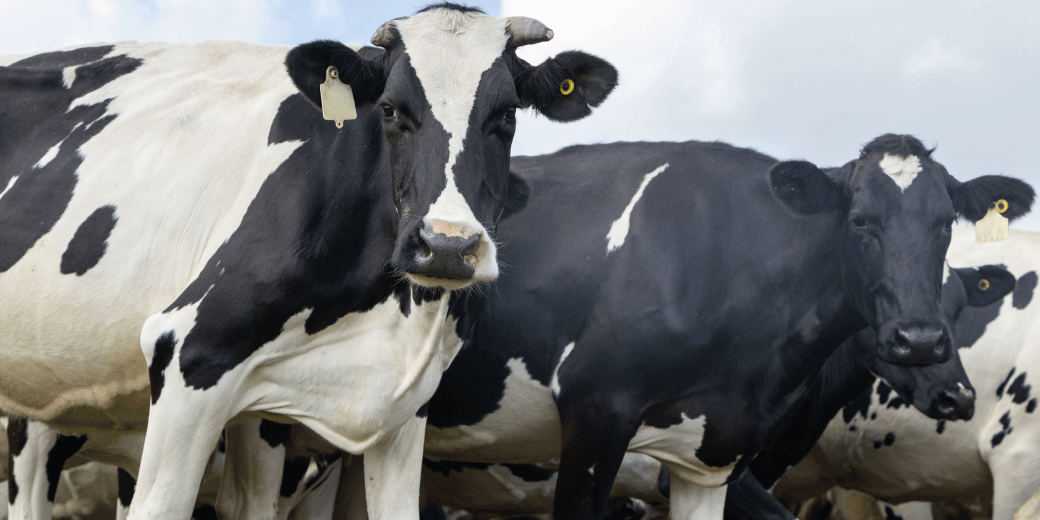
The current FMD vaccination strategy has a 95% chance of failure.
FMD Response SA
5 May 2026
The probability of failure under the government’s current approach to vaccination against foot and mouth disease is estimated by FMD Response SA to be between 90% and 95%. The plan as currently laid out by the government cannot mathematically achieve the herd immunity required by the World Organisation for Animal Health (WOAH) for FMD-free status.
“While we greatly appreciate the government’s commitment to SA’s farmers, as well as the acquisition of superior vaccines to control the virus, the current strategy and vaccination rollout at farm level remains fundamentally inadequate,” said Andrew Morphew, spokesperson for FMD Response SA.
The only way to stop the disease spreading is to ensure that the country’s 14 million cattle are vaccinated within a tight timeframe of six to eight weeks to ensure nearly all of the country’s cattle become immune to the virus, halting its spread.
By contrast, the government aims to vaccinate 80% of South Africa’s cattle only by December 2026. This timeline presents serious challenges, as some cattle will lose immunity when vaccine protection wanes after approximately six months, before other cattle are vaccinated, allowing the disease to continue spreading.
Lessons from Argentina and Brazil’s successful eradication of FMD have shown that cattle must be vaccinated within strict timeframes and boosted six months later to ensure widespread immunity that halts the virus.
Morphew added, “No country in the world has achieved World Organisation Animal Health FMD-free-with-vaccination-status using annual rolling single-dose campaigns”.
“The private sector is ready and willing to assist the government and wants to contribute to the FMD effort immediately and in a way that will be effective,” explained Morphew.
The Department of Agriculture published a Section 10 scheme on Monday which does make allowances for some measure of private partnerships in vaccination efforts. However, according to this plan, the state will still control all vaccine distribution.
“This approach is a recipe for failure. As demonstrated by the successful vaccination campaigns of Brazil and Argentina, private distribution is essential to ensure vaccines reach farms timeously and are administered effectively at the farm level. Requiring the state to centrally control distribution leads to bottlenecks and delays,” said Morphew.
Delays in vaccination result in some cattle losing immunity before others are protected, increasing the risk of vaccinated cattle being reinfected.
While FMD Response SA welcomes the goals of the Section 10 scheme, in reality, the private sector needs actual and speedy access to vaccines for this participation to be in any way impactful.
The Section 10 scheme also lacks mandatory tight time frames that should be enforced to ensure all cattle are vaccinated quickly.
A slow state-controlled rollout means South Africa will not be able to control the disease. Vaccination at speed and scale is only possible by activating private sector vaccine distribution
Background: Foot and Mouth Disease is a highly contagious viral disease affecting cattle, sheep, goats, and pigs. The current outbreak has severely impacted South African livestock, with economic ramifications extending throughout the agricultural sector. Achieving herd immunity requires vaccination of at least 90% of the cattle population within a narrow time window to break the disease transmission cycle effectively.
FMD Response SA is a farmer- led, farmer funded, system – focused initiative to make the operational reality of South Africa’s FMD response visible so that it is acknowledged an addressed. It is administered by a steering committee of industry representatives. www.fmdresponsesa.co.za
Statement issued by FMD Response SA, 5 May 2026