




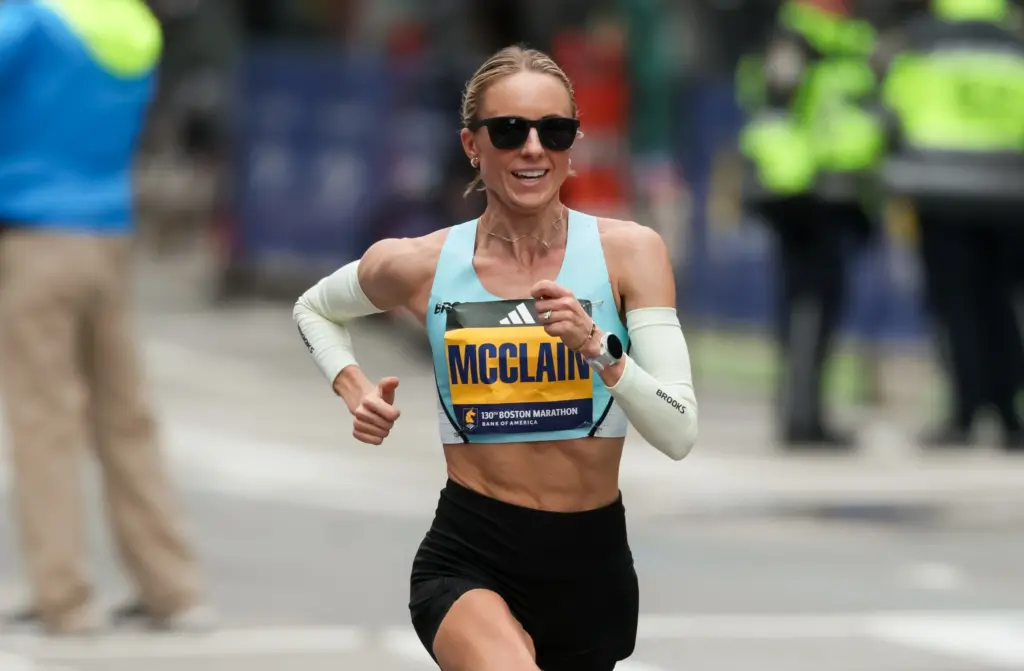
ATN spoke with several elite athletes about their recovery routines during the Boston Marathon. Their approaches spanned dialed-in metric tracking through wearables like the Oura Ring to more relaxed, hands-off approaches
The boundaries of what was thought to be possible in marathon running continue to be redefined. The two-hour barrier was demolished with a new world record at the London Marathon just two weekends ago, and shocking course-record times and personal bests filled Boston the week before.
Witnessing the professional field fly down the notoriously hilly Boston Marathon course, for example, can make it hard to believe some of them are pushing close to a 4:30-per-mile pace with such an effortless stride.
What does it take to hold unfathomably fast paces for 26.2 miles? Aside from the obvious answers of genetics, talent, rigorous training and years of hard work, every professional runner will tell you the key to their success is recovery.
“There’s no such thing as overtraining; it’s under-recovering,” professional marathoner Dakotah Popehn told Athletech News ahead of the Boston Marathon. Popehn, who is sponsored by Puma, was the top American woman at the 2024 Paris Olympic Marathon.
In Boston, Athletech News spoke with several elite athletes about their recovery routines, which spanned dialed-in metric tracking and more relaxed, hands-off approaches.
Oura Rings & HRV Tracking Aplenty
Popehn and her fellow Minnesota native and Puma teammate Annie Frisbie are both users of the Oura Ring, where they carefully watch their heart rate variability (HRV) and other recovery metrics.
“I track my HRV really closely,” Popehn said. “I think that’s my best indicator of how my body will respond to training.”
Susanna Sullivan, who landed a fourth-place finish at the World Championships Marathon in Tokyo last year, is also a fan of her Oura Ring. She told ATN she monitors her HRV and especially her resting heart rate to see if her body is recovering efficiently.
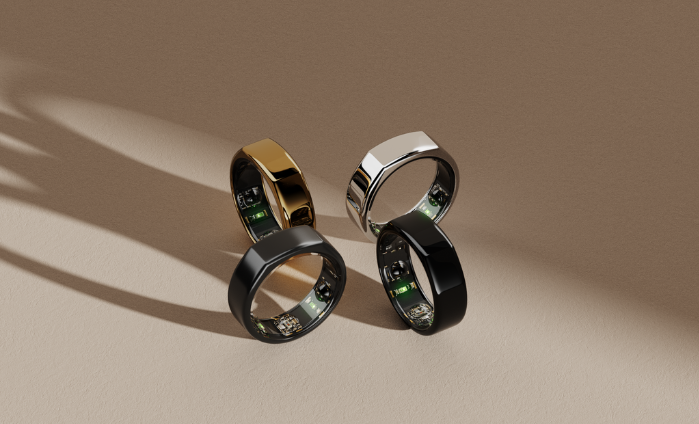 credit: Oura
Frisbie also credits her Suunto smart watch with understanding how she’s progressing and adapting to training based on how she’s recovering.
“With the watch I use, I feel like you can usually see trends over time with your recovery,” she told ATN.
One of America’s fastest runners, Clayton Young, is also a fiend for metrics.
“I really invest in a lot of wearables,” Young, a Brooks-sponsored athlete who landed top-10 finishes at the Olympics, World Championships and last year’s Boston Marathon, told ATN. “I’m big into HRV and I’ve been tracking since 2018. I have a pretty good baseline (on) how it tracks my fitness and my recovery.”
Young has previously utilized Whoop and Coros smartwatches and can often be seen adorning the Coros armband heart rate monitor during races. Most recently, he’s partnered with Suunto to use their watches to track his biometrics and training.
Throughout the Boston Marathon activations, brands had Hyperice Normatec compression boots waiting for runners to sneak in some last-minute relief before race day — and it seems like Hyperice’s recovery tech is a favorite among the pros too.
“I spend at least 45 minutes in my Normatecs every night,” Popehn said.
Kenyan athlete Sharon Lokedi, Boston course record-holder and back-to-back winner of the marathon in 2025 and 2026, also told ATN she’s a fan of the Normatec boots.
Lokedi, Popehn, Frisbie and Sullivan all said they’re frequently getting massages as well, layering onto the Normatec compression to promote blood flow and recovery in their muscles, which are often bearing the burden of well over 100 miles of training per week.
Jess McClain, who took fifth place female at this year’s race and top American in 2025 and 2026, said she likes Roll Recovery’s tools, specifically its R3 Foot Roller and R8 Deep Tissue Massage Tool.
The foot roller, she told ATN, is a companion she keeps under her desk to roll out her feet during the workday.
‘Sleep is King, Nutrition is King’
Across the board, sleep and nutrition are at the top of every athlete’s list for recovery.
“Sleep is king, nutrition is king, all the hydration, all the little things,” Frisbie said.
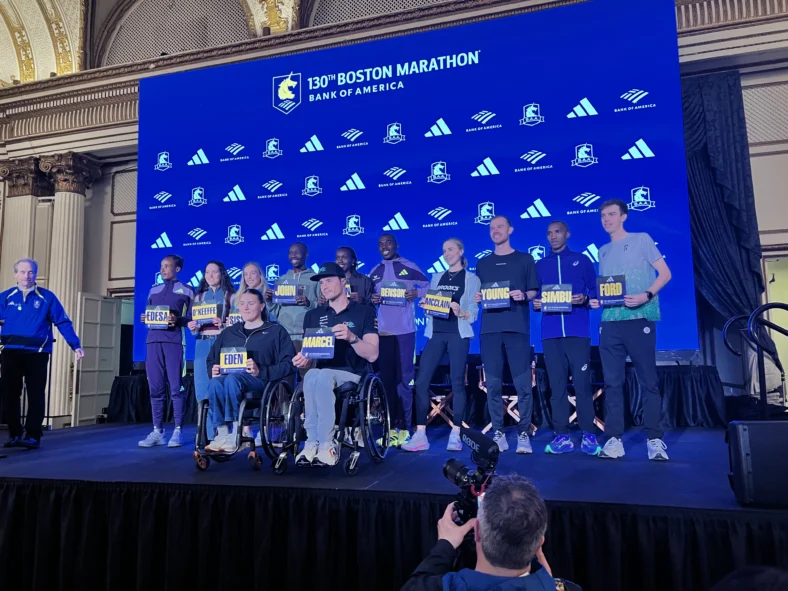 The professional athlete field at the 2026 Boston Marathon (credit: Ani Freedman/ATN Staff)
“Sleep. That’s my number one,” Lokedi added.
All answered they prioritize getting 8 to 10 hours of sleep each night — and often more during the day.
“My favorite recovery tool is napping. I love to nap,” Young said. “I try to carve out about 90 minutes every day, from 12:00 to 1:30 — my ‘office hours.’”
Nearly every athlete said they struggle to sleep the night before a race, with anticipation and pre-race nerves bubbling up. When Young has trouble sleeping, he goes through race visualization, picturing every step of the Boston course or whatever race he’s training for, pairing that with box breathing before drifting off.
“I usually don’t sleep well the night before a race, so I’ve just come to accept that and not stress about it,” McClain noted.
“For the most part, I just stick to the basics — get off my feet, sleep and take one day completely off. I don’t run on Mondays,” she added. “I think that honestly keeps me super healthy at this point in my career. And eating — I eat a lot more than I think I need. Fuel is a huge, huge thing.”
Sullivan called getting enough sleep the “building block” of her recovery routine, along with making sure she’s fueling enough, another core pillar for every other athlete — this makes sense, given the demanding volume of training it takes to compete in the marathon at the top level.
Could Keeping It Simple Be the Key to Success?
For all the tips, tricks, supplements and tech out there, some of the athletes who performed the best on race day seemed to benefit from a simpler approach.
Lokedi — who took the win on race day — doesn’t like to complicate her training or routine with tracking too many metrics.
“With all the data, I feel like sometimes it stresses you too much. It gives you so much to think about,” she said.
“I just most of the time go with how I feel,” Lokedi explained, who noted she always sleeps poorly the night before races. “If it works, I stay with it. If it’s sleep and it works, go with it. If it’s food and it works, go with it.”
Lokedi is particularly a fan of Maurten energy gels and hydration products, which she says seem to agree with her.
On race day itself, Lokedi couldn’t help but keep things simple — it was during the bus ride to the starting line when she realized she’d left her Garmin watch behind in the hotel. Luckily, a fellow participant loaned her his much simpler Garmin model, which seemed enough to do the job as she secured the win for the second year in a row.