



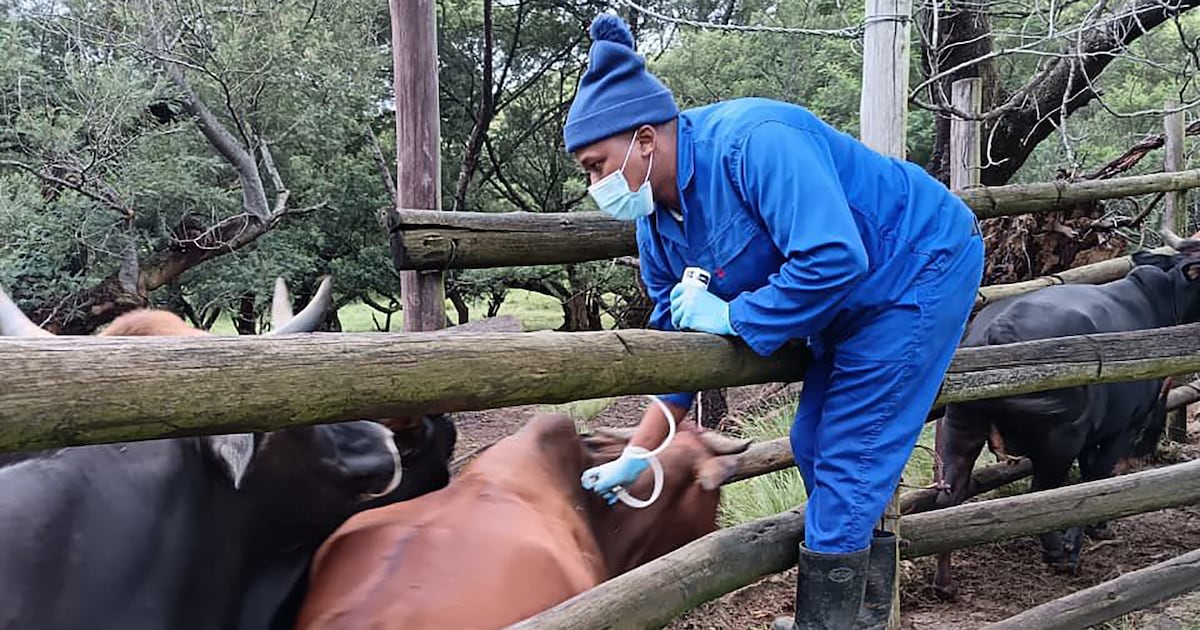
Industry group FMD Response SA has criticised the government’s newly gazetted vaccination scheme, warning that the current approach to controlling foot-and-mouth disease (FMD) is “a recipe for failure” and could leave South Africa unable to achieve herd immunity.
The criticism follows the formal gazetting of a framework that allows farmers to vaccinate livestock voluntarily under strict state oversight, marking an important shift in government policy after sustained pressure from the agricultural sector.
In a statement, FMD Response SA said the probability of failure under the government’s current vaccination strategy is between 90% and 95%. It argues that the plan “cannot mathematically achieve the herd immunity required by the World Organisation for Animal Health for foot-and-mouth disease-free status”.
“While we greatly appreciate the government’s commitment to South Africa’s farmers, as well as the acquisition of superior vaccines to control the virus, the current strategy and vaccination rollout at the farm level remains fundamentally inadequate,” spokesperson Andrew Morphew said.
The group said the only viable path to halting transmission would be to vaccinate the country’s roughly 14-million cattle within a tightly controlled six- to eight-week window to achieve near-universal immunity. By contrast, the government’s phased rollout — targeting 80% coverage by December — risks allowing immunity in early-vaccinated animals to wane before later vaccinations are completed, creating conditions for continued spread.
FMD Response SA also raised concerns about the structure of the newly gazetted scheme, arguing that continued state control over vaccine distribution would create bottlenecks and delay implementation at scale.
“This approach is a recipe for failure,” Morphew said and warned that delays could result in uneven immunity across herds and increase the risk of reinfection.
The group said the scheme lacks mandatory, tightly enforced timelines and that vaccination “at speed and scale” would be possible only through full activation of private sector vaccine distribution.
The gazetted framework allows farmers to vaccinate animals voluntarily, provided they comply with strict requirements, including traceability, veterinary supervision and detailed record-keeping. Farmers must appoint authorised veterinarians or animal health technicians, with all vaccinations conducted under state oversight.
Agriculture minister John Steenhuisen told a press briefing on Tuesday that the government is still aiming to vaccinate 80% of the national herd by December as it moves to regain FMD-free status.
The plan comes as the FMD outbreak, which began in 2025, spreads across multiple provinces, disrupting livestock production and placing pressure on the government to contain the disease.