





Arla Foods Ingredients is showcasing high-protein, nutrient-dense application concepts designed to meet the needs of GLP-1 users at the ongoing Vitafoods Europe 2026 trade show (May 5–7). The company says these demonstrate how manufacturers can meet the growing demand for companion nutrition that helps consumers manage side effects, such as lean muscle loss, gastrointestinal issues, nausea, and loss of appetite.
The concepts feature Arla Foods Ingredients’ Nutrilac and Lacprodan BLG-100 (beta-lactoglobulin) protein solutions, delivering essential amino acids for muscle health. They also incorporate probiotics and cultures from Novonesis to support digestive well-being.

Live at the show floor in Barcelona, Spain, Nutrition Insight discusses how nutrition can support GLP-1 users with Peter Schouw Andersen, senior director in Performance Nutrition at Arla Foods Ingredients.
At Vitafoods, the company is positioning GLP-1 companion nutrition around nutrient density and muscle maintenance, aiming to redefine what weight management entails.
“Traditionally, weight management has been almost entirely about calorie reduction and volume control. GLP-1 therapy is forcing a fundamental rethink of that approach,” says Schouw Andersen.
“What we’re seeing — and what we’re highlighting at Vitafoods — is that for GLP-1 users, eating less doesn’t automatically mean eating better. Reduced appetite, early satiety, and gastrointestinal side effects make it harder to meet basic nutritional needs, particularly for high-quality protein and micronutrients.”
Therefore, Arla Foods Ingredients notes weight management is evolving from “eat less” to “nourish better,” Schouw Andersen adds.
“Our data shows a clear gap in the current meal replacement and diet shake market: most products are still built around large volumes and calorie control, which simply don’t fit the realities of what GLP-1 users need.”
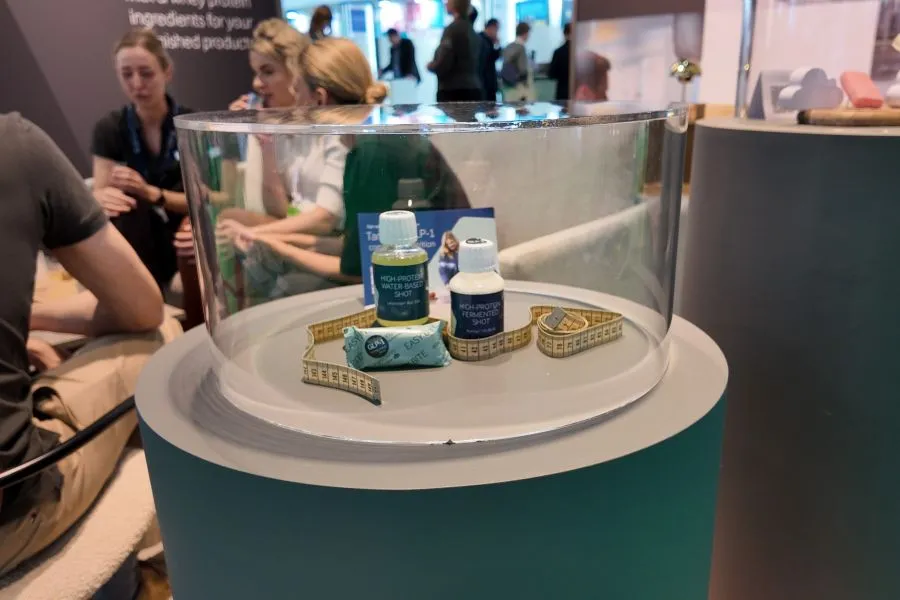 At Vitafoods, Arla Foods Ingredients is positioning GLP-1 companion nutrition around nutrient density and muscle maintenance.He notes there is a strong opportunity for mini- or shot-style formats with high nutrient density, where every sip delivers meaningful nutritional value. “This reframes weight management in terms of preserving muscle, supporting metabolic health, and sustaining quality of life — not just reducing body weight.”
Formulating for the GLP-1 consumer
Schouw Andersen underscores that portion size reductions are generally insufficient to support GLP-1 users, which can even result in a risk of undernutrition in some cases. He stresses that consumers on these medications often struggle to finish standard portions, urging brands to rethink how much nutrition is delivered per bite or sip.
“The focus has to shift toward nutrient density, ensuring that smaller servings still deliver optimized levels of protein, essential amino acids, and key micronutrients,” he reiterates.
“Format plays a major role too,” Schouw Andersen adds. “Large shakes or sports-style products assume normal appetite and volume tolerance — which simply doesn’t apply here. That’s why we see strong relevance for compact formats like high-protein shots, spoonable yogurts, or small drinking yogurts designed specifically for reduced appetite and gastrointestinal sensitivity.”
He summarizes that successful GLP-1 companion products will be those that are designed around the physiology of users, not retrofitted from traditional weight management concepts.
At Vitafoods Europe 2026, the company is showcasing several concepts, including a fermented, high-protein shot featuring Nutrilac ProteinBoost, with 10 g of protein in a 70 ml serving. It is also presenting a lactose-reduced drinking yogurt with 20 g of protein and a fermented, high-protein spoonable yogurt.
 Schouw Andersen says there is a demand for compact formats like high-protein shots or spoonable yogurts (Image credit: Arla Foods Ingredients).Moreover, Arla Foods Ingredients developed a health and medical nutrition application, a high-protein water-based shot for ambient storage featuring Lacprodan BLG-100. The shot provides 21 g of protein in a 100 mL serving, is free from fat and sugar, and is low in lactose.
Whey protein standout
In the companion product space, Schouw Andersen highlights protein quality as key, as GLP-1 users are at an increased risk of losing lean muscle mass during rapid weight loss.
“Whey protein stands out because of its superior amino acid profile and digestibility. Both of the whey solutions we’re showcasing at Vitafoods — Nutrilac ProteinBoost and Lacprodan BLG-100 — provide all nine essential amino acids, which are fundamental for muscle protein synthesis.”
He details that Lacprodan BLG-100 is naturally high in leucine, a key trigger for muscle protein synthesis. “In fact, BLG allows us to deliver a meaningful leucine dose in a very small serving size, which is ideal for GLP-1 users with reduced appetite.”
Beyond muscle maintenance, Schouw Andersen says that whey protein also supports satiety and metabolic health, making it “uniquely suited to companion nutrition” that complements pharmacological weight loss rather than undermining it.
Complementing pharma
Arla Foods Ingredients sees functional nutrition as the essential infrastructure around GLP-1 therapy, says Schouw Andersen.
“Pharmaceuticals address appetite regulation and metabolic pathways, but they don’t solve practical, day-to-day nutritional challenges such as protein inadequacy, muscle loss, digestive discomfort, or micronutrient gaps. That’s where functional foods and beverages come in.”
“Going forward, we expect to see more products explicitly designed as ‘companion nutrition’ — foods that support treatment adherence, protect muscle mass, improve digestive comfort, and help users maintain nutritional adequacy during and after pharmacological intervention.”
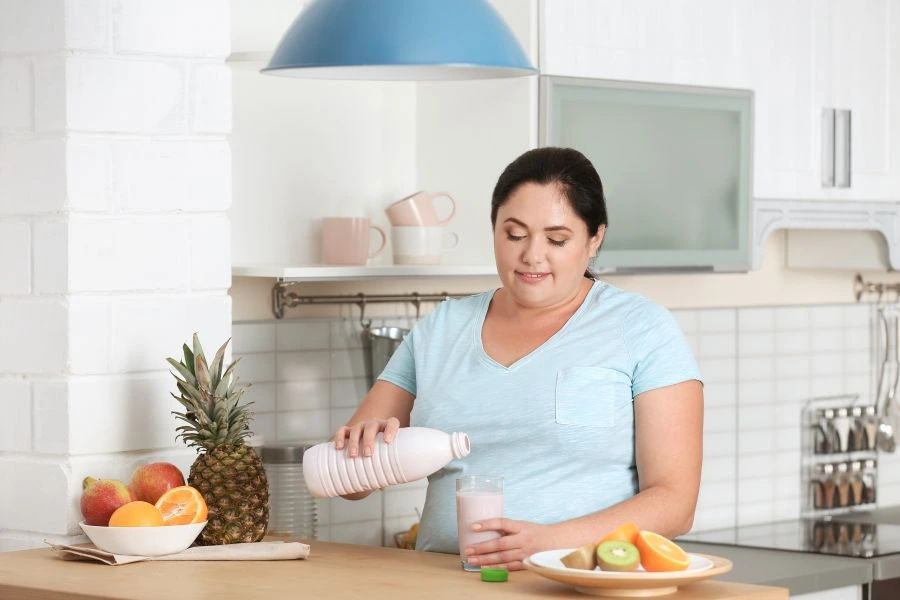 Functional nutrition can become a bridge between clinical treatment, active lifestyle needs, and everyday wellness — rather than an alternative to medication.He notes that functional nutrition becomes a bridge between clinical treatment, active lifestyle needs, and everyday wellness — rather than an alternative to medication.
Ready-to-stir concepts
Ease of consumption is “absolutely critical” in improving compliance and daily nutrition, according to Schouw Andersen. However, he says this is often underestimated.
“When someone is managing a chronic condition or undergoing medical treatment, even small practical barriers can significantly impact compliance. Illness changes daily routines, energy levels, and priorities, so convenience becomes a genuine nutritional enabler rather than a ‘nice to have.’”
For this reason, Arla Foods Ingredients is highlighting ready-to-stir concepts at Vitafoods Europe 2026, with “simple and intuitive” preparation.
Schouw Andersen says that a powder that can be mixed quickly with a spoon — without blenders or shaking — reduces friction and helps people actually use the product consistently.
“Ingredients like Lacprodan BLG 100 Acidic play a key role here because of their high solubility,” he adds. “They dissolve easily in both cold and warm liquids and even work in foods as well as beverages. This flexibility makes it easier to integrate nutrition into everyday life, which ultimately improves compliance and supports better long-term nutritional intake.”
What’s next?
Schouw Andersen says the lines between clinical nutrition, active nutrition, and everyday wellness are blurring, accelerated by GLP-1 therapies.
“We see a growing overlap around muscle health, metabolic resilience, and digestive well-being — needs that apply to clinical patients, active consumers, and wellness-focused individuals alike. The difference lies less in what people need and more in how nutrition is delivered.”
He adds that future products will likely combine clinical credibility (evidence-based protein quality and functional benefits), active nutrition principles (muscle preservation and performance support), and everyday convenience and enjoyment (taste, format, ease of use).
“GLP-1 creates a new type of consumer — one the market wasn’t originally designed for — and that’s pushing all three sectors closer together around targeted, nutrient-dense, small-format nutrition,” Schouw Andersen concludes.