




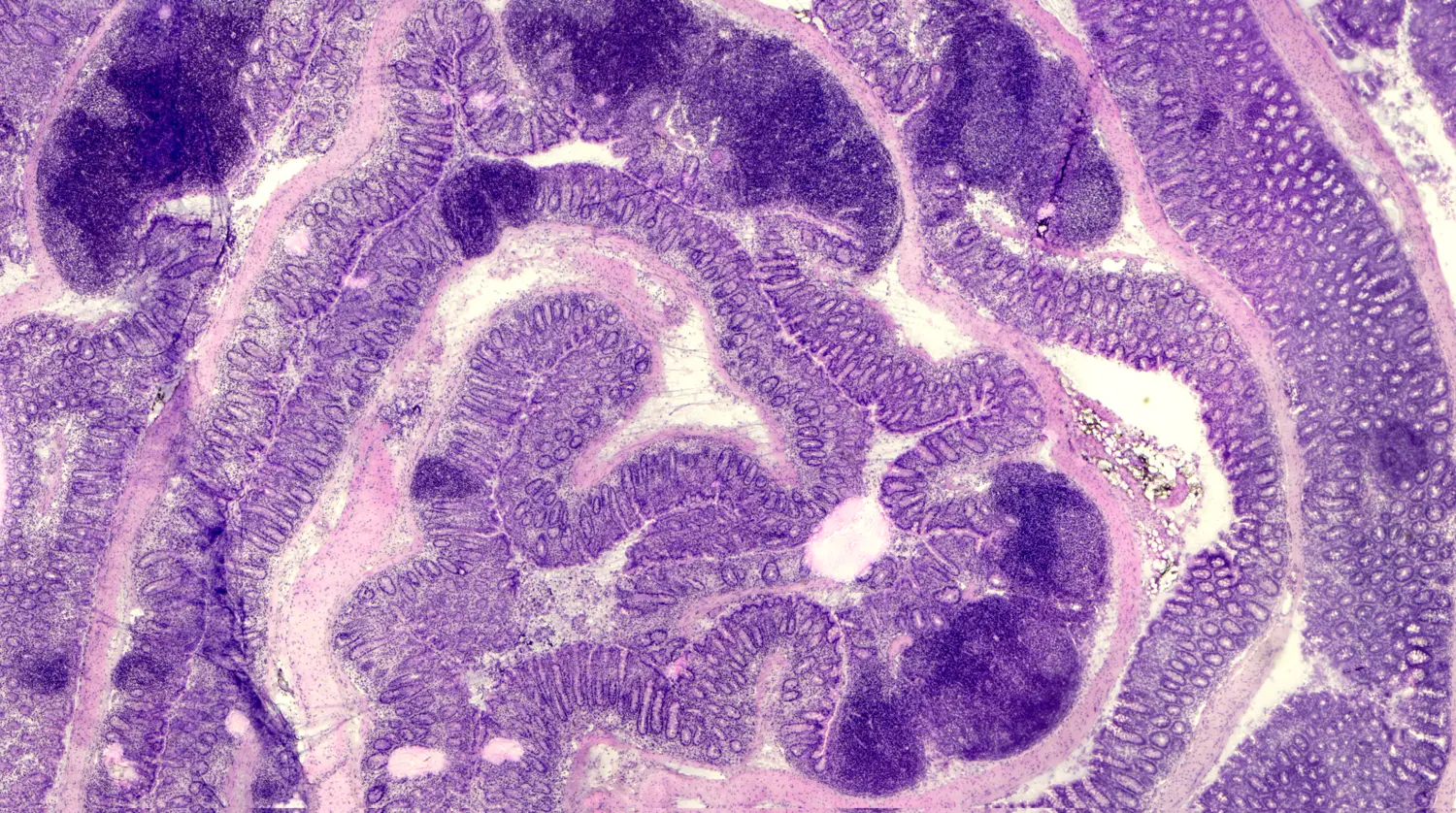
“We found that the intestine does not have just one type of inflammation, but several, occurring simultaneously in different parts of the tissue. This may be a missing piece in understanding why some patients respond well to a treatment while others do not,” says researcher Eduardo Villablanca at the Department of Medicine, Solna , Karolinska Institutet.
When the mice were treated with an antibody that blocks an inflammatory molecule, IL‑12, the activity in all these programs decreased. This was followed by a reduction in immune cells and a calming of the intestinal epithelium.
“This shows that the treatment does not extinguish all inflammation in the same way. It affects several programs at once, which may offer new clues for designing future therapies,” says Eduardo Villablanca.
The researchers also compared gene expression in the mouse models with previously published data from individuals with ulcerative colitis and Crohn’s disease. The analysis shows that several key inflammatory pathways are similar between mice and humans, suggesting that the findings may be relevant to human disease.
The study is a collaboration between Karolinska Institutet, Roche, and SciLifeLab. The research has been funded by, among others, the Swedish Research Council, the Swedish Cancer Society, the Knut and Alice Wallenberg Foundation, and the European Research Council. The researchers report consultancy work and research support from several pharmaceutical companies in the scientific article.
Publication
“Spatiotemporal analysis reveals distinct inflammatory programs underlying chronic colitis” , Jennifer Fransson, Chiara Sorini, Francisca Castillo, Yuhao Chi, Ning He, Martin Suarez-Alvarez, Maria Alejandra Ulloa, Rodrigo A. Morales Castro, Ali Okhovat, Hailey Sounart, Chiara Zagami,
Rebeca F. Cardoso, Immunity, online 6 May 2026.