




 A new Cornell study suggests vitamin B12 plays a far broader role in human biology than previously understood, influencing key metabolic pathways linked to aging, muscle function and disease risk. Credit: Stock
Vitamin B12 may shape metabolism and aging more than previously understood.
Vitamin B12 is typically associated with red blood cells and nerve health, but new research from Cornell University suggests its influence reaches much deeper into how the body produces energy and maintains muscle.
The study, published in the Journal of Nutrition, reveals previously unrecognized ways that B12 supports cellular metabolism. It also identifies early warning signals in the body that may detect nutritional strain long before classic deficiency symptoms appear.
Vitamin B12 reshapes metabolic understanding
“This is the first study that shows B12 deficiency affects skeletal muscle mitochondrial energy production,” said corresponding author Martha Field, Ph.D. ’07, associate professor in the Division of Nutritional Sciences and in the College of Human Ecology. “It’s highly relevant because muscles have high energy demands. More importantly, my co-author, Anna Thalacker-Mercer from the University of Alabama at Birmingham, wondered if B12 supplementation in aged mice would improve muscle mitochondrial function – and it did.”
Previous research has largely concentrated on the visible consequences of B12 deficiency, such as megaloblastic anemia, neuropathy, and cognitive decline, rather than examining the underlying biological mechanisms.
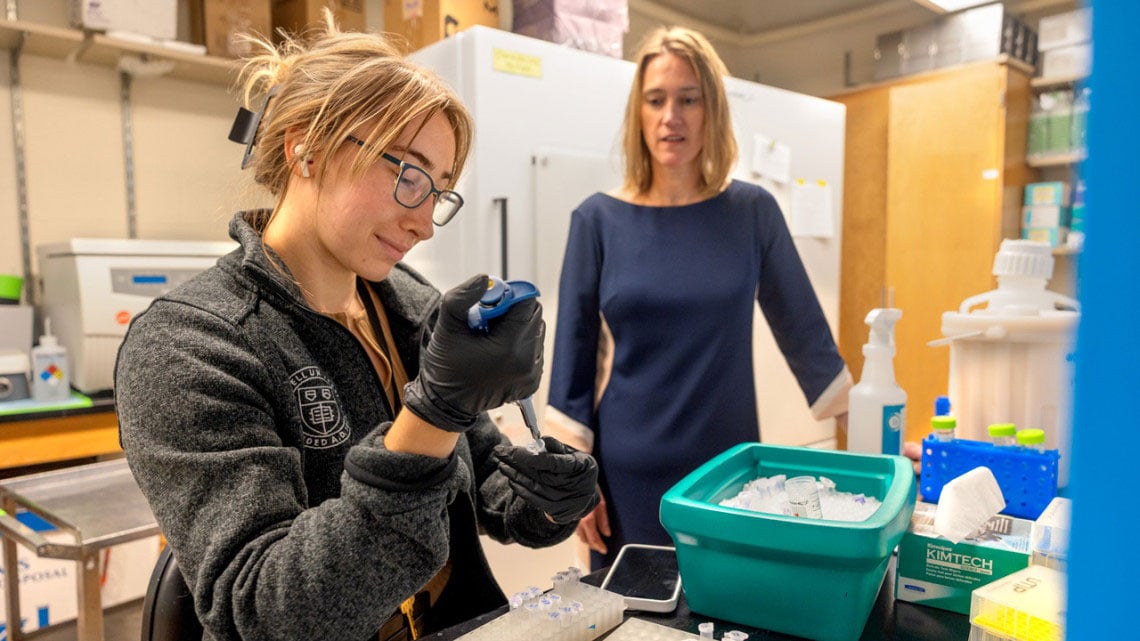 Martha Field, right, assistant professor in the Division of Nutritional Sciences, works with Chloe Purello in her Kinzelberg Hall lab. Credit: Jason Koski/Cornell University
At Cornell, a research group led by Field, along with first authors Luisa Castillo, Ph.D. ’25, and Katarina Heyden, B.S. ’18, Ph.D. ’24, investigated these deeper processes. Their work mapped how B12 interacts with lipid metabolism, organelle stress pathways, and epigenetic regulation. The results indicate that B12 plays a central regulatory role across multiple interconnected biological systems, suggesting that even modest deficiencies could have widespread effects.
“Another thing we observed in mice is that B12 deficiency seemed to inhibit growth or maintenance of muscle mass,” Field said. “It seems that low B12 status is associated with lower muscle mass and maybe muscle strength.”
Subtle deficiency may carry broad risk
B12 deficiency remains widespread across the globe, particularly among older adults and in populations with limited access to animal-based foods, which are primary sources of the vitamin. Estimates suggest that about one in four older adults in developed countries may have suboptimal B12 levels, highlighting the need for improved detection and intervention.
The findings also align with a growing body of research showing that insufficient intake of micronutrients, even without full deficiency, can contribute to chronic disease.
While severe B12 deficiency is relatively uncommon in many developed regions, marginal levels are still frequently observed in older adults, as well as in vegans, vegetarians, and individuals with absorption disorders. The study indicates that even these lower levels may reduce the body’s ability to cope with metabolic stress, immune challenges, and the effects of aging.
Toward precision nutrition strategies
From a clinical perspective, the researchers suggest that B12-related biomarkers could support more personalized approaches to nutrition. Rather than relying on uniform supplement recommendations, future guidelines may be tailored to individual metabolic needs and lifestyles, reflecting a broader move toward precision nutrition. This approach fits within a larger effort to integrate nutrition science with systems-level biology.
The current findings are based on cell models and will need to be validated in human studies, Field said.
“We want to understand the whole causal pathway – understanding the molecules and mechanisms,” Field said. “This sets the stage for a future controlled human trial.”
Reference: “Vitamin B12 Supports Skeletal Muscle Oxidative Phosphorylation Capacity in Male Mice” by Luisa F Castillo, Katarina E Heyden, Abigail R Williamson, Wenxia Ma, Olga V Malysheva, Nathaniel M Vacanti, Anna E Thalacker-Mercer and Martha S Field, 20 January 2026, The Journal of Nutrition.
DOI: 10.1016/j.tjnut.2026.101367
Never miss a breakthrough: Join the SciTechDaily newsletter.
Follow us on Google and Google News.