




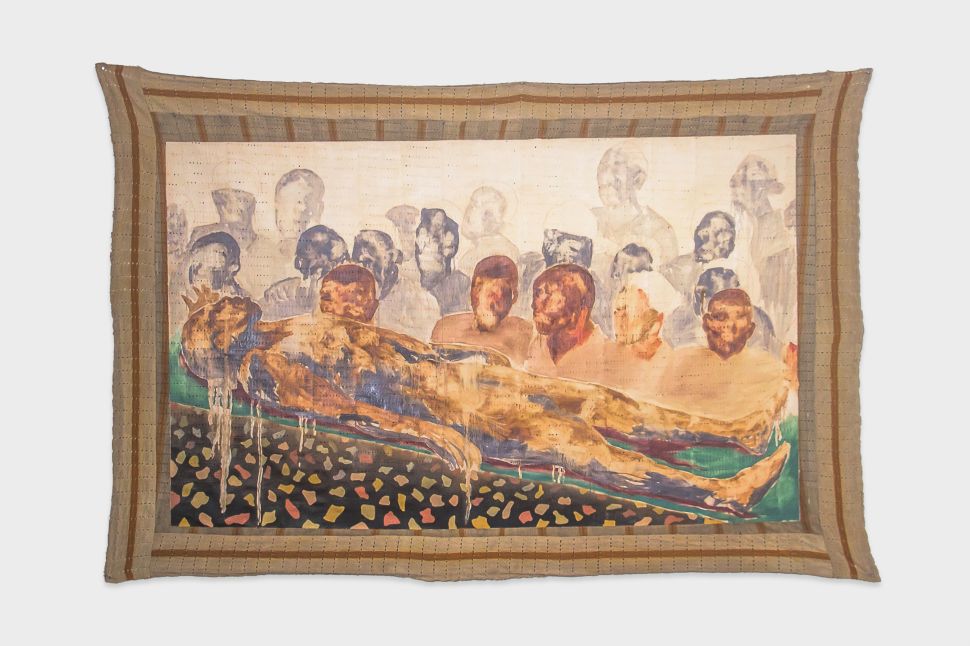
 Nengi Omuku, The Gathering, 2020. Oil on Sanyan. Courtesy the artist
In Nengi Omuku’s painting The Gathering, a wounded figure lays on a stretcher, the body dripping on what seems like shards of rubble surrounded by a gathering of figures with amorphous faces. A small hand is raised as though blessing the injured figure as it is transferred to safety. In the image, the crowd gradually withers the farther away from the scene.
The work was inspired by the collapse of a building near the artist’s studio in the Onikan neighborhood of Lagos Island. “That is a picture of humanity, and where we should be as individuals,” the artist told Observer. “It was just the people that gathered, pulling people out of the rubble. There was nobody from the government to help. So this piece for me is about compassion and about sharing grief.”
This June, at the de Young Museum in San Francisco, in a solo exhibition of the same title, the Nigerian painter and sculptor will be showing works made between 2020 and 2026. It’s her first institutional show in the U.S., and the exhibition will explore protests and political uncertainty alongside collective solidarity and beauty with paintings that meditate on collective care and dreaming new worlds.
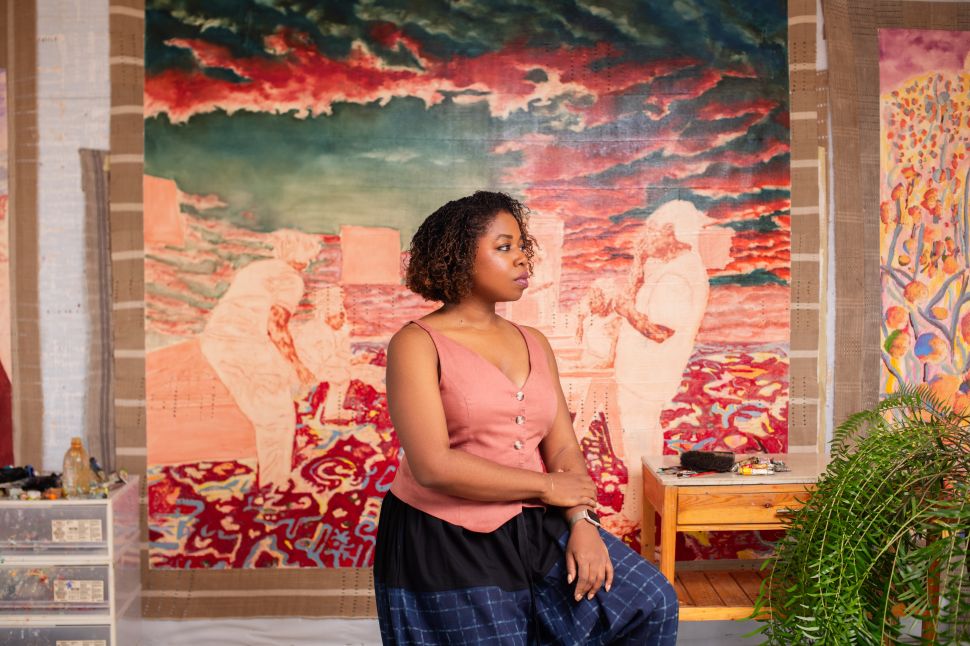 Nengi Omuku. Photo: Anny Robert
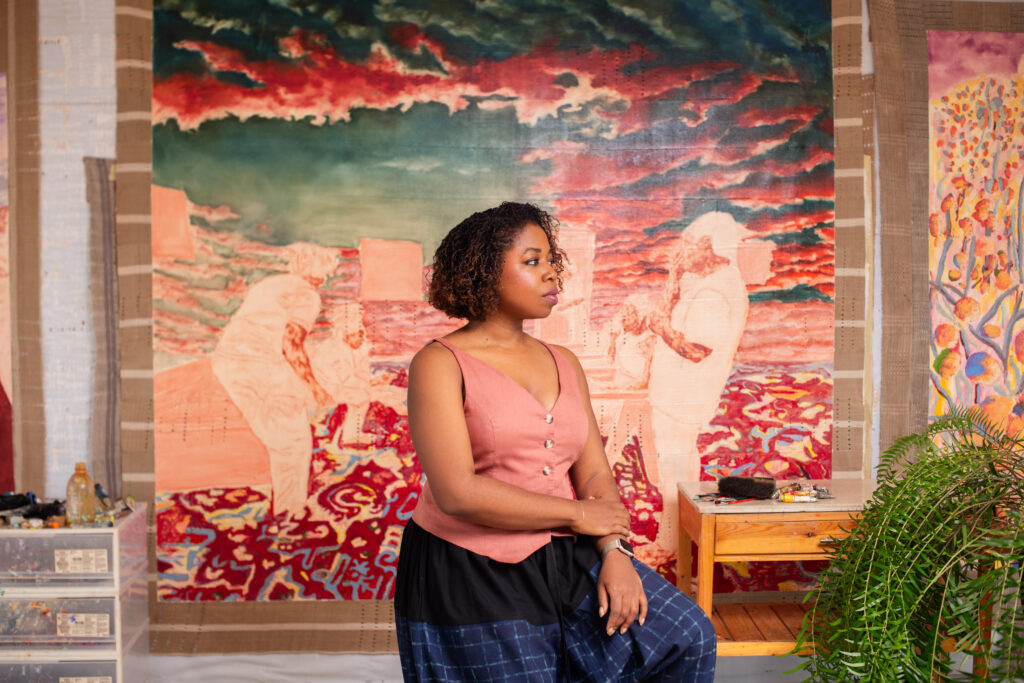
Omuku is not new to the exploration of collectivism and belonging. After graduating from the Slade School of Fine Art, buoyed by feelings of isolation and otherness, she returned to Nigeria and found grounding in textiles. “Wherever I turned, if I saw someone in traditional dress, I could immediately say, this person is from here, this is who they belong to,” she said. “That became so grounding for me that I could look at someone and identify a little part of who they were through their dress.”
That euphoria of community inspired her investigation into textiles across Nigeria, where she settled on the Sanyan, a precolonial hand-spun textile made from cotton blended with wild silk fibers. Sanyan is worn by the Yoruba people of southwestern Nigeria, and their textiles took well to the paint and brush, and soon she turned this communal cultural cloth into canvas.
In this show, Omuku evokes history again through archival images of Nigerian protests as reference for her paintings, in the process creating a reweaving, refashioning and remembrance of history. “I was aware that I was painting on a heritage textile that has real historical significance,” she said of the collision of fabric and archives. “I’m thinking about the height of weaving in Nigeria that was done in this golden age of making. I’m also looking for instances where the fabric of society came apart in protest.”
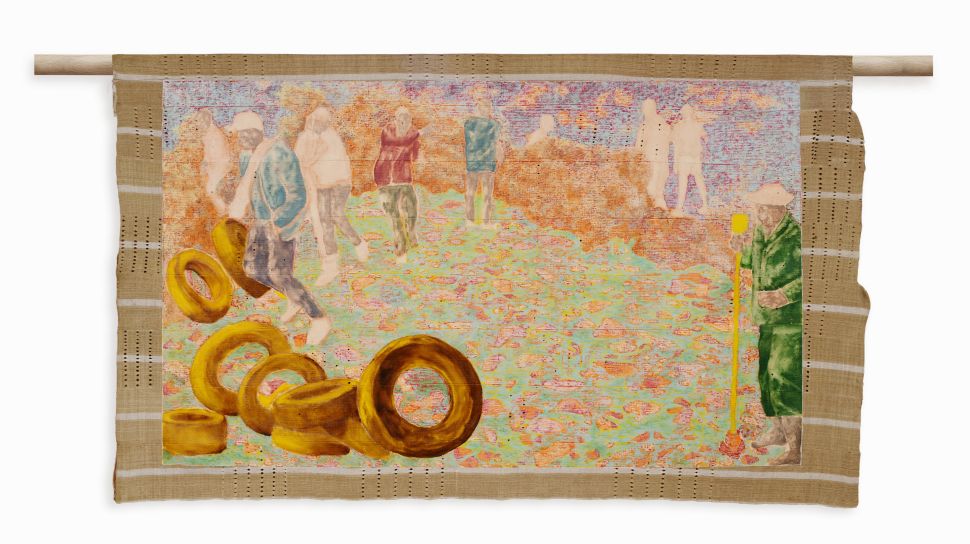 Nengi Omuku, The Dirge, 2025. Oil on Sanyan. Courtesy the artist
Her paintings will be presented alongside the museum’s African art collection in a conversation revealing cultural and material continuities across generations. For so long, African collections have been relegated to anthropological events and ethnographic studies, but Omuku believes that the upcoming show will expand that context, providing a space that elaborates on histories and traditions of art making over time, as well as opening a new discourse around art from the continent.
Beauty forms a seismic piece of the puzzle in “The Gathering.” This largely comes from Omuku’s horticultural background, training with her mother, a florist and landscaper. Flower arrangements have been integral to how she thinks about composition, color and restraint, though it remained a quiet part of her process and practice. “All gardening is landscape painting. The concept of altering nature to fit a certain picturesque is basically what we do as landscape painters. It’s the same principles.”
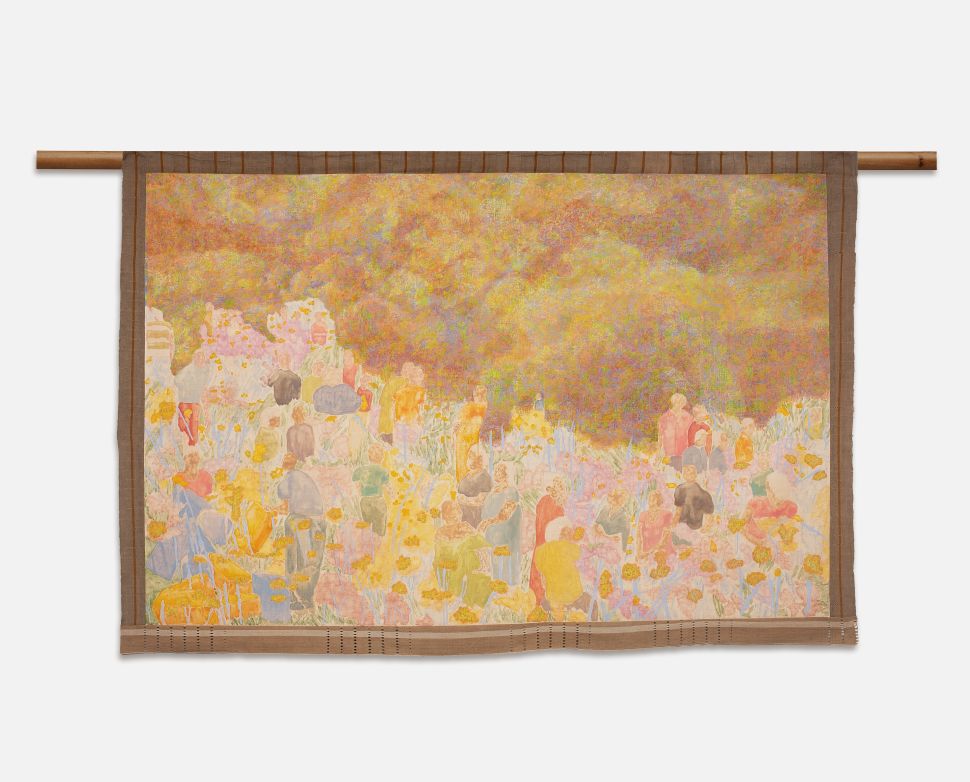 Nengi Omuku, This Too Shall Pass, 2025. Oil on Sanyan. Courtesy the artist
It was a looming depression brought on by the regurgitative paintings of hardship that got her asking newer questions of her own practice, inviting the beauty of flowers and nature to the fore. “I thought, shouldn’t art have space to dream of other worlds? Of new things? Of new futures? In that element of dreaming, landscape eventually set in. I opened myself up to a Nigerian romanticism, a gift to the bodies in my paintings. Nothing speaks to liberation like nature.”
The result of that liberation is a work embedded in material history and memory that is tactile yet sensorial in its sensibilities. The artist doesn’t view beauty in times of crisis as a tension but rather a necessary intervention, something she showcased aptly in a painting featuring jerrycans during a petrol scarcity protest. The bodies are thrust into the beauty of landscape; the chaos and hardships are acknowledged, but there is also a recognition for dreaming up newer imaginaries.
More in Artists